The person behind the counter decides, within three seconds of seeing you, how much patience they will extend. That is not cynicism, it is how bureaucratic spaces operate everywhere, and in India's formal institutions it is especially true. Dressing deliberately for a court date, a bank visit, or a government office is not about vanity. It is about removing one more reason for someone to make your errand harder.
The Court: Dress as a Witness, Not a Petitioner
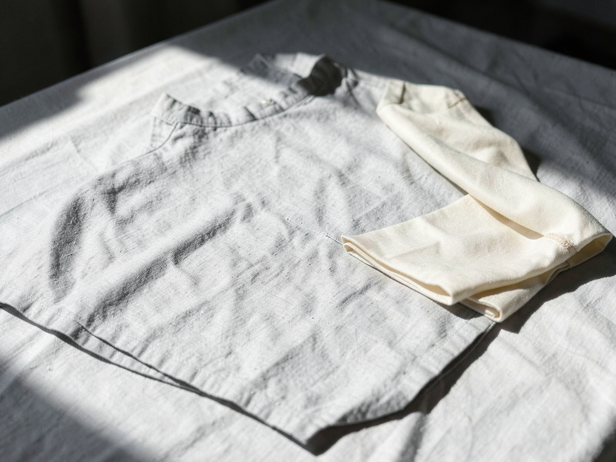
Most people appearing in a district or sessions court in India are not lawyers, but the court reads clothing the way it reads conduct. The standard that works without fail is what tailors used to call "office formal" before that phrase got diluted: a plain cotton or linen shirt in white, light grey, or pale blue for men, tucked in, with dark trousers, navy, charcoal, or black. No jeans, regardless of the cut or colour. No sneakers. A pair of clean leather or synthetic leather shoes in black or dark brown closes the look. For women, a plain cotton salwar kameez in a muted colour, dusty rose, off-white, sage, grey, with a dupatta worn, not draped as an afterthought, reads as composed and respectful. A plain saree in cotton or georgette works equally well. Avoid heavy embroidery, mirror work, or anything that catches light. The goal is to look like someone who prepared for this appointment, not someone who came from somewhere else and stopped by.
![Pale Grey Salwar Kameez Still Life]()
Pale Grey Salwar Kameez Still Life
Image credit : AI
My choice for a court date outfit India: a simple, elegant pale grey salwar kameez.
The Bank Counter: Neat Enough to Be Taken Seriously, Not So Formal You Look Nervous
A bank is not a court, and overdressing for a routine transaction can read as anxious rather than authoritative. The register that works here is what you might wear to a parent-teacher meeting: presentable without being stiff. For men, a collared shirt, cotton, linen, or a cotton-polyester blend, in any solid or fine-check pattern, with clean trousers or dark chinos. The shirt need not be tucked in at a casual branch, but at a flagship branch or when meeting a relationship manager, tuck it. For women, a neat kurta with leggings or churidar, or a plain cotton saree, or a simple western shirt with trousers. What to avoid: sleeveless tops at older or semi-rural branches, where the dress code expectation is more conservative; heavily distressed clothing; chappals that are visibly worn out. The fabric matters more than the silhouette. A wrinkled shirt in fine cotton still reads as careless. An ironed kurta in a mid-range synthetic reads as prepared. Iron what you wear.
The Government Office: Dress to Be Processed, Not Noticed
A tehsildar's office, a municipal corporation counter, a passport seva kendra, a ration card office, these are spaces where standing out is a liability, not an asset. The person who gets processed smoothly is the person who looks like they belong to the paperwork. Muted colours, covered shoulders, and closed footwear are the three rules that hold across every state and every type of office. For men: a plain cotton shirt, any solid colour that is not bright red or electric blue, with trousers. For women: a salwar kameez or saree is the most friction-free choice in most states. In urban offices, a plain kurta with trousers also works. Avoid: sleeveless blouses at government offices in smaller towns, short hemlines, heavy jewellery that requires removal at security, and anything with large English slogans or graphic prints. A jute or cloth bag rather than a branded tote signals that you are there to work through paperwork, not to perform status.
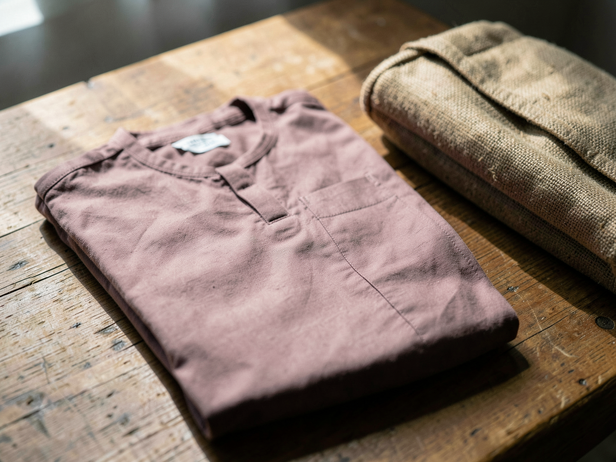
![Dusty Rose Kurta Still Life]()
Dusty Rose Kurta Still Life
Image credit : AI
My go-to for official appointments in India: a simple, elegant dusty rose kurta. Perfect for a court date outfit India.
Fabrics That Hold Up Through a Long Wait
Each of these venues involves sitting on a hard bench, standing in a slow queue, and possibly returning after lunch. Cotton, especially a medium-weight cotton poplin or a cotton-linen blend, is the fabric that handles all of this. It breathes, it does not hold creases badly after an hour of sitting, and it irons flat at home. Pure linen looks sharp for the first forty minutes and then tells on you. Polyester blends stay pressed longer but trap heat in a non-air-conditioned office. The practical answer for most of India, across most of the year, is a cotton or cotton-blend fabric in a medium weight: not sheer, not heavy, not synthetic enough to shine under fluorescent light. For the cooler months, October through February in north India, a plain cotton blazer or a wool-blend jacket over a collared shirt adds a layer of formality that works at all three venues without requiring a full suit.
One Detail That Changes More Than You Expect
Footwear and bags are where the outfit either holds together or collapses. At a court or a government office, worn-out footwear undercuts everything else. A clean pair of closed shoes, leather, synthetic leather, or a plain canvas shoe in white or black, costs less than most people assume and lasts years with basic care. At a bank, footwear matters less, but a bag that closes properly matters more: a bag that zips shut and does not require you to hold it closed with one hand while signing documents signals that you are organised. Documents carried in a clear plastic folder or a plain file cover, rather than loose in a carry bag, mark you as someone who has done this before. That impression, formed in the first few seconds, is the one that determines whether the person across the counter leans forward or leans back.