Kajal migrates for a mechanical reason, not a willpower one. Cold air tightens pores and slows sebum flow for about forty minutes after you step outside, then the skin compensates by pushing oil harder through the follicles around the orbital rim. That oil, combined with the wind physically disrupting the wax lattice in a soft kajal formula, breaks the bond between pigment and skin in the first hour. By hour two, the carbon black or iron oxide has moved into the fine lines under the eye and the moisture pocket at the inner corner. You did not apply it wrong. The formula and the surface were working against each other from the start.
What Is Actually in Kajal and Why Winter Breaks It
![Kajal and Primer Still Life]()
Kajal and Primer Still Life
Image credit : AI
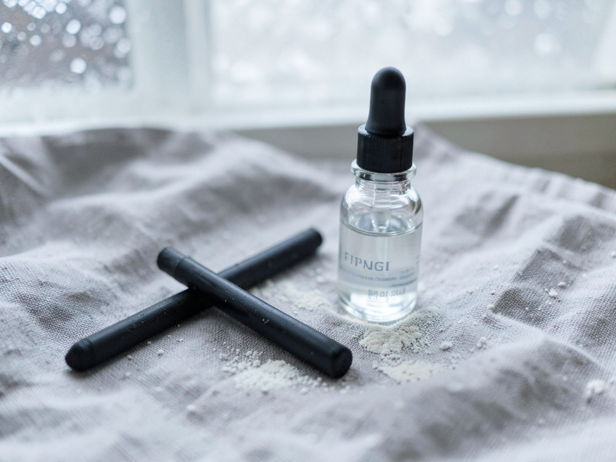
Kajal and primer oil on pale grey linen, a subtle dusting of powder. Perfect for long-lasting kajal tips India.
Most kajals sold in India are built on a wax-oil-pigment base: paraffin or carnauba wax holds the shape of the stick, castor or mineral oil carries the pigment onto the skin, and carbon black or iron oxide provides the depth of colour. In warm weather this system is reasonably stable because the wax sets quickly on contact. In cold weather the wax stays soft longer, the temperature differential between the stick and your skin narrows, and the oil fraction stays liquid and mobile for longer than it should. Wind accelerates evaporation of water from the skin surface, which concentrates the oil layer rather than dispersing it, and the pigment floats on that layer instead of bonding to the skin. The result is a formula that is chemically correct at room temperature and mechanically unstable at twelve degrees with a breeze.
The First Change: Swap the Formula, Not the Brand
The fix is not a different brand in the same format. It is a different wax ratio. Kajals labelled waterproof or smudge-proof use a higher proportion of hard waxes, often polyethylene or microcrystalline wax, alongside a reduced oil fraction. The set time on skin is faster and the bond survives both the sebum surge and the wind. Look at the ingredient list: if mineral oil or castor oil appears in the first three ingredients, the formula is oil-heavy and will migrate in cold conditions regardless of what the packaging claims. If a hard wax appears first and oil appears fourth or later, the formula is built for hold. Kohl-style kajals, which are the loosest and most pigment-rich, are the most vulnerable; they are also the most beautiful for a smoked look, so if you will not give them up, the second change becomes non-negotiable.
The Second Change: The Surface the Kajal Lands On
![Morning Makeup Still Life]()
Morning Makeup Still Life
Image credit : AI
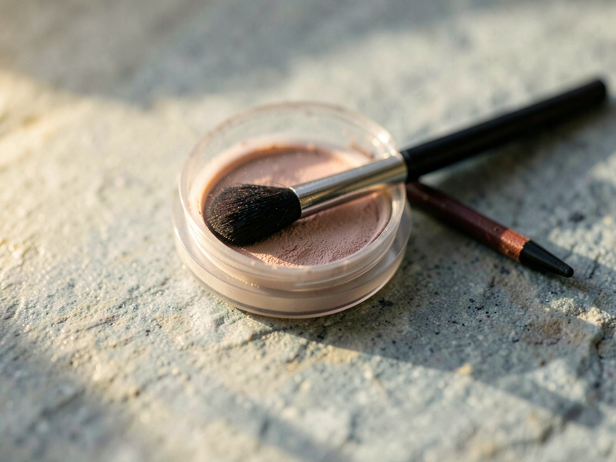
Morning makeup essentials. Discover long-lasting kajal tips for flawless application.
Kajal applied directly to bare skin in winter is applied to a surface that is already oil-compromised. The fix is a thin layer of translucent or skin-toned eyeshadow base pressed onto the undereye and waterline area before the kajal goes on. A flat eyeshadow brush works; a fingertip works almost as well if the pressure is light. The base, whether it is a dedicated primer, a matte translucent powder, or a pressed eyeshadow in a neutral that matches your skin, absorbs the surface oil, creates a slightly textured surface that the wax in the kajal can grip, and slows the migration pathway at the inner corner. The difference in wear time between primed and unprimed skin in cold wind is not marginal. Most people who try it report the line holding through a full working day outdoors. The base does not need to be expensive. A pressed translucent powder costs less than a hundred rupees at any pharmacy and does the same mechanical job as a specialist eye primer.
Application Details That Compound the Fix
Two application habits make the formula-and-surface changes work harder. First, apply kajal in thin layers rather than one heavy pass. A thick deposit of pigment has more mass to migrate; a thin layer sets faster and has less material to lose. Two light passes give more depth than one heavy one and hold significantly better. Second, set the kajal immediately after application, before it has a chance to move, with a fine brush loaded with a dark matte eyeshadow in the same tone pressed gently over the line. This locks the wax layer with a powder bond. In cold wind this step alone can add an hour of wear. The eyeshadow does not change the look; it deepens it slightly and seals it. These two habits are particularly useful at the waterline, where primer cannot go and the formula change carries most of the work.