The lehenga has been in its box for months, wrapped in muslin, smelling faintly of the wedding day. Pulling it out for Karva Chauth feels right, it is the most bridal thing you own, and this is the most bridal evening of the married year. But a wedding lehenga is engineered for a single day of choreographed movement: sitting for the pheras, standing for photographs, being helped in and out of a car. Karva Chauth asks you to fast through the afternoon, carry a thali, stand through the puja, and then crane your neck at the moon. The lehenga that survived your wedding may not survive the evening without a few honest adjustments.
The Blouse: Where the Real Problem Lives
The blouse is the piece most likely to cause trouble. Wedding blouses are almost always stitched to fit a specific moment, padded bra, specific posture, professional draping. Months later, your body may have shifted slightly, and more importantly, your tolerance for discomfort has dropped. A blouse that pinched at the armhole on your wedding day, when adrenaline masked everything, will be genuinely painful by the third hour of a fast.
Check the armhole first. Slide two fingers inside the seam when the blouse is on. If you cannot, the armhole is too tight for an evening of movement and will leave a red welt by the time you sit down for the puja. A tailor can drop the armhole by half a centimetre without touching the outer silhouette, this is a forty-minute alteration and costs almost nothing.
Check the hook-and-eye closure at the back. If the hooks are straining, do not wear the blouse as-is. Either let the back seam out by the amount it needs, or have a tailor add a small modesty panel of matching fabric. A blouse that pops open during the moon-sighting ritual is not a small problem.
Check the neckline lining. Heavy bridal blouses often use a stiff interfacing that sits directly against the collarbone. On the wedding day this is invisible. On a fasting evening, when you are slightly dehydrated and warm, the edge of that interfacing will feel like a wire. Ask your tailor to add a thin cotton lining strip along the neckline edge, a strip of malmal stitched flat costs almost nothing and changes the entire experience.
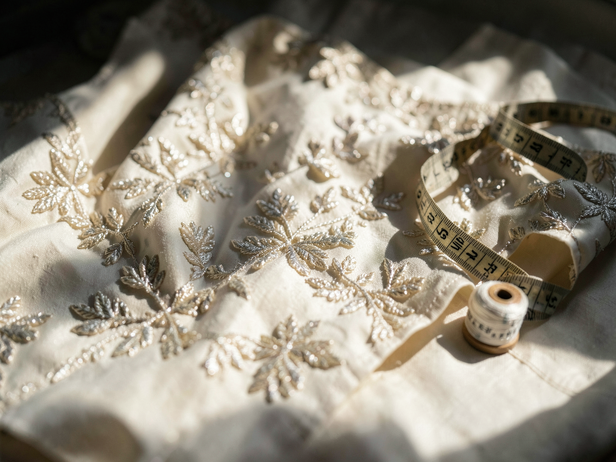
![Bridal Blouse Detail]()
Bridal Blouse Detail
Image credit : AI
I'm preparing this exquisite bridal blouse, a key element for any wedding lehenga. The intricate embroidery speaks of tradition and craftsmanship.
The Lehenga Skirt: Weight, Waistband, and the Long Evening
A full bridal lehenga skirt in silk, brocade, or heavily embroidered net can weigh between two and four kilograms. On your wedding day, you wore it for a concentrated stretch and then changed. On Karva Chauth, you may wear it for five or six hours continuously. The waistband is where you will feel this first.
Wedding lehenga waistbands are typically stitched at a precise measurement and finished with a hook or a drawstring. If yours is a fixed hook closure, have a tailor add a two-centimetre extension in matching fabric before the evening. A fasting body bloats slightly through the afternoon; a waistband that fits at six in the morning will feel tight by seven in the evening. This is not about size, it is about the way the body responds to not eating.
If the waistband sits directly on your skin, check the inner lining. Stiff net or raw dupion against the skin for hours causes a rash along the hip line, particularly where the waistband sits. A strip of soft cotton stitched to the inner waistband edge, the same malmal your tailor uses for blouse lining, takes fifteen minutes and prevents a problem that will distract you through the entire puja.
The skirt hem is worth checking for a different reason. Wedding lehengas are hemmed to a specific heel height. If you are wearing different shoes, or if you plan to remove your heels at any point during the evening, the hem will drag. A dragging hem on a heavily embroidered lehenga picks up every thread and snag on the floor. Either wear the same heel height, or have the hem taken up to work with a lower shoe.
The Dupatta: The Piece Nobody Thinks to Check
Bridal dupattas are often the heaviest single piece in the set. A zari-bordered dupatta in pure silk or georgette with heavy embroidery can weigh more than the blouse. On the wedding day it is pinned in place by a professional and stays there. On Karva Chauth, you are pinning it yourself, and it will slip.
The practical solution is to stitch two small, hidden loops of thread on the inner shoulder seam of your blouse, one on each side, and use small safety pins through these loops to anchor the dupatta. The pins sit inside the fold and are invisible from the front. The dupatta stays where you put it through the thali carrying and the moon-sighting without you having to hold it with one hand all evening.
If the dupatta has a very heavy border, drape it so the border falls at the back rather than the front. The weight distributes more evenly across the shoulder, and the front drape stays lighter and easier to manage.
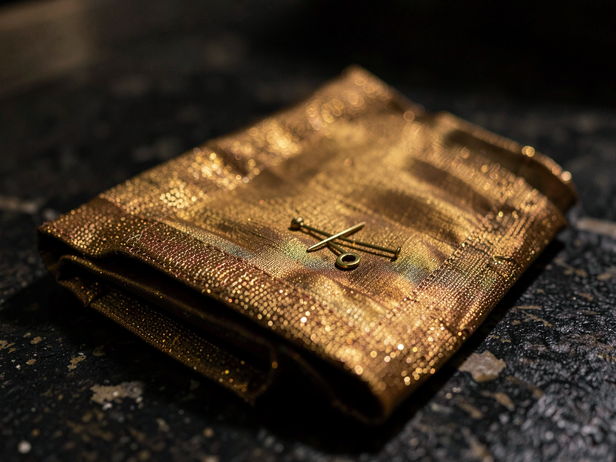
![Dupatta's Golden Embrace]()
Dupatta's Golden Embrace
Image credit : AI
My heavy zari border dupatta, perfect for wedding lehenga alterations, rests elegantly.
Fabric and Skin: What Itches and Why
The fabrics most likely to cause irritation over a long fasting evening are raw silk, stiff net, and heavily starched organza. Raw silk has a natural texture that feels luxurious in short bursts and abrasive against bare skin after two hours. Net, particularly the stiff nylon net used as a base layer in many bridal lehengas, creates friction along the inner thigh and behind the knee when you walk.
The solution for net is a full-length cotton slip worn underneath. Not a synthetic slip, cotton. A simple cotton underskirt in a neutral colour, hemmed two centimetres shorter than the lehenga, eliminates the net-on-skin contact entirely. It also adds a small amount of warmth if the evening is cool, and it keeps the lehenga from clinging if you are standing near incense smoke.
For raw silk blouses, a thin layer of cotton between the fabric and your skin at the most contact points, the inner arm and the midriff, makes a difference. Some women apply a thin layer of unscented moisturiser along the collarbone and inner arm before putting the blouse on; this reduces friction without affecting the fabric.
What Is Worth Altering and What Is Not
Alterations worth doing before Karva Chauth: loosening the armhole, adding a waistband extension, adding cotton lining strips to the neckline and waistband, adjusting the hem for a different heel height, stitching dupatta anchor loops. All of these are reversible, take less than a day with a competent tailor, and cost between a few hundred and a few thousand rupees depending on the work.
Alterations not worth doing for a single evening: changing the neckline shape, resizing the blouse significantly, adding sleeves, or altering the skirt silhouette. These change the garment permanently and are unlikely to improve the Karva Chauth experience enough to justify the risk to the original stitching.
One thing worth doing that is not an alteration: take the lehenga to a dry cleaner who handles bridal wear before the evening, not after. A lehenga that has been in storage absorbs the smell of the box and the mustiness of the muslin. Wearing it freshly cleaned means you are not spending the evening aware of that smell. After Karva Chauth, clean it again before returning it to storage, incense smoke and perfume set into embroidery over time and are harder to remove the longer they sit.
The wedding lehenga was made to mark a beginning. Wearing it through the first Karva Chauth is its own kind of continuation, but the evening goes better when the garment is working with you rather than against you.