A four-function wedding invitation is not four separate problems. It is one problem with four time slots, and the solution lives in how fabric moves across contexts rather than in how many bags you can carry on the train.
Start with two anchor pieces, not four looks
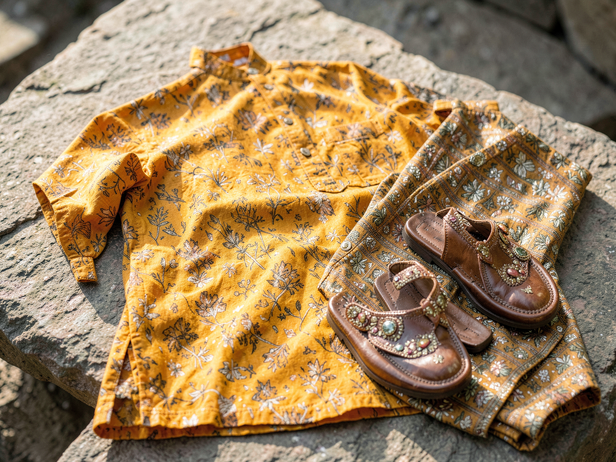
![Saffron & Mustard Ethnic Ensemble]()
Saffron & Mustard Ethnic Ensemble
Image credit : AI
Elevate your wedding guest outfit ideas India with this vibrant saffron and mustard ensemble. Perfect for any function.
Pick one piece that reads formal and one that reads relaxed. A silk chanderi kurta in a deep jewel tone, bottle green, burgundy, ink blue, can anchor both the mehendi and the sangeet if you change what sits beneath it. Pair it with mirror-work palazzo pants for the mehendi and swap to a raw silk lehenga skirt in a complementary shade for the sangeet. The kurta is the same. The silhouette reads different. This is not a trick; it is how tailored dressing has always worked. The second anchor is a structured blouse, a sleeveless brocade or a full-sleeve tissue silk, that can move between the wedding ceremony and the reception when you change the drape of the dupatta or switch the bottom entirely.
The mehendi and haldi: where natural fabrics earn their place
These are the two functions where you are closest to the ground, the flowers, and the turmeric. Cotton and linen do not panic. A hand-block-printed cotton kurta in saffron, mustard, or terracotta is the right choice here, not because it is cheap to ruin, but because the weight and drape suit an outdoor afternoon. Avoid chiffon and organza at haldi; they cling when damp and the colour transfer is permanent. A cotton kurta with a contrast border, worn with simple kolhapuri sandals and a single oxidised silver necklace, reads considered rather than casual. Save the embellishment for later. The mehendi function is where restraint pays forward: you have not spent your statement piece yet.
The wedding ceremony: drape does more than embroidery
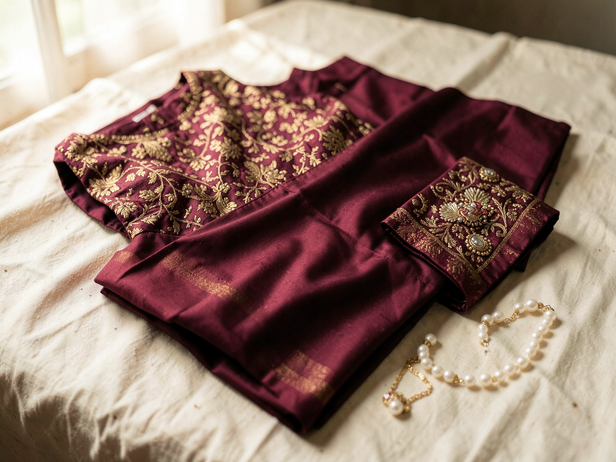
![Burgundy Silk Saree Ensemble]()
Burgundy Silk Saree Ensemble
Image credit : AI
Elegant Banarasi silk for your wedding guest outfit ideas India. Rich hues and timeless pearls.
The ceremony is where most guests reach for the heaviest lehenga they own, which is fine if you are in the wedding party. If you are a guest, a six-yard saree in Banarasi silk or a Kanjivaram weave does more work than a lehenga at a fraction of the packing weight. The pallu is the variable. A pallu pinned at the shoulder reads traditional. The same saree with the pallu draped loose over one arm and a structured sleeveless blouse reads contemporary. One saree, two silhouettes. If you are not comfortable in a saree for a full ceremony, a sharara set in heavy georgette with a short kurta reads equally formal, and the sharara pants fold flat, which a lehenga skirt does not.
The reception: where the blouse and the bag carry the weight
The reception is usually indoors, usually lit, and usually the function where photographs matter most. This is where the structured blouse from your anchor pair earns its cost. A brocade blouse paired with a draped skirt in a different texture, raw silk, velvet, tissue, reads as a complete outfit even though the skirt may be something you already own. The change that reads as a new look is almost never the skirt; it is the neckline, the sleeve, and the jewellery. A deep-back blouse with a long necklace is a different silhouette from a high-neck blouse with chandelier earrings. Both can sit on the same skirt. Carry a small embellished clutch rather than a tote, the bag signals the register of the event more immediately than most people expect.
The one accessory rule that makes the whole system work
Each function should have one accessory that does not repeat. Not four sets of jewellery, one piece per function that reads as the defining element of that look. Oxidised silver at the mehendi. Polki or kundan at the ceremony. Pearls or a single statement earring at the reception. The sangeet is where you can go bolder, a layered necklace, a maang tikka, a statement bangle stack, because the lighting and the energy support it. When the clothes are doing the heavy lifting across functions, the accessories become the signal that something has shifted. The guest who changes one piece reads as someone who dressed intentionally. The guest who changes everything reads as someone who packed too much.