A wedding day that holds both a haldi and an evening reception is not two occasions stitched together. It is two completely different physical environments, two different relationships with your own body, and two different audiences reading you at the same time. Getting dressed for one without accounting for the other is where most brides lose the thread.
The Haldi Outfit: Dress for What Will Happen to It
![Haldi Outfit Flat Lay]()
Haldi Outfit Flat Lay
Image credit : AI
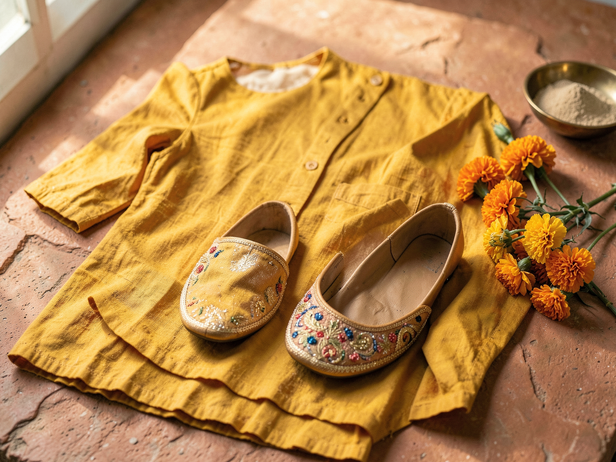
A vibrant flat lay featuring a mustard kurta and juttis, perfect for your haldi ceremony outfit. #haldi
The turmeric paste used in a haldi ceremony is a suspension of curcumin in oil, and curcumin binds to natural fibres, cotton, silk, linen, with a tenacity that no pre-soak removes. This is not a stain risk. It is a dye. Any fabric you wear to a haldi should be treated as a fabric you are willing to retire afterward, or one that was already yellow to begin with.
The traditional choice of yellow or mustard cotton exists for exactly this reason, not as decoration, but as camouflage. A pale yellow cotton kurta or a simple organza lehenga in turmeric tones absorbs the ceremony without showing the evidence. Tissue silk in the same palette works if you want structure. What does not work: ivory, cream, white, blush, or any pastel that reads as light. These fabrics will show every handprint.
The silhouette should allow you to sit on the floor, to have your arms raised, and to be touched repeatedly by multiple people. A fitted blouse with a deep back neckline and a full skirt in breathable cotton or raw silk gives you that range. Avoid heavy embroidery at the hem or the blouse back, it catches paste and becomes difficult to clean even if the colour is forgiving.
Skin and Makeup at Haldi: The Case for Almost Nothing
Turmeric paste on a full face of foundation does one thing: it removes the foundation and leaves a yellow cast on skin that was never prepped for it. A haldi is not a makeup moment. It is a skin moment.
A light SPF moisturiser, a tinted lip balm, and groomed brows are enough. If you want eye definition, a smudge-proof kohl pencil on the waterline survives better than shadow. Save the full bridal makeup for after the ceremony, when your skin has been wiped clean and you have time to reset.
For skin, apply a thin layer of coconut oil or raw almond oil to your face, neck, arms, and hands before the ceremony begins. Oil creates a barrier between the curcumin and your skin, making the post-haldi cleanup faster and more complete. This is the same principle behind oil cleansing, like dissolves like. The turmeric slides off oiled skin; it grips bare skin.
Your hair at haldi should be braided or pinned up and away from your face. A loose braid threaded with fresh marigolds does the job and photographs well. Avoid any product that creates hold, paste and gel attract turmeric and make it harder to wash out.
The Transition: What the Gap Has to Do
![Banarasi Silk Lehenga Ensemble]()
Banarasi Silk Lehenga Ensemble
Image credit : AI
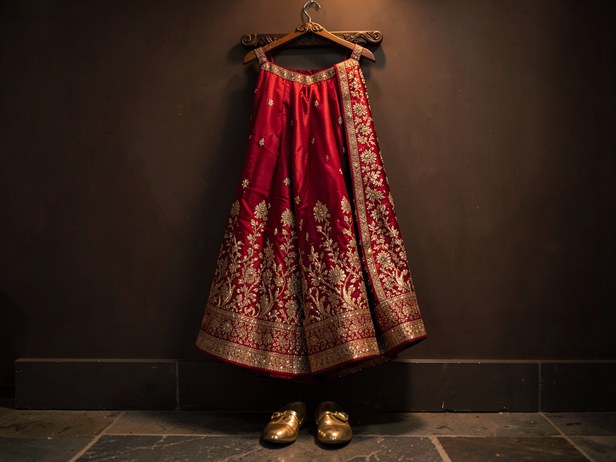
Exquisite Banarasi silk lehenga, perfect for a bridal haldi outfit. Timeless elegance for your special day.
The window between the haldi and the reception is rarely as long as it feels in the planning. In practice, you have time to shower, dry your hair, and dress, and not much more. This means the reception look cannot depend on a complicated base that takes forty minutes to build.
A skilled makeup artist who knows the schedule will start with a skin-prep routine that accounts for the post-turmeric flush. Turmeric leaves a warmth on the skin that actually works in your favour under evening lighting, it reads as a glow rather than a cast if the foundation is matched to it rather than fighting it. Ask your artist to see your skin after the haldi cleanup, not before, when choosing the foundation shade for the evening.
The one thing that should not change between morning and evening: your nail colour. Choose a shade that works for both, a deep terracotta, a burnt gold, or a classic red sits equally well against a haldi-yellow cotton and an evening lehenga. Changing nail colour mid-day is a pressure you do not need.
The Reception Outfit: What the Fabric Has to Carry
An evening reception runs for several hours under artificial light, involves sustained standing and greeting, and is photographed from every angle. The fabric and construction have to hold up to all three.
Heavy Banarasi silk, tissue with zari work, or a georgette lehenga with a structured blouse are the workhorses of this moment. These fabrics photograph with depth under warm indoor lighting, the zari catches the light without reading as flat, the georgette moves without losing its shape. A velvet blouse in a contrasting colour adds texture that reads well in photographs taken from a distance.
The reception silhouette can be more fitted and more structured than the haldi look. A sharply tailored blouse, a lehenga with a longer train, or a saree draped in a style that requires a petticoat with some stiffness, all of these work because you are no longer sitting on the floor or being touched by a crowd. You are standing, greeting, and being seen from across a room.
What can stay from the morning: your base jewellery, if it is gold. Heavy gold sets, polki, kundan, or temple jewellery, work at both ceremonies without looking out of place. The haldi is already a gold-toned environment. Adding the same set to an evening lehenga in a jewel tone or a deep red simply grounds the look. You are not required to change your entire jewellery set for the reception unless you want to.
The One Thing Most Brides Overlook
Footwear. The haldi happens on a surface that will be slippery, wet turmeric paste on a floor, grass, or a decorated platform. Heels at a haldi are a fall risk. Flat juttis or embroidered flats in a colour that matches the outfit are the right call, and they keep your feet clean enough to switch to heels for the evening without a full second clean-up.
For the reception, the heel height you choose should be the heel height you have already worn for at least two hours in the week before. A wedding day is not the day to break in new footwear. If the lehenga was hemmed for a specific heel, wear that heel to the fitting and to at least one rehearsal walk. A hem that drags is a trip hazard and a photograph problem.
The distance between a haldi and a reception is not a distance in style. It is a distance in function. One outfit is built to be ruined gracefully; the other is built to last the night. Once that distinction is clear, every choice, fabric, colour, makeup, jewellery, shoes, falls into the right column on its own.