The line outside the Gurdwara on Gurpurab stretches past the langar hall and onto the street. Families arrive in their best, volunteers hand out squares of cloth at the gate, and somewhere near the entrance a row of shoes accumulates into a small mountain. For anyone stepping inside for the first time, or the first time in a long while, three physical acts mark the crossing: the head goes covered, the feet go bare, the body goes to the floor. None of these is arbitrary, and understanding what each one actually does to how you dress and carry yourself makes the whole experience land differently.
Covering the Head: What to Wear and How to Tie It
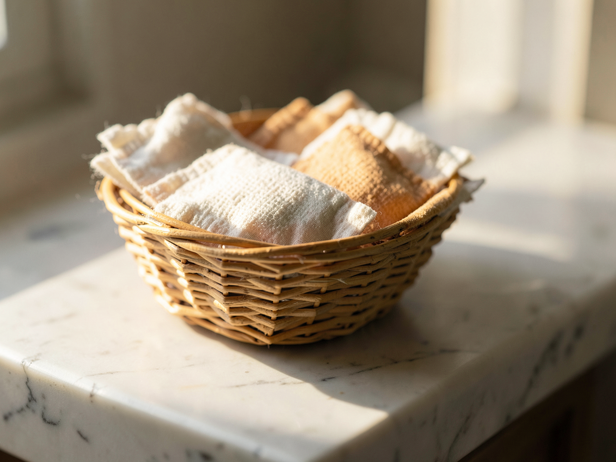
The Gurdwara keeps a basket of cotton squares near the entrance for anyone who arrives without a covering. Taking one is not a compromise, it is the same gesture a Sikh makes every morning. The head is covered in the presence of the Guru Granth Sahib as an act of humility before the scripture, not as a concession to modesty norms. That distinction matters when you are choosing what to bring.
A dupatta works well if it is long enough to stay put without pinning. A square scarf of at least 60 centimetres on each side can be folded diagonally and tied at the nape. Cotton and linen hold a knot without slipping; silk moves. If you are wearing a saree, the pallu drawn over the head is entirely appropriate. Men can use a cotton handkerchief folded into a triangle and knotted, or a small square of cotton tied the same way. The covering does not need to be white, orange, or any particular colour. It needs to stay on and cover the crown.
One practical note: if your hair is in a high bun or a topknot, a single square of cloth will not stay centred without a pin. Either carry a bobby pin or lower the bun before you tie. The cloth sliding off mid-parikrama is more disruptive than taking a moment outside to adjust.
![Soft Headscarves on Marble]()
Soft Headscarves on Marble
Image credit : AI
Preparing for a Gurdwara visit, these soft headscarves offer a respectful way to cover your head.
Removing the Shoes: What This Means for Your Outfit Choice
Shoes come off before you step onto the parikarma, the marble corridor that surrounds the darbar sahib. On Gurpurab the marble can be cold in the early morning and warm by midday, and the floor is shared by everyone from infants to elders. The act of removing footwear levels everyone who enters, no one walks in on a platform that the person beside them does not have.
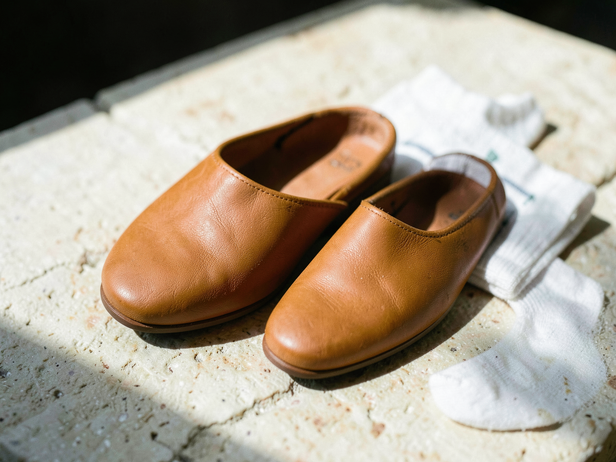
This is worth thinking about when you dress. Footwear that takes time to remove, ankle boots with multiple buckles, lace-up shoes with tight eyelets, creates a bottleneck at the entrance and a small embarrassment when you are fumbling while others wait. Slip-on juttis, kolhapuris, sandals with a single strap, or clean socks under open shoes all make the transition smooth. On a day when thousands are moving through, smooth matters.
The floor will be cleaned but it will also be walked on by thousands of bare feet. If you are particular about this, clean cotton socks are acceptable in most Gurdwaras. Check at the entrance, some ask for bare feet in the darbar sahib itself, others are fine with socks throughout.
Sitting on the Floor: Dressing for It Before You Arrive
There are no chairs in the darbar sahib. The sangat sits on the floor together, and this is not incidental, it is the point. Sitting at the same level as every other person in the room, regardless of what you earn or where you live, is one of the oldest expressions of the Sikh principle of equality. The Guru Granth Sahib is the only presence elevated in the room.
This changes what is comfortable to wear. Fitted trousers in a stiff fabric, pencil skirts, and very narrow salwar cuts make sitting cross-legged for any length of time genuinely uncomfortable and sometimes impossible without a visible struggle. Churidar with a long kurta, a salwar with a generous cut, a dhoti-style drape, or a full-length skirt with enough fabric to tuck under all work well. If you are wearing a saree, a six-yard drape with a petticoat that sits at the natural waist rather than the hip gives you enough fabric to arrange yourself on the floor without the pleats pulling.
Men in trousers will find that straight-cut or relaxed fits are far more comfortable than slim or tapered ones for floor seating. A kurta over the trousers is standard and practical.
![Juttis and Socks]()
Juttis and Socks
Image credit : AI
Preparing for a Gurdwara visit, I lay out my juttis and socks, mindful of Gurdwara dress code.
Colour and Fabric: What the Space Actually Asks For
The Gurdwara does not have a colour code. White is common because it is associated with the Khalsa and with the langar volunteers, but it is a choice, not a requirement. Sikh scripture does not prescribe mourning colours or auspicious colours in the way some other traditions do. What the space does ask for, implicitly, is a kind of care, the sense that you dressed with intention for this visit.
Cotton and linen breathe in a crowded darbar sahib. Synthetic fabrics that trap heat become uncomfortable quickly when you are sitting close to others on the floor. Heavy embroidery and stiff brocade are not wrong, but they can make floor-sitting harder and langar service, if you choose to help, impractical. A clean, pressed fabric in any colour reads as respect. A crumpled or very casual outfit reads as inattention, not because the Gurdwara enforces a dress code, but because you will feel it yourself once you are inside.
The synthesis: covering the head, removing the shoes, and sitting on the floor are not three separate rules to comply with. They are one continuous gesture, a deliberate setting aside of the markers that separate people outside. Dressing for a Gurdwara visit on Gurpurab means choosing clothes that make each of those three acts easy, so the gesture can be whole rather than interrupted by a scarf that won't stay or trousers that won't bend.