The bumps appear two days after shaving, not during it, which is why most men blame the wrong thing. They switch razors, try a new foam, go from five blades to three, and the bumps come back. The razor is rarely the problem. The sequence is.
Why Indian Men's Neck Hair Behaves Differently
Hair follicles on the neck grow at a sharper angle to the skin than follicles on the cheek. In men with coarser or tightly coiled hair, common across South Indian, Marathi, and Bengali skin types, this angle is more pronounced. When a blade cuts the hair below the skin's surface, the sharp tip curls as it regrows and re-enters the follicle wall or the surrounding skin. The result is pseudofolliculitis barbae: an inflammatory response that looks like a cluster of red, raised bumps, sometimes with a trapped hair visible underneath. It is not acne. Treating it with acne products that dry the skin makes it worse by tightening the follicle opening.
![Badger Brush & Cream]()
Badger Brush & Cream
Image credit : AI
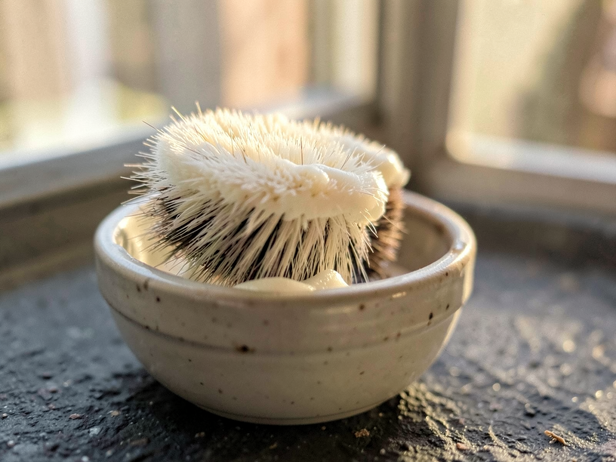
My badger brush, loaded with cream, sits on a ceramic bowl. Preparing for a smooth shave, aiming to prevent razor bumps.
The Preparation Step Most Men Skip
Dry shaving and shaving immediately after waking are the two fastest ways to guarantee bumps. Hair shaft diameter drops measurably after two to three minutes of warm water contact, the shaft swells and softens, making it easier to cut cleanly without the blade dragging. Shave at the end of a warm shower, not before it. If you shave at the sink, hold a warm, wet towel against the neck for ninety seconds first. Apply a shaving cream or gel with a brush rather than your hand: the brush lifts each hair slightly away from the skin so the blade meets it at a better angle. A cream with glycerin or aloe vera base keeps the surface slick longer than foam that dries within thirty seconds of application.
Direction Is the Variable That Changes Everything
Shaving against the grain on the neck gives a closer cut and a higher chance of ingrown hairs. The rule for bump-prone skin is to map the grain first. Run a finger along the neck in different directions, the direction that feels smooth is with the grain, the direction that catches is against it. On most Indian men, the grain on the neck runs downward from the jaw toward the collarbone, but it shifts at the nape, often running sideways. Shave with the grain on the first pass. If a second pass is needed, go across the grain, never against it. A single with-grain pass leaves more stubble than two against-grain passes but produces a fraction of the inflammation.
![Classic Shaving Ritual]()
Classic Shaving Ritual
Image credit : AI
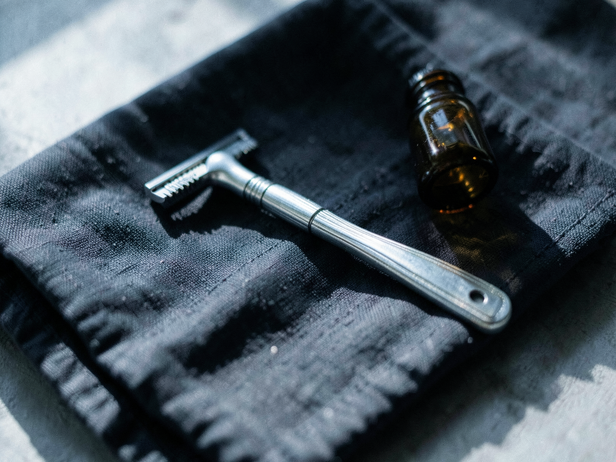
My ritual for smooth skin, preventing ingrown hair neck shaving.
The Blade Angle and Pressure Problem
A cartridge razor with three or more blades is designed to pull the hair up with the leading blade and cut it below skin level with the trailing blades. This mechanism is efficient on flat cheek skin and damaging on the angled, curved neck. A double-edge safety razor held at a consistent twenty to thirty degree angle to the skin cuts at the surface rather than below it. It requires more attention to angle but removes the lifting-and-cutting mechanism that drives ingrown hairs. Whatever razor you use, let the weight of the handle do the work. Pressing harder does not cut closer, it scrapes the top layer of skin off with the hair, removing the barrier that keeps bacteria out of the follicle.
What to Apply After, and When
The post-shave window is where the cycle either breaks or restarts. Alcohol-based aftershave closes the pores quickly but strips the lipid layer the skin uses to regulate the follicle opening. On bump-prone skin, use a fragrance-free, alcohol-free toner with witch hazel or niacinamide instead, both reduce redness without drying. Apply a light, non-comedogenic moisturiser while the skin is still slightly damp. Two or three times a week on non-shaving days, use a chemical exfoliant with salicylic acid at a concentration of one to two percent along the neckline. Salicylic acid is oil-soluble, which means it clears the material inside the follicle rather than just buffing the surface. This keeps the exit path clear for regrowing hair before it has the chance to curl back in. Mechanical scrubs, walnut shell, apricot kernel, scratch the surface without reaching the follicle and should be avoided on active bumps entirely.