The gold on a piece of jewellery can look identical across all three finishes on day one. By month six, the differences are visible, and by year two, they tell completely different stories depending on what you bought and how you wore it.
Gold Plated: The Thinnest Layer, the Shortest Life
Gold plated jewellery is made by depositing a thin layer of gold onto a base metal, usually brass, copper, or zinc alloy, through an electroplating process. The gold layer is measured in microns, and industry standard allows anything above 0.5 microns to carry the gold plated label. Most mass-market pieces sit between 0.5 and 1 micron.
At that thickness, the gold is genuinely thin. Friction from daily wear, contact with skin oils, sweat, perfume, and water all accelerate the breakdown of the layer. On a ring worn every day, the plating on the inner band can begin to wear through in as little as three to six months. Earrings and pendants, which face less friction, may hold for a year or more.
The base metal matters here too. When the plating wears through on a brass or copper base, the jewellery can leave green marks on skin, a reaction between the copper and sweat rather than any toxicity. It is cosmetically unpleasant and a reliable sign the gold layer is gone.
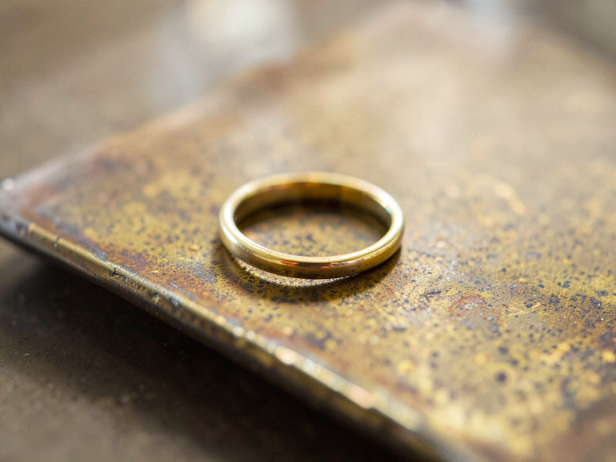
![Gleaming Gold on Aged Brass]()
Gleaming Gold on Aged Brass
Image credit : AI
Exploring the durability of gold plating versus rolled gold. This image showcases the beauty of a gold-toned ring.
Rolled Gold: A Mechanical Bond, Not a Coating
Rolled gold, sometimes called gold filled in American markets, is made through a fundamentally different process. A layer of solid gold alloy is heat-bonded and mechanically pressed onto a core of base metal, typically brass. The gold content in a rolled gold piece must be at least 5 percent of the item's total weight, with a minimum layer thickness of around 10 microns.
That difference in thickness is significant. Ten microns versus one micron means the gold layer in a rolled gold piece is roughly ten times as thick as a standard gold plated piece. The mechanical bond also makes it more durable than electroplating, which is a surface deposit rather than a fused layer.
In practical terms, a well-made rolled gold piece worn with reasonable care, kept away from harsh chemicals, removed before swimming, stored properly, can hold its finish for ten to thirty years. It is not solid gold, and it will eventually wear, but the timeline is a different category entirely from plated jewellery. Rolled gold is also generally safe for sensitive skin, since the thick gold layer prevents the base metal from reaching the surface during normal wear.
Vermeil: Gold Over Silver, With Specific Rules
Vermeil (pronounced ver-may) is a specific category: gold plated over sterling silver, with a minimum gold thickness of 2.5 microns. The sterling silver base, at least 92.5 percent pure silver, is what separates vermeil from standard gold plating over brass or copper.
The silver base gives vermeil two practical advantages. First, sterling silver is itself a precious metal, so even if the gold layer wears away, you are left with a silver piece rather than a discoloured brass one. Second, silver is hypoallergenic for most people, making vermeil a safer choice for sensitive skin than plated pieces on base metal.
The gold layer at 2.5 microns is thicker than standard plating but nowhere near rolled gold. With daily wear, vermeil jewellery typically lasts one to three years before the finish shows visible wear at high-friction points. Pieces worn occasionally can look good for much longer. Re-plating vermeil is straightforward and relatively affordable, since the silver base is worth keeping.
![Clear Liquids Beside Gold Chain]()
Clear Liquids Beside Gold Chain
Image credit : AI
Exploring the subtle differences in gold finishes, like how long gold plating lasts.
What Actually Wears the Finish Away
The enemies of any gold finish are the same regardless of which type you own: friction, moisture, acids, and chemicals. Perfume and hairspray are particularly aggressive because they contain alcohol and compounds that break down the gold layer from the surface. Chlorine in swimming pools attacks the base metals underneath, which accelerates lifting and peeling. Sweat, which is mildly acidic, does the same over time.
The practical rules follow from this. Put jewellery on last, after perfume and products have dried. Remove it before washing hands, swimming, or exercising. Store pieces separately so they do not scratch each other. Wipe them with a soft cloth after wearing to remove skin oils. None of this is complicated, but the difference it makes to longevity is measurable, particularly for gold plated pieces where the margin for error in the layer is already thin.
Which One Is Worth Buying
The answer depends on how you wear jewellery and what you expect from it. Gold plated pieces are the right choice when you want a trend finish for occasional wear, or when you are buying something you expect to replace in a season. The low price reflects the low lifespan, and that is a fair trade if you go in knowing it.
Vermeil sits in the middle: a meaningful step up in durability and skin safety, worth the extra cost if you wear a piece regularly and want it to last a few years. The silver base also means it retains some intrinsic value even after the gold wears.
Rolled gold is the closest thing to solid gold performance at a fraction of the price. If you are buying a piece you want to wear daily for years, a chain, a bangle, a classic hoop, rolled gold is the finish that will actually survive that use. The layer is thick enough to behave like solid gold in everyday conditions, even if it is not.
The finish you choose is less about aesthetics than about honesty with yourself about how you actually wear jewellery. A vermeil ring worn every day will outlast a gold plated ring worn carefully, but rolled gold will outlast both.