A Kundan necklace pulled out for a wedding and a string of pearls worn to a puja carry the same risk: the wrong cloth, the wrong liquid, or one minute too long in water, and the setting shifts. These three materials, Kundan, pearls, silver, sit in most Indian jewellery boxes together, but they have almost nothing in common chemically, and cleaning one the way you clean another is how heirlooms get damaged.
Cleaning Kundan: Why Water Is the Enemy
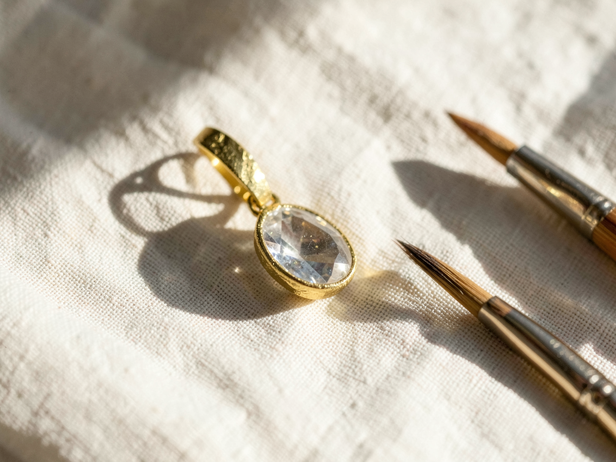
Kundan jewellery is set by pressing thin sheets of 24-karat gold foil (the kundan) around uncut gemstones or glass into a lac base. The lac is the problem. It is a resin, not metal, and it softens when it gets wet and contracts when it dries. Even a brief soak loosens the foil and shifts the stone. Never submerge Kundan. Never use an ultrasonic cleaner.
The right method: take a soft, dry artist's brush, the kind used for watercolour, not a stiff bristle brush, and sweep dust out from between settings in one direction. For surface grime that has built up around the foil edge, dampen the very tip of a cotton bud with plain water, press it against a tissue first to remove almost all the moisture, and touch only the metal surface, not the lac base underneath. Work section by section. Let each section dry completely before moving to the next. Never use soap, alcohol, or any commercial jewellery cleaner on Kundan.
Store Kundan pieces individually in a soft cloth pouch. Stacking them scratches the foil and the stones shift against each other.
![Kundan Pendant on Linen]()
Kundan Pendant on Linen
Image credit : AI
I'm showcasing the delicate beauty of this Kundan pendant, highlighting its intricate details and the importance of proper jewellery care. Learn how to clean Kundan jewellery at home.
Cleaning Pearls: Acid Is the Threat
A pearl's surface is aragonite, calcium carbonate, laid down by the mollustic in thin layers called nacre. Nacre dissolves in acid. Vinegar, lemon juice, most commercial jewellery cleaners, and even sweat are acidic enough to dull the surface over time. The pearl industry describes this as losing its orient, the layered iridescence that gives a good pearl its depth.
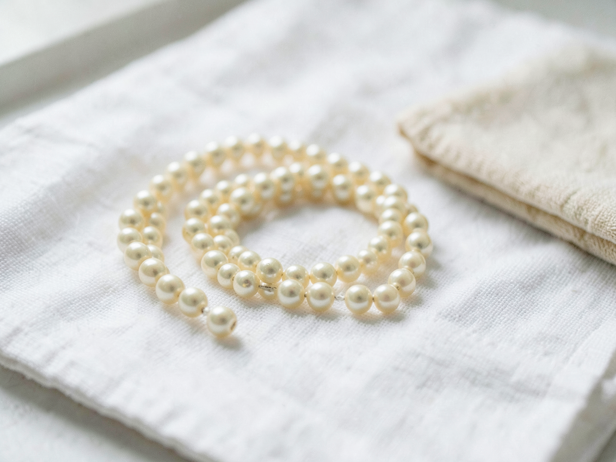
The right method: after every wear, wipe each pearl with a soft, slightly damp chamois or microfibre cloth. This removes sweat, perfume residue, and skin oils before they have time to work into the nacre. Perfume and hairspray should always go on before the pearls come out, not after, the alcohol in both attacks the surface.
For a deeper clean, dampen a soft cloth with plain water only, wipe each pearl individually, and lay the strand flat on a dry towel. Do not hang it to dry, the silk or nylon thread absorbs water and stretches, weakening the knots between each pearl. A strand worn regularly should be restrung every one to two years regardless of whether it looks worn, because the thread degrades from the inside.
Never use an ultrasonic cleaner, steam, or any chemical on pearls.
Cleaning Silver: Tarnish Is Oxidation, Not Dirt
Silver tarnishes because it reacts with sulphur compounds in the air, hydrogen sulphide from cooking, pollution, and even some fabrics, forming silver sulphide on the surface. The black layer is not grime and will not lift with soap and water alone. It needs a mild abrasive or a chemical reduction.
The most reliable home method for plain silver: mix a small amount of white toothpaste, plain white, not gel, not whitening formula with microbeads, with water to a thin paste. Apply with a soft cloth or a soft toothbrush, rub gently in a straight line rather than circular motions, rinse thoroughly under running water, and dry immediately with a soft cloth. Circular polishing creates fine scratches that catch light and look dull over time; straight strokes follow the metal's grain.
For silver with stones set in it, avoid toothpaste entirely, the mild abrasive scratches softer stones like turquoise, coral, and onyx, which are common in Indian silver jewellery. Use a paste of baking soda and water applied only to the silver, keeping it away from the stone, or simply wipe with a silver polishing cloth.
The aluminium foil method works for heavily tarnished plain silver with no stones: line a bowl with aluminium foil, add hot water and a tablespoon of baking soda, place the silver so it touches the foil, and leave for two to three minutes. The electrochemical reaction transfers the sulphide from the silver back to the foil. Rinse and dry thoroughly. Do not use this on silver with pearls, Kundan, lac work, enamel, or glued settings, the heat and chemical activity will damage all of them.
![Pearls and Chamois Cloth]()
Pearls and Chamois Cloth
Image credit : AI
Gentle care for your precious pearls. Learn how to clean pearl jewellery at home.
The Shared Rules Across All Three
Whatever the material, three habits protect every piece in the box. Dry storage matters more than most people realise, a small silica gel packet in the jewellery box slows tarnish on silver and prevents moisture from reaching lac bases. Wearing order matters too: jewellery goes on last, after perfume, moisturiser, and hairspray have dried. And after wearing, a quick wipe before the piece goes back into storage removes the sweat and oils that do the slow damage over weeks.
The setting is usually the first thing to fail, not the stone or the metal. A stone that has shifted slightly looks like a design flaw until it falls out entirely. Checking settings every few months, pressing gently against each stone to feel for movement, catches the problem before it becomes a loss.