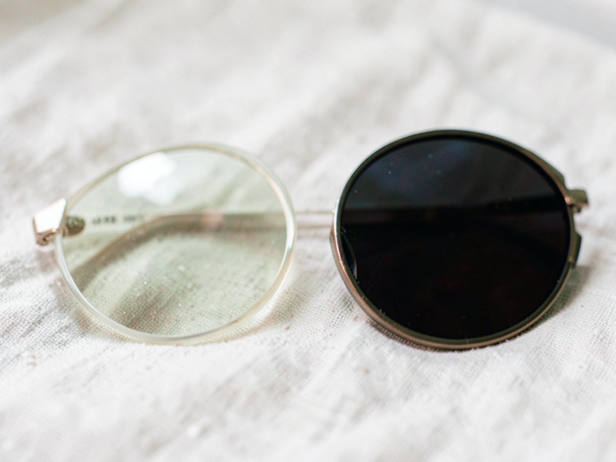
A dark lens does not block ultraviolet light. A light lens can block all of it. This single fact undoes most of what people believe about sunglasses, and it matters because the eye absorbs UV silently, no squinting, no warning, no immediate signal that anything is wrong.
What UV400 Actually Certifies
UV400 is the only label worth trusting as a baseline. It means the lens blocks wavelengths up to 400 nanometres, covering both UVA (315 to 400 nm) and UVB (280 to 315 nm) in full. The number is not a brand claim; it maps to an international optical standard, ISO 12312-1, which Indian Bureau of Standards has adopted. A pair carrying UV400 has passed a spectrophotometer test on the lens material itself, not on the coating, not on the frame, not on the tint.
What the sticker does not tell you: whether the lens is optically distorted, whether the frame leaves your peripheral vision exposed, whether the coating will hold after six months of monsoon humidity, or whether the pair sitting next to it for a third of the price passed the same test. In India, the BIS mark IS 14139 on prescription eyewear indicates compliance with domestic optical standards, but non-prescription fashion sunglasses often carry neither BIS nor a verified UV400 claim, only a printed sticker applied by the importer.
![Dual Sunglass Lens Study]()
Dual Sunglass Lens Study
Image credit : AI
Exploring the subtle differences in sunglass tints and their ability to block UV rays. Essential for eye safety.
Why Tint Colour and Darkness Are Irrelevant to UV
UV blocking is a property of the lens material or a chemical treatment applied to it, not of the dye. A clear polycarbonate lens is inherently UV-blocking because polycarbonate absorbs UV at the molecular level. A dark brown glass lens with no UV treatment transmits UV freely while making your pupil dilate, which is worse than wearing nothing, because dilation lets more radiation reach the retina.
Grey, brown, green, amber, rose: none of these tint colours carries a UV claim on its own. Polarisation, similarly, reduces glare from reflected horizontal light but has no relationship to UV protection. A polarised lens without a UV400 certification is a glare filter, not eye protection. The two properties are independent and must both be verified separately if both matter to you.
Three Checks You Can Do Without a Lab
You cannot test UV transmission at home with any accuracy, but you can screen out obvious failures before buying.
Hold the lens over a phone screen displaying a white page and look for colour shift or distortion. Rotate the lens slowly. A quality lens shows minimal colour change and no warping of straight lines on the screen. Heavy distortion means the optical quality is poor enough that the UV claim is probably not the only thing the manufacturer cut corners on.
Check frame coverage. Hold the frames against your face in front of a mirror and look at how much of the eye socket is exposed at the sides and above the brow. Wrap-around or curved frames that sit close to the face block peripheral UV that a flat fashion frame leaves open. For outdoor use in direct sun, on a beach, at altitude, or on a cricket ground, peripheral coverage matters more than the lens tint.
Ask for the test certificate, not the sticker. A legitimate importer or optical retailer can produce a batch test report from the lens manufacturer. If the seller cannot produce documentation and the pair costs less than what a verified lens blank costs wholesale, the UV400 sticker was printed, not earned.
![Open Sunglasses on Granite]()
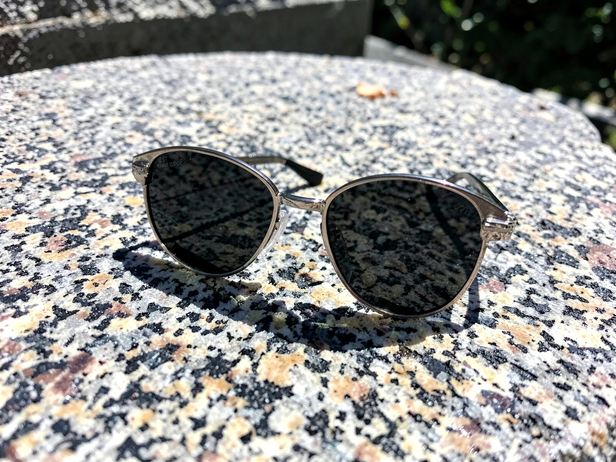
Open Sunglasses on Granite
Image credit : AI
My sunglasses offer UV400 protection, essential for eye safety outdoors. I ensure they provide the best sunglasses for UV protection.
What Prolonged UV Exposure Actually Does to the Eye
The cornea absorbs UVB most readily. Acute overexposure causes photokeratitis, essentially a sunburn of the cornea, which resolves in a day or two but is acutely painful. Chronic low-level UVA exposure over years is associated with accelerated cataract formation and with pterygium, a growth of tissue across the cornea that is common in populations with high lifetime sun exposure, including farmers, fishermen, and outdoor workers across coastal India. Neither condition announces itself early.
Children's eyes transmit more UV to the retina than adult eyes because the crystalline lens has not yet developed the same UV-absorbing capacity. If you are choosing sunglasses for a child who spends time outdoors, the UV400 certification and frame coverage matter more than they do for an adult.
Lens Materials and What They Mean for Protection
Polycarbonate and Trivex are inherently UV-blocking to 400 nm without any added coating. Standard CR-39 plastic, the most common optical plastic, blocks to roughly 350 to 380 nm by default and needs a UV-absorbing coating to reach 400 nm. Glass blocks UVB well but transmits UVA unless treated. Acrylic, used in the cheapest fashion frames, is the least reliable: its UV absorption varies by formulation and degrades with UV exposure itself, meaning a pair that passed a test at manufacture may not pass it two summers later.
If you buy polycarbonate or Trivex lenses from a named optical manufacturer, Essilor, Zeiss, Hoya, or Lenstec among those with Indian distribution, the UV400 claim is structural and does not depend on a coating that can chip or fade. If you buy fashion sunglasses from a street vendor or an unverified online listing, the material is almost certainly acrylic and the sticker is almost certainly decorative.
The gap between a verified pair and an unverified one is not always the gap between expensive and cheap. Several mid-range Indian optical chains carry polycarbonate UV400 frames at prices comparable to what a mall kiosk charges for acrylic. The variable is not cost, it is whether the retailer can show you the paperwork.