That reflex to reapply every hour is not loyalty to a product, it is the product doing exactly what keeps you buying it. Lip skin is thinner than facial skin, has no sebaceous glands of its own, and loses moisture faster than almost any other surface on the body. When a balm sits on top without helping the barrier rebuild, the moment it wears off the lips feel drier than before application. Over weeks, that gap widens.
The Ingredients That Create the Loop
Menthol and camphor are the clearest culprits. Both produce a cooling sensation by triggering cold receptors in the skin, TRPM8 channels, not by actually lowering temperature or adding moisture. The sensation fades, lips feel warm and dry by contrast, and the hand goes back to the pocket. Phenol, used in some older medicated balms, works similarly: a mild anaesthetic that numbs the surface and makes dryness less perceptible while the balm is on, more perceptible when it is off. Fragrances and flavours, vanilla, strawberry, mint, are among the most common causes of contact dermatitis on lips. The irritation is low-grade and chronic: a faint tingling that reads as dryness rather than inflammation. Salicylic acid, occasionally added to slough off flaking, removes dead cells faster than the barrier can replace them in people who already have compromised lip skin. It earns its place in a weekly treatment; it has no business in a daily balm.
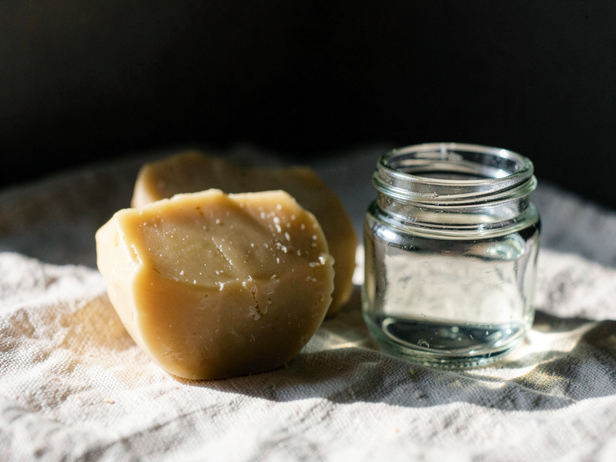
![Beeswax and Glycerin Study]()
Beeswax and Glycerin Study
Image credit : AI
Exploring the natural textures of beeswax and glycerin, essential for soothing dry lips. Why do lips feel dry after lip balm?
What the Barrier Actually Needs
Lip skin needs two things working together: something that draws water to the surface and something that holds it there. Humectants, glycerin, hyaluronic acid, aloe vera, pull moisture from the air and from deeper skin layers toward the surface. On their own, in a dry climate or in air conditioning, they can pull moisture out rather than in, which is why they need an occlusive layer on top. Petrolatum is the most effective occlusive available in cosmetics. The American Academy of Dermatology lists it among the most reliable barrier ingredients, and it has a long safety record. Beeswax and carnauba wax provide structure and mild occlusion. Shea butter and castor oil add both occlusion and a degree of emolliency, they soften the surface while sealing it. A balm built from this combination does not feel as immediately satisfying as one with menthol, because it is not triggering a nerve response. It is doing the slower, less dramatic work of letting the barrier function.
How to Read a Label Before You Buy
The ingredient list on a lip product runs in descending order of concentration. If menthol, camphor, or any flavour appears in the first five ingredients, the product is built around sensation rather than repair. A reliable balm leads with petrolatum, shea butter, or a wax, with glycerin somewhere in the middle third. Fragrance and flavour should appear at the very end or not at all. Vitamin E, tocopherol, is a useful antioxidant at the right concentration; at high concentrations it can itself trigger contact sensitivity in some people, so it belongs in the lower half of the list. SPF is worth having in a lip product used during daylight hours. Zinc oxide and titanium dioxide are the mineral filters that sit on the surface rather than penetrating it, which makes them the lower-risk choice for a product reapplied many times a day.
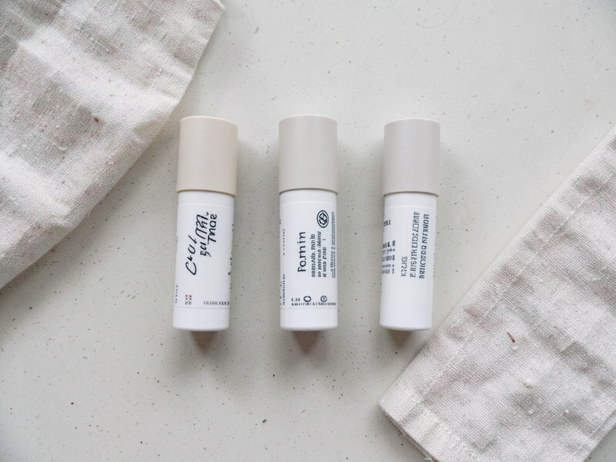
![Minimalist Lip Balm Still Life]()
Minimalist Lip Balm Still Life
Image credit : AI
Exploring the simple elegance of lip balm. My lips feel dry after lip balm sometimes, so I seek the best ingredients.
Breaking the Cycle in Practice
Switching products alone rarely breaks the habit immediately. Lips that have been in a reapplication loop for months have a genuinely compromised barrier, and the first week on a plain petrolatum or shea-based balm often feels worse before it feels better, because the cooling or numbing sensation is gone and the actual dryness is now perceptible. Applying a thick layer of plain petrolatum at night, when there is no air conditioning, no sun, and no eating to remove it, is the most effective single step. Drinking enough water matters less than people assume for lip dryness specifically, the lips do not hydrate from the inside the way internal organs do, but mouth breathing, which dries the lip surface directly, is worth addressing. Licking lips deposits amylase, a digestive enzyme, onto the surface and accelerates breakdown of the skin barrier. The habit is worth breaking. Within two to three weeks on a fragrance-free, menthol-free balm, most people find the urge to reapply drops from hourly to twice or three times a day. That is not dependence. That is a barrier doing its job.