Pick up two machine-embroidered kurtas at a festive sale, one at Rs 1,400, one at Rs 4,200, and the difference in hand-feel is immediate. The cheaper one feels slightly stiff at the embroidered panel. The expensive one drapes. That stiffness is not a quality accident; it is the clearest signal of where the manufacturer cut cost, and once you know what to look for, you cannot unsee it.
Thread Quality: Rayon, Polyester, and the Sheen That Fades
![Golden Hour Kurta Embroidery Detail]()
Golden Hour Kurta Embroidery Detail
Image credit : AI
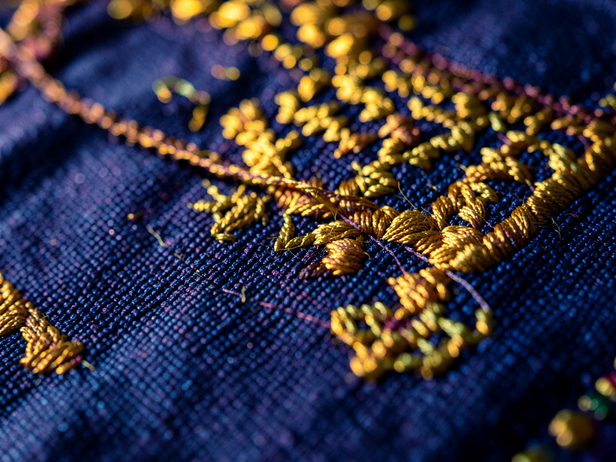
Luxurious rayon embroidery on a festive kurta, showcasing exquisite satin stitch detail. Explore machine embroidery kurta quality.
Most machine embroidery in the mid-range festive market uses either rayon or polyester thread. Rayon has a softer sheen, closer to silk, and it catches light without looking plastic. Polyester is stronger and cheaper, and it photographs with a slightly harder gloss. At Rs 1,200 to Rs 2,000, almost every kurta uses 100 percent polyester embroidery thread. Between Rs 2,500 and Rs 4,500, you start seeing rayon-polyester blends or full rayon on the top passes, with polyester used only for the underlay stitches that the eye never reaches. The practical difference: rayon thread softens with washing, polyester does not. After five washes, the rayon-embroidered panel moves with the fabric. The polyester panel stays slightly separate from it.
Stitch Density and What It Costs the Machine
Stitch density is measured in stitches per square centimetre, and it is where mid-range embroidery earns or loses its price. A low-density fill stitch, sometimes called a light satin, uses fewer passes to cover a shape. It is faster, it uses less thread, and it leaves the base fabric partially visible through the embroidery. A high-density fill covers the base completely, requires multiple directional passes, and locks the thread so it does not catch or pull on a dupatta hook. The embroidery on a Rs 1,500 kurta typically runs between 350 and 450 stitches per square centimetre on its main motifs. A Rs 3,500 to Rs 4,500 kurta runs between 600 and 800. You can test this at the shop: hold the embroidered panel up to a window. If you can read newsprint through the motif, the density is low. If the motif is opaque, it is high.
Backing Fabric and the Stiffness Problem
![Embroidery Backside Detail]()
Embroidery Backside Detail
Image credit : AI
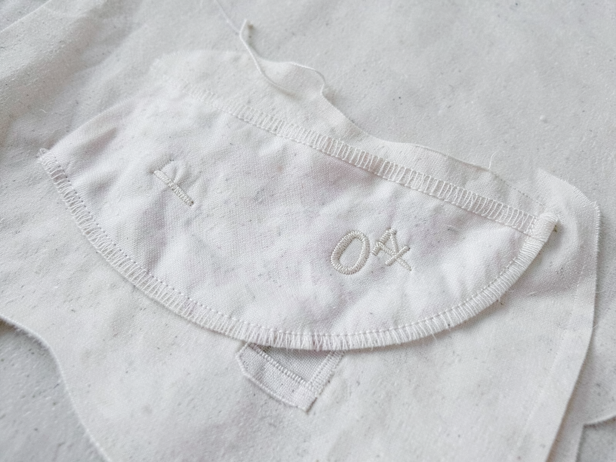
Examining the quality of machine embroidery on a kurta panel, highlighting the neat underside of satin stitches and stabilizer backing. A key aspect of festive kurta price difference India.
Every machine-embroidered piece requires a stabiliser, a backing material that keeps the base fabric from puckering while the needle moves at speed. The grade of stabiliser, and whether it is cut away or torn away after stitching, determines how the finished kurta drapes. Cheap kurtas use a tear-away paper stabiliser. It is removed after stitching, but small fragments stay caught in the underside of the embroidery, and the process of tearing it away can distort the stitches at the motif edges. Mid-range kurtas above Rs 3,000 increasingly use a cut-away woven stabiliser that stays in place permanently. It adds weight and body to the embroidered panel, which is why it drapes differently, the stabiliser becomes part of the structure. This is not a flaw. It is a construction choice that makes the embroidery more durable. The tell: flip the kurta and look at the back of the embroidered panel. Torn edges and paper residue mean tear-away. A clean woven backing, flush with the embroidery, means cut-away.
Colour Passes and Gradient Work
A single-colour embroidered motif requires one thread load on the machine. A motif with a gradient, say, a marigold that moves from deep saffron at the petal base to pale yellow at the tip, requires the machine to stop, re-thread, and run a second pass with precise registration so the two colours meet cleanly. Each additional colour pass adds machine time, thread cost, and the possibility of misregistration, where the second colour lands slightly off and the motif edge looks ragged. At Rs 1,200 to Rs 2,000, most embroidery is two-colour maximum, and gradient work is absent. Between Rs 3,000 and Rs 4,500, three- and four-colour motifs are common, and the registration on a well-made piece is tight enough that the colour boundary looks intentional rather than approximate. When you are comparing two kurtas with similar motif shapes, count the colours within a single flower or leaf. That count tells you more about the price justification than the overall pattern complexity does.
The Panel Placement Question
Machine embroidery is programmed in a hoop, and the hoop has a fixed diameter. A motif that is larger than the hoop requires the fabric to be re-hooped mid-stitch, stopped, repositioned, and restarted. Every re-hooping is a registration risk. On a Rs 1,500 kurta, the embroidered panel is almost always designed to fit within a single hoop run, which is why the motifs cluster in a band rather than spreading across the yoke or down the sleeve seam. On a Rs 3,500 to Rs 4,500 kurta, the design often crosses hoop boundaries, and the quality of that seam, whether the motif continues without a visible break or gap, is one of the clearest markers of the manufacturer's machine calibration and operator skill. Run your finger along any motif that crosses the centre of the chest panel. A ridge or a gap in the embroidery at that point is a re-hooping join that was not registered correctly.
Thread, density, backing, colour passes, and panel registration are five separate decisions made before a single kurta reaches the shop floor. A Rs 4,200 festive kurta that holds its embroidery through a season of wearing and washing made different choices on all five. A Rs 1,400 kurta that loses its sheen after two dry-cleans made the cheaper call on most of them. The price is not the label. It is the accumulation of those five calls.