A lab grown diamond and a mined diamond are chemically identical. The same carbon lattice, the same hardness, the same refractive index. A gemologist with a loupe cannot tell them apart without a spectrometer. What is not identical is the price, and what is even less identical is what happens to that price the moment you try to sell.
Why Lab Grown Diamonds Cost What They Do
Lab grown diamonds are made in one of two ways: High Pressure High Temperature (HPHT), which replicates the geological conditions that form mined diamonds, or Chemical Vapour Deposition (CVD), which builds the crystal layer by layer from a carbon-rich gas. India, particularly Surat, has become one of the largest cutting and polishing hubs for CVD diamonds in the world, which is part of why prices here have moved faster than in Western markets.
The cost of growing a diamond has fallen steeply as the technology has scaled. A one-carat lab grown diamond that retailed in India for roughly ₹1.5 to ₹2 lakh five years ago now sells for somewhere between ₹25,000 and ₹60,000 depending on cut, colour, and clarity grade, and where you buy it. Branded jewellers charge a premium for certification, setting, and the retail experience. Direct-to-consumer and smaller jewellers in diamond districts like Surat and Mumbai's Zaveri Bazaar price them closer to the production cost. The stone itself is only one part of what you pay for at a branded counter.
Certification matters more here than with mined stones precisely because the price is low enough that a consumer might not bother. An IGI or GIA certificate on a lab grown diamond tells you the actual grade, not a sales pitch. Without it, two stones priced identically may be graded very differently.
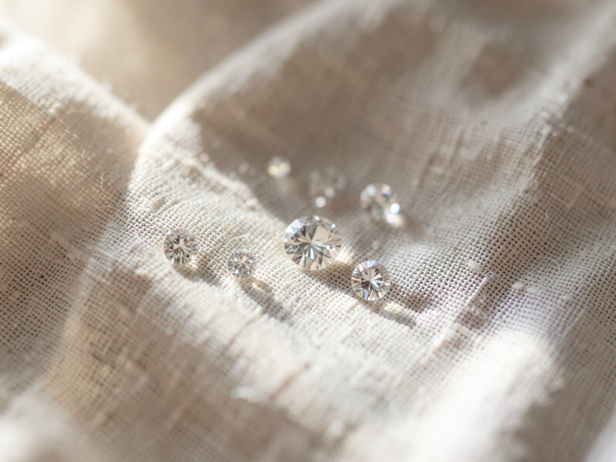
![Diamonds on Linen]()
Diamonds on Linen
Image credit : AI
Sparkling unset diamonds on linen. Explore lab grown diamond price India.
The Resale Reality
This is where the conversation changes tone. Mined diamonds have always had a complicated resale story, the idea that they hold value is largely a marketing legacy, but lab grown diamonds have an even harder time of it. Because production costs keep falling, a stone bought today will almost certainly be cheaper to produce in two years. A jeweller buying back your stone knows this. The resale value of a lab grown diamond in the Indian market currently sits at roughly 10 to 25 percent of the original retail price, and some jewellers will not buy them back at all.
A few larger jewellery chains have introduced exchange programmes where a lab grown diamond can be traded in against a new purchase, typically at a percentage of the invoice value. This is not the same as resale. You are not getting cash; you are getting credit toward another purchase from the same retailer. Read the terms before treating it as a liquidity option.
The resale market for second-hand lab grown diamonds through platforms like Caratlane's exchange desk or independent resellers is still thin. There is not yet the kind of organised secondary market that exists for gold or even for some coloured gemstones. If you are buying a lab grown diamond partly as a store of value, the numbers do not support it yet.
What the Grading System Means for Your Purchase
Lab grown diamonds are graded on the same 4C system as mined stones: cut, colour, clarity, and carat weight. The grading is done by the same laboratories, IGI grades the majority of lab grown stones sold in India, GIA has expanded its lab grown grading service, and SGL is used by some domestic retailers. The grade on the certificate is what you are paying for.
Colour grades D through F are colourless. G through J are near-colourless and represent good value because the difference from a colourless stone is invisible to the naked eye in most settings. Clarity grades VS1 and VS2 are typically eye-clean, meaning inclusions are not visible without magnification. Buying a VS2, G colour stone instead of a D, IF stone in the same carat weight can save you 30 to 40 percent without any visible difference in a piece of jewellery. The cut grade matters most of all for how the stone handles light, an Excellent or Very Good cut in an IGI-certified stone is where the visual return is highest.
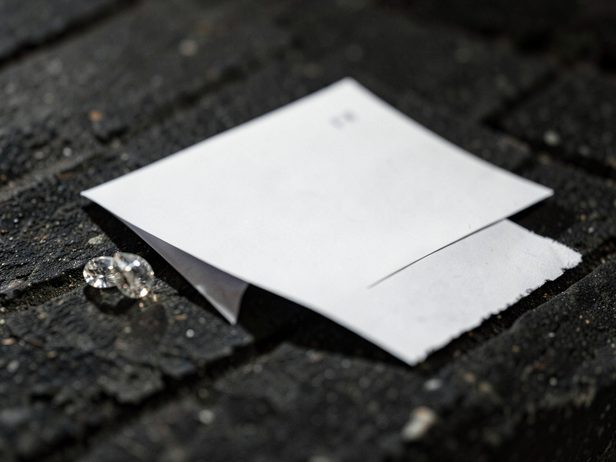
![Diamond and Certificate Still Life]()
Diamond and Certificate Still Life
Image credit : AI
An IGI certified lab grown diamond awaits its setting, presented on a dark stone surface.
How to Buy Without Overpaying
The price of a lab grown diamond varies significantly between retail formats. A branded showroom will price a one-carat, VS2, G colour, Excellent cut stone differently from a direct-to-consumer brand online, which will price it differently again from a Surat-based wholesaler selling to the public. Getting one quote from a single counter and buying on the spot is the fastest way to overpay.
Ask for the IGI or GIA certificate number and verify it on the laboratory's website before you pay. The certificate lookup is free and takes two minutes. It tells you whether the grade on the certificate matches what you are being sold. Ask specifically whether the price includes the setting or is for the loose stone alone, because the two are sometimes bundled without being itemised. And if an exchange or buyback programme is part of the pitch, ask for the terms in writing, specifically what percentage of invoice value the buyback applies to and whether it is cash or store credit.
Lab grown diamonds make genuine sense for people who want a larger, better-graded stone than a mined diamond budget allows, or who are not buying with resale in mind. The stone is real. The light performance is real. The saving over a comparable mined stone is real. What is not real is the idea that the price paid today will be recoverable tomorrow.