On a heavy smog day, the film that settles on your face by evening is not simply dirt. Fine particulate matter, PM2.5 and smaller, binds to the sebum your skin produces through the day, forming a sticky compound that water alone cannot lift. Ozone, a major component of urban smog, oxidises the lipids on your skin's surface, which is why skin feels tight and dull rather than just grimy after a long commute. The order in which you take this off is not a wellness ritual preference. It is a question of what each product is chemically capable of removing.
What Is Actually Sitting on Your Skin
The outermost layer by evening contains at least three distinct things: oil-soluble residue from pollution particles and sunscreen, water-soluble residue from sweat and environmental dust, and oxidised lipids from ozone exposure. These do not respond to the same cleansers. An oil cleanser dissolves oil-soluble matter. A water-based cleanser clears what the oil step leaves behind. Skipping the first step and going straight to a foaming cleanser moves the oil-bound particles around the skin rather than lifting them off. This is the structural reason double cleansing exists, not as a trend, but as a response to what urban skin accumulates.
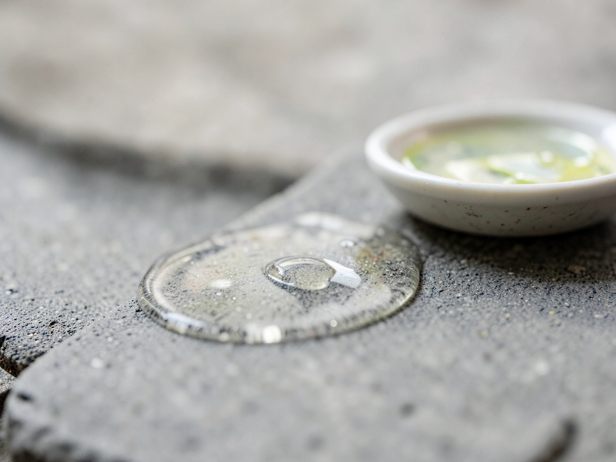
![Cleansing Duo on Stone]()
Cleansing Duo on Stone
Image credit : AI
My evening skincare smog routine begins with this cleansing duo. Essential for removing pollution from face.
Step One: The Oil Phase
Start with a cleansing oil, a cleansing balm, or micellar water with an oil phase. Apply it to dry skin, water repels oil, so a wet face reduces the cleanser's ability to bind to pollutant residue. Massage for at least sixty seconds. The friction matters: it breaks the bond between the sebum-pollution compound and the skin's surface. Rinse with lukewarm water. You will notice the water turns slightly grey or beige as it emulsifies off the skin. That is the pollution layer leaving. If the water runs clear immediately, you likely applied too little product or skipped the dry application.
Step Two: The Water Phase
Follow immediately with a low-pH gel or cream cleanser. This step removes sweat residue, the water-soluble fraction of environmental dust, and any remaining emulsified oil from step one. A foaming cleanser with sulphates will do the job but strips the moisture barrier in the process, which matters more after a smog day because ozone has already compromised that barrier. A gel cleanser with a pH between 4.5 and 5.5 clears the surface without the additional disruption. Rinse again, pat dry.
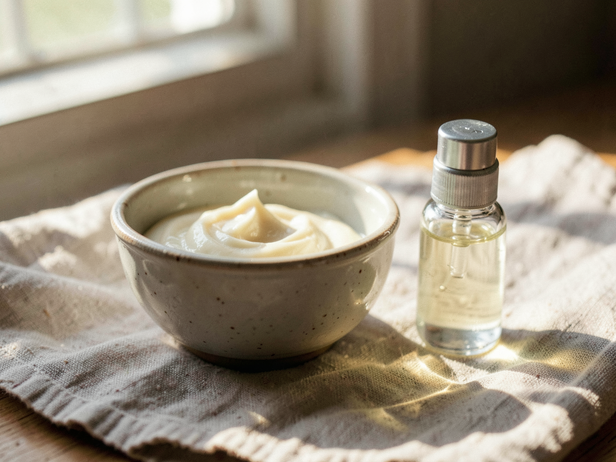
![Cream and Serum Still Life]()
Cream and Serum Still Life
Image credit : AI
My evening skincare ritual, preparing for the night. Essential for combating smog.
After the Double Cleanse
The skin after this sequence is clean but temporarily more permeable than usual, ozone damage and the cleansing process together have reduced the lipid content of the surface layer. This is the moment when a niacinamide serum or a ceramide moisturiser does its actual job, because the surface is genuinely open to absorption rather than sitting under a film of pollution. Apply while the skin is still slightly damp. A heavy occlusive, shea butter, petroleum jelly, goes last if you use one, sealing everything underneath. Retinoids and acids are fine to use at this stage of your routine; they do not require a different sequence on smog days.