Most air purifiers are bought after a bad AQI week, an allergy flare, or a neighbour who swears by one. Then they get plugged into a corner, the filter gets forgotten, and the machine runs for months doing a fraction of what it was designed to do. The problem is rarely the purifier. It is almost always how it is being used.
Placing It in the Wrong Spot
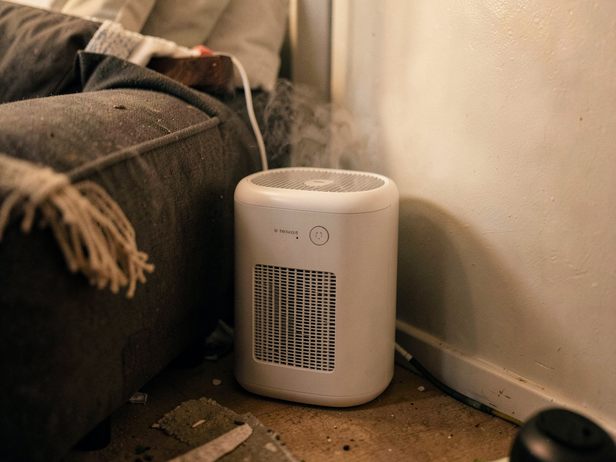
An air purifier pulls air in, filters it, and pushes clean air out. That cycle only works if air can actually reach the intake. Pushing a unit into a corner between a sofa and a wall, or tucking it behind a curtain, starves the intake and forces the motor to work harder for less result. The American Society of Heating, Refrigerating and Air-Conditioning Engineers notes that airflow placement determines how efficiently a room's air turns over. Put the purifier in the part of the room where you spend the most time, with at least 30 centimetres of clearance on all sides. A bedroom unit belongs near the bed, not on the far side of the room where the air it cleans never reaches you while you sleep.
![Blocked Airflow, Poor Air Quality]()
Blocked Airflow, Poor Air Quality
Image credit : AI
My air purifier's placement is a common mistake, blocking airflow and reducing its effectiveness for indoor air quality.
Never Changing the Filter
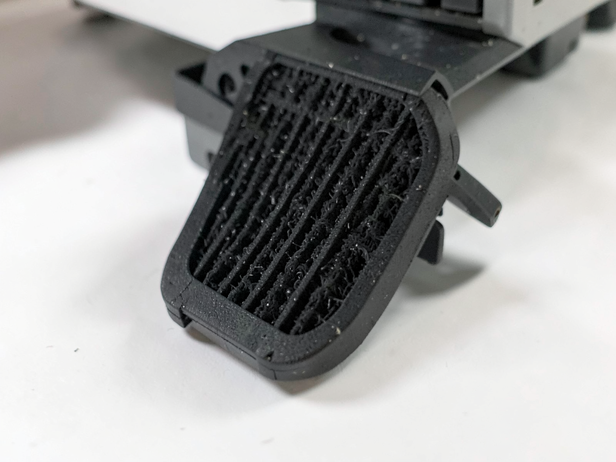
A HEPA filter works by trapping particles in a dense mat of fibres. Once that mat is full, it does not pass particles through, it simply stops moving air efficiently. Many people assume a filter that looks grey is still working. It is not. At full load, airflow drops, the motor strains, and the particles the filter can no longer trap recirculate. Most HEPA filters are rated for six to twelve months under normal use. In Indian cities where outdoor AQI regularly crosses 150, that window shrinks. Check the filter every three months. If it is visibly dark and the manufacturer's hours are up, replace it. Running a clogged filter is not neutral. It is actively counterproductive.
Running It in a Room With Open Windows
An air purifier is not a ventilation system. It is a recirculation system: it cleans the air already in the room by passing it through the filter repeatedly. Open a window and you are continuously introducing unfiltered outdoor air faster than the machine can process it. On high-AQI days, this means the purifier is losing the race it was bought to win. Close the windows and doors of the room the purifier is in when outdoor air quality is poor. On genuinely clean-air days, ventilate naturally. The two strategies serve different conditions and should not run simultaneously.
![Loaded HEPA Filter Panel]()
Loaded HEPA Filter Panel
Image credit : AI
This is a visibly loaded HEPA filter panel. I'm showing how often to change your air purifier filter for better indoor air quality.
Buying the Wrong Size for the Room
Air purifiers are rated by CADR, Clean Air Delivery Rate, which measures how quickly a unit can filter a given volume of air. A unit with a CADR of 150 cubic metres per hour will cycle the air in a 150-square-foot room roughly twice per hour. Put that same unit in a 400-square-foot open-plan living area and it cycles the air less than once per hour, which the WHO's indoor air quality guidelines suggest is insufficient for meaningful particle reduction. Match the CADR to the room. If you bought a compact unit for a bedroom and moved it to the living room, it is undersized for the job. A second unit or a larger replacement is the fix, not running the small one on maximum speed.
Ignoring the Pre-Filter
Most air purifiers have a pre-filter, a coarser mesh layer that catches large particles like pet hair, dust clumps, and fibres before they reach the HEPA layer. This pre-filter is washable in most models and is meant to be cleaned monthly. When it is clogged, it restricts airflow to the HEPA layer and shortens the HEPA filter's life by making it work on particles the pre-filter should have caught. Cleaning the pre-filter takes two minutes. Not cleaning it costs you a HEPA filter replacement months earlier than necessary.
Turning It Off When You Leave the Room
The instinct to save electricity by switching off the purifier when you step out is understandable but counterproductive. Indoor air quality degrades continuously: cooking, cleaning, a person re-entering, off-gassing from furniture and paint. A purifier that runs continuously maintains a baseline. One that is switched on only when you are present spends the first hour of your return catching up. On low or auto mode, most purifiers draw between 20 and 40 watts, less than a standard incandescent bulb. The electricity cost of running it continuously through the day is small. The air quality cost of running it intermittently is not.
The machine itself is rarely the failure. The filter it is running on, the corner it has been pushed into, and the window left open beside it are where the money spent on the purifier quietly disappears.