A crash diet promises a smaller number on a scale. What it delivers alongside that number is a set of physiological trade-offs that do not reverse the morning after the wedding. The body under severe caloric restriction does not simply burn stored fat, it makes a series of triage decisions, and muscle, hair follicles, and reproductive hormones are consistently deprioritised. These six mechanisms explain why.
1. Muscle Is the First Thing the Body Cannibalises
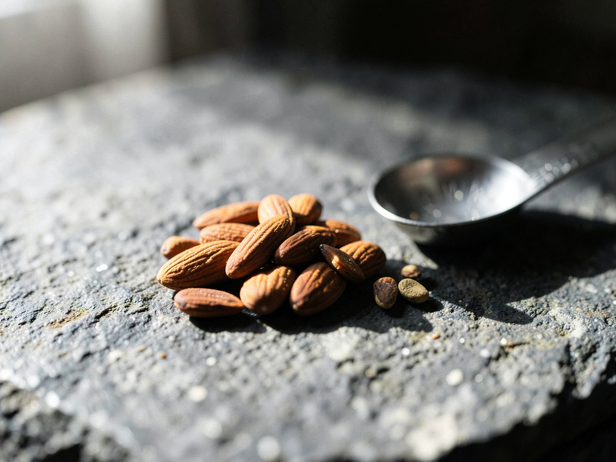
![Almonds and Lentils Still Life]()
Almonds and Lentils Still Life
Image credit : AI
A simple arrangement of almonds and lentils, hinting at dietary choices. Extreme calorie restriction can have side effects.
When caloric intake drops sharply below what the body needs, it turns to stored glycogen first, then to both fat and lean muscle simultaneously. Without adequate dietary protein and resistance activity, the ratio tips toward muscle loss, a process called catabolism. The Indian Council of Medical Research recommends a minimum of 0.8 to 1 gram of protein per kilogram of body weight daily for sedentary adults; crash diets that rely on juice fasts, soup-only plans, or extreme calorie cuts rarely meet even that floor. The result is a body that may weigh less but carries a higher proportion of fat to muscle, a change that does not photograph the way the person intended, and that takes months of consistent training to reverse.
2. Resting Metabolic Rate Drops and Stays Down
The body reads a sudden, steep calorie deficit as a famine signal. Within days, it begins reducing the rate at which it burns energy at rest, a documented adaptive response sometimes called metabolic adaptation. The thyroid hormone triiodothyronine, which regulates metabolic rate, falls in response to prolonged restriction. This means that once the wedding is over and normal eating resumes, the body is now burning fewer calories at rest than it did before the diet began. Weight returns faster, often as fat rather than muscle, because the metabolic baseline has shifted downward.
3. Hair Enters a Shedding Phase With a Two-Month Delay
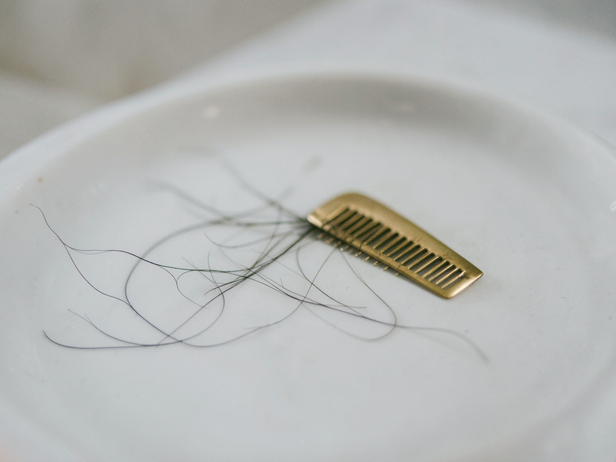
![Hair Strands and Brass Comb]()
Hair Strands and Brass Comb
Image credit : AI
Subtle signs of hair loss from dieting, a stark reminder of extreme calorie restriction's impact.
Telogen effluvium, the clinical term for stress-triggered hair shedding, does not show up immediately. The hair follicle cycle means that a nutritional shock in September produces visible shedding in November or December. The follicle requires adequate iron, zinc, biotin, and protein to sustain the anagen (growth) phase. A crash diet that eliminates food groups or drops calories below roughly 1,200 a day for women deprives the follicle of these inputs. The follicle responds by pushing more hairs into the resting phase early. By the time the shedding becomes noticeable, often in handfuls in the shower, the wedding photographs are already framed on the wall. The trigger was the diet.
4. The Hypothalamic-Pituitary-Ovarian Axis Reads Restriction as a Threat
Reproductive function is metabolically expensive. When energy availability falls below a critical threshold, research from exercise physiology places this around 30 kilocalories per kilogram of fat-free mass per day, the hypothalamus reduces its pulse frequency of gonadotropin-releasing hormone. Luteinising hormone and follicle-stimulating hormone follow. Oestrogen production falls. The result ranges from a delayed cycle to complete amenorrhoea. This is not a dramatic or rare outcome; it is a predictable hormonal response to the body perceiving insufficient energy for reproduction. For someone planning a wedding, and possibly a pregnancy shortly after, this is not a trivial disruption.
5. Electrolyte Imbalances Affect Skin, Mood, and Sleep
Very low calorie diets, particularly those that restrict carbohydrates sharply, cause the kidneys to excrete sodium at an accelerated rate. Sodium loss pulls potassium and magnesium with it. These electrolytes regulate nerve signalling, muscle contraction, and sleep architecture. The symptoms, disrupted sleep, irritability, muscle cramps, a dull, dehydrated appearance to the skin, are often attributed to stress or wedding anxiety. They are frequently the diet. Skin that is chronically under-nourished does not carry makeup the same way, and no amount of skincare product compensates for cellular dehydration driven from the inside.
6. The Rebound After the Wedding Is Biologically Predictable
When restriction ends, and it always ends, the body responds to renewed food availability with preferential fat storage, particularly around the abdomen. This is not a failure of willpower. It is the body executing exactly the survival strategy it evolved to execute after a famine. Ghrelin, the hunger-signalling hormone, remains elevated for weeks after a period of restriction ends. Leptin, which signals satiety, remains suppressed. The person eats more than they intend to, stores more of it than they would have before the diet, and ends up at a higher body fat percentage than when they started, often within three to four months. The crash diet did not change the body's set point. It defended it, aggressively.