A Sargi eaten at 4 a.m. has one job: keep you functional until the moon rises, sometimes fourteen hours later. Whether it does that job depends less on ritual and more on how the foods on the plate behave inside the body over those hours.
The Macronutrient Logic of a Long Fast
Three things determine how long a meal sustains you: how slowly it digests, how gradually it releases glucose into the bloodstream, and how much protein it carries to slow that release further. A plate heavy in refined carbohydrates, white bread, sweets made with maida, sugar-laden fruit juices, spikes blood glucose quickly and drops it just as fast. By 9 a.m. you are hungry, by noon you are light-headed. The goal is the opposite curve: a slow rise, a long plateau, a gradual descent. Complex carbohydrates, fat, fibre, and protein working together produce that curve. This is not a theory specific to fasting; it is how glucose metabolism works in any context, and the Indian Council of Medical Research's dietary guidelines for sustained energy output rest on exactly this principle.
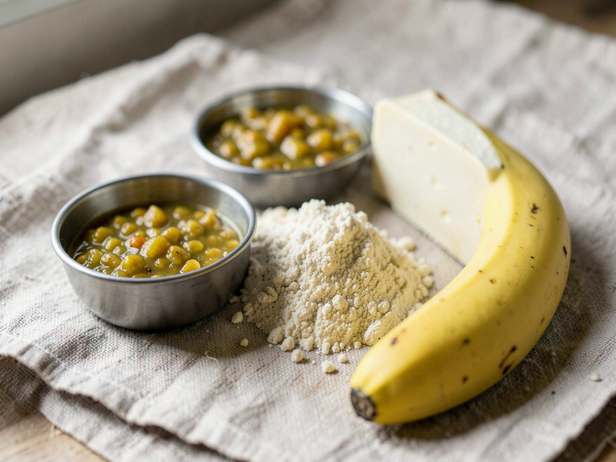
![Morning Ingredients for a Nourishing Meal]()
Morning Ingredients for a Nourishing Meal
Image credit : AI
Preparing ingredients for a Sargi meal, focusing on wholesome foods for a long fast.
What Belongs on the Thali
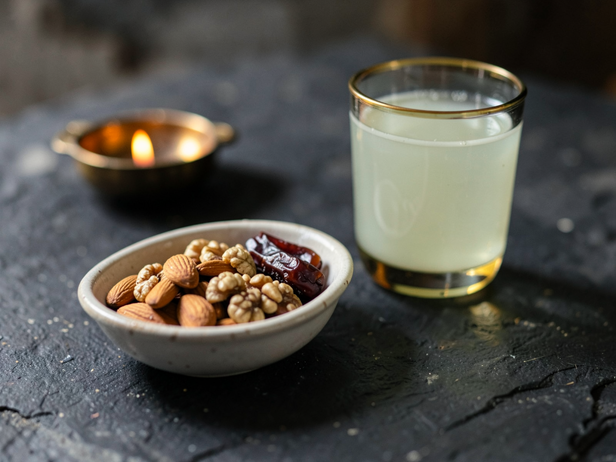
Whole wheat roti or a small portion of dalia outperforms white rice or puri for this purpose. The fibre slows gastric emptying, which means the carbohydrate load reaches the bloodstream over two to three hours rather than one. Pair it with a protein source: paneer, curd, or a small portion of dal. Protein extends satiety independently of carbohydrate digestion by triggering peptide YY and GLP-1, hormones that suppress appetite. A tablespoon of ghee on the roti adds fat, which further slows digestion and provides fat-soluble vitamins. Seasonal fruit, a banana, a handful of grapes, an apple, adds potassium and natural sugars that release more steadily than processed sweets. Coconut water or a glass of full-fat milk addresses hydration and electrolytes simultaneously; both matter because a full-day fast without water means the body draws on its own fluid reserves from the first hour. Dry fruits, almonds, walnuts, a few dates, are dense in magnesium, which supports muscle function and reduces the headaches that dehydration and low blood sugar can both cause. Dates in particular carry a low-to-medium glycaemic index despite their sweetness, making them a better choice than the mithai that sometimes rounds out the plate.
What Quietly Fails You
Fried foods, puri, pakora, heavily ghee-laden sweets, sit in the stomach for a long time but not in a useful way. Fat in large quantities slows digestion past the point of benefit and can cause nausea and bloating by mid-morning, particularly when the body is not moving much. Caffeine, including chai, is a common Sargi habit and a double-edged one: it raises alertness briefly but accelerates fluid loss and can drop blood sugar in the hours after the initial lift. If chai is part of the ritual, one cup is a different metabolic event from two or three. Salty snacks increase thirst across the day, which makes a waterless fast harder to sustain. High-sodium foods are not dangerous in a single day for a healthy adult, but they make the hours feel longer.
![Morning Nourishment Still Life]()
Morning Nourishment Still Life
Image credit : AI
Preparing for my Karwa Chauth fast with energizing Sargi meal essentials.
Timing and Portion Size
Eating as close to the fast's start time as possible, the window before sunrise, not an hour before it, gives the meal the longest possible runway. A meal eaten at 3:30 a.m. for a 4:15 a.m. fast start has less time to begin digesting before the body enters a fasted state than one eaten at 4:00 a.m. Portion size matters in a different direction than people expect: a very large Sargi does not extend satiety proportionally. The stomach empties at a rate determined by composition, not volume. Eating past comfortable fullness adds discomfort without adding hours of sustained energy. A moderate, well-composed plate outperforms a large one built on the wrong foods.
Who Should Think Twice
A healthy adult with no underlying conditions can manage a single-day fast with a well-composed Sargi and no meaningful risk. The picture changes for someone with Type 2 diabetes or blood sugar instability, where a fourteen-hour fast without any carbohydrate intake can produce hypoglycaemia; the composition advice here does not substitute for a conversation with their doctor about whether the fast is appropriate at all, and if so, how to structure it. Pregnant women, those who are breastfeeding, and anyone on medication that requires food at specific intervals should get individual guidance before observing a waterless fast of this length. The Sargi advice stands for the general case. It does not override a specific medical picture.