
Omelette vs Boiled Egg Which One Really Helps in Weight Loss
Harsh Raj | Jan 11, 2026, 07:00 IST

Egg
Image credit : Freepik
Deciding between an omelette and a boiled egg for weight loss can be tricky. This guide cuts through the confusion, looking at calories, protein, fats, how they're cooked, how full they make you feel, and what fits your life. Forget diet fads; we'll help you pick the best egg for your personal journey.
Almost everyone trying to lose weight has faced this moment standing in the kitchen wondering whether to crack eggs into a pan or drop them into boiling water. Eggs are affordable filling easy to cook and widely trusted in weight loss diets. Yet the omelette vs boiled egg debate keeps coming back especially for people counting calories watching fat intake or simply trying to eat cleaner without giving up taste.
![Eggs on a Healthy Breakfast Plate by AI]()
Eggs are nutritional powerhouses. One large egg contains high quality protein essential amino acids healthy fats vitamins like B12 D and minerals such as selenium and choline. Protein helps preserve muscle during weight loss and keeps hunger under control. The difference between omelette and boiled egg does not come from the egg itself but from the cooking method and added ingredients.
A plain boiled egg contains roughly 70 to 75 calories. It has no added fat and keeps the calorie count predictable. An omelette made with one egg starts at the same base but oil butter cheese milk or vegetables quickly change the total. One teaspoon of oil adds about 40 calories. Cheese can add even more. For strict calorie control boiled eggs usually win.
Both omelette and boiled egg provide nearly the same amount of protein from the egg. Protein promotes satiety meaning you feel full longer. Boiled eggs are dense and require chewing which can slow eating and enhance fullness. Omelettes can feel more satisfying if loaded with vegetables because volume increases without many calories. Satiety depends on how the omelette is prepared.
![Cooking Eggs at Home by AI]()
Boiled eggs contain only natural egg fats. Omelettes absorb cooking fat depending on the pan and oil used. For weight loss excessive fats can slow calorie deficit. However healthy fats are not the enemy when controlled. Using a non stick pan with minimal oil or cooking spray can make omelettes nearly as weight loss friendly as boiled eggs.
Egg protein supports metabolism by preserving lean muscle mass during calorie restriction. Boiled eggs provide steady energy without heaviness. Omelettes especially with vegetables offer micronutrients that support digestion and energy levels. Neither option directly boosts metabolism but consistency and portion control matter more than form.
Boiled eggs are extremely convenient. They can be prepared in advance stored easily and eaten anywhere. This helps avoid unhealthy snacking. Omelettes require cooking time and access to a kitchen but feel like a proper meal which helps people stick to diets emotionally. Weight loss success improves when food fits daily routines.
Many diets fail because food feels boring. Boiled eggs can become monotonous for some people leading to cravings later. Omelettes allow flavor variations using spices herbs onions tomatoes and greens without adding many calories. Enjoyment improves long term adherence which is crucial for sustainable weight loss.
Boiled eggs are simple and easy to digest for most people. Omelettes with vegetables add fiber which improves digestion but may cause bloating for sensitive individuals. Listening to your body matters. Comfortable digestion supports consistent eating patterns and better weight management.
![Protein Rich Breakfast by AI]()
For low calorie diets boiled eggs work best. For low carb or keto styles both are suitable depending on fat control. For high protein balanced diets omelettes with vegetables offer more nutrients. There is no universal winner only better alignment with dietary style.
Boiled eggs work well for breakfast snacks or post workout protein. Omelettes are ideal for main meals like breakfast or dinner where fullness and satisfaction matter. Timing does not affect fat loss directly but hunger control does.
Adding excessive oil cheese or processed meats turns omelettes into calorie bombs. Relying only on boiled eggs without variety can lead to nutrient gaps and boredom. Skipping vegetables reduces fiber intake. Weight loss depends on balance not extremes.
If weight loss means strict calorie tracking minimal cooking and portability boiled eggs are better. If weight loss means balanced meals enjoyment and sustainability vegetable omelettes with controlled oil are equally effective. The difference lies in preparation not preference.
The omelette vs boiled egg question is not about good or bad foods but about smarter choices within your lifestyle. Eggs remain a reliable ally in weight loss when cooked mindfully.
Something that brings clarity
Weight loss does not demand choosing sides between omelette and boiled egg. Both support fat loss when portion size ingredients and cooking methods are controlled. Boiled eggs offer simplicity and calorie precision while omelettes provide flexibility and satisfaction. The better choice is the one that helps you stay consistent enjoy meals and maintain a calorie deficit without stress.
Understanding eggs beyond calories
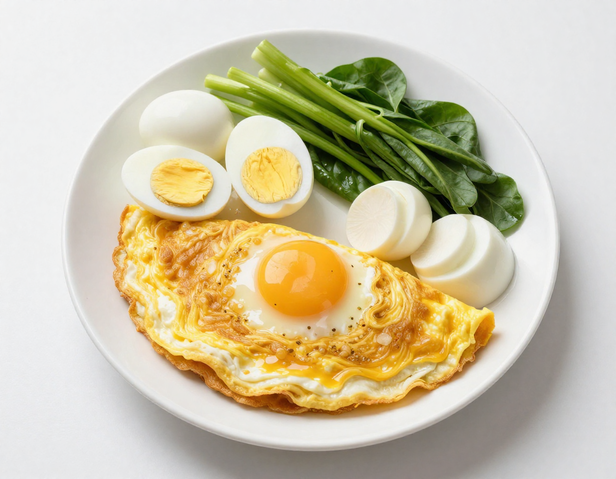
Eggs on a Healthy Breakfast Plate by AI
Image credit : Freepik
Eggs are nutritional powerhouses. One large egg contains high quality protein essential amino acids healthy fats vitamins like B12 D and minerals such as selenium and choline. Protein helps preserve muscle during weight loss and keeps hunger under control. The difference between omelette and boiled egg does not come from the egg itself but from the cooking method and added ingredients.
Calorie comparison in real terms
Protein and satiety factor
Fat intake and cooking method

Cooking Eggs at Home by AI
Image credit : Freepik
Boiled eggs contain only natural egg fats. Omelettes absorb cooking fat depending on the pan and oil used. For weight loss excessive fats can slow calorie deficit. However healthy fats are not the enemy when controlled. Using a non stick pan with minimal oil or cooking spray can make omelettes nearly as weight loss friendly as boiled eggs.
Impact on metabolism and energy
Convenience and lifestyle fit
Taste satisfaction and diet adherence
Digestibility and gut comfort
Role in different weight loss styles

Protein Rich Breakfast by AI
Image credit : Freepik
For low calorie diets boiled eggs work best. For low carb or keto styles both are suitable depending on fat control. For high protein balanced diets omelettes with vegetables offer more nutrients. There is no universal winner only better alignment with dietary style.
Best times to eat omelette or boiled egg
Common mistakes people make
Practical comparison in daily life
The omelette vs boiled egg question is not about good or bad foods but about smarter choices within your lifestyle. Eggs remain a reliable ally in weight loss when cooked mindfully.
Something that brings clarity
Weight loss does not demand choosing sides between omelette and boiled egg. Both support fat loss when portion size ingredients and cooking methods are controlled. Boiled eggs offer simplicity and calorie precision while omelettes provide flexibility and satisfaction. The better choice is the one that helps you stay consistent enjoy meals and maintain a calorie deficit without stress.