Every year, FSSAI and state food safety departments seize tonnes of adulterated khoya, paneer and mithai in the weeks before major festivals. The adulterants found are not random, they follow the economics of dairy production, which means the same handful of substances appear in lab reports year after year. Understanding what those substances are, and how analysts detect them, changes how you read a sweet shop counter.
What Khoya Is Most Commonly Cut With
Khoya, or mawa, is reduced whole milk, slow-cooked until most of the water is gone and what remains is a dense, fatty solid. That density is the economic pressure point. Adulterators replace part of the milk solids with starch, most often from potato, arrowroot or maize. Starch is cheap, binds well, and mimics the grainy texture of genuine khoya well enough to pass a casual inspection.
A second common adulterant is vanaspati, partially hydrogenated vegetable fat. It raises the fat content of a batch that was made from toned or skimmed milk rather than whole milk, so it passes a basic fat-percentage test while costing a fraction of what full-cream milk solids would.
Synthetic khoya, not adulterated khoya, but a product made without milk at all, is built from refined flour, starch, vanaspati, and skimmed milk powder in varying ratios. It is the furthest end of the spectrum and the hardest to distinguish by smell or taste alone.
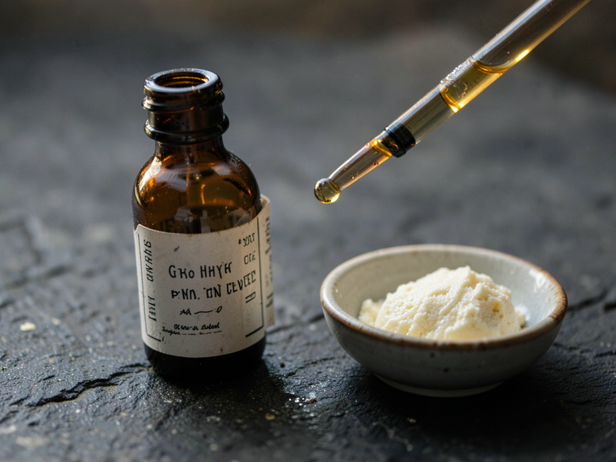
![Amber Drop on Khoya]()
Amber Drop on Khoya
Image credit : AI
Testing for milk adulteration in khoya and paneer is crucial, especially during festive seasons in India.
What Paneer Is Cut With
Paneer adulteration follows a different logic. Because paneer is sold by weight and priced per kilogram, the incentive is to add mass without adding cost. The most common route is starch, again, added during coagulation so it binds into the curd and is not visible in the finished block.
Detergent adulteration is less about adding mass and more about process: some producers use washing soda or caustic soda to speed coagulation or to neutralise sour milk that would otherwise be discarded. These residues stay in the finished paneer. The FSSAI has documented detergent adulteration in paneer samples from multiple states, with the highest rates typically in samples collected from unorganised vendors rather than packaged brands.
Skimmed milk powder is also added to increase yield, it stretches a given volume of milk into more paneer by raising the total solids before coagulation. This is not always illegal depending on labelling, but in unlabelled loose paneer sold as pure, it is adulteration.
What Goes Into Adulterated Milk Sweets
Finished sweets like barfi, peda, and gulab jamun carry forward whatever was in the khoya or paneer they were made from, plus their own layer of potential adulteration. Sugar is occasionally replaced partly with saccharin or other non-nutritive sweeteners, undetectable by taste at low concentrations. Artificial colours that are not permitted under FSSAI's Positive List of Food Additives are used to brighten the appearance of sweets that would otherwise look dull. Arrowroot and refined flour extend the body of barfi without changing the flavour profile enough for most buyers to notice.
Aluminium foil, vark, used to coat sweets is a separate concern. Genuine vark is silver, beaten to near-transparency. Adulterated vark may be aluminium rather than silver, which is not metabolised the same way. The distinction is not visible to the eye.
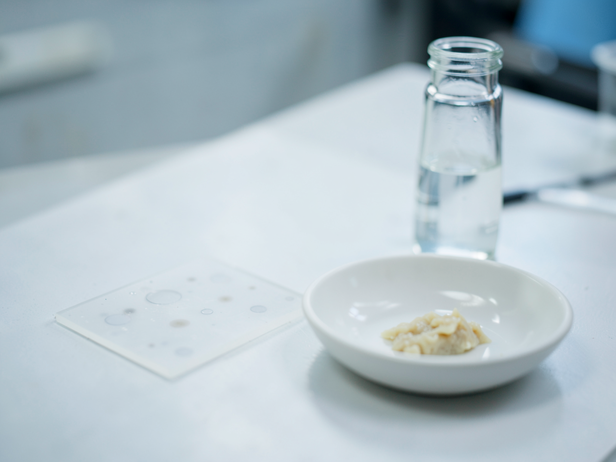
![Food Adulteration Test Setup]()
Food Adulteration Test Setup
Image credit : AI
I'm conducting a test for milk adulteration in India, examining a food sample for purity.
How Food Safety Labs Actually Detect These Adulterants
The standard test for starch in khoya and paneer is the iodine test: a drop of iodine solution on the sample turns blue-black in the presence of starch. It is rapid, inexpensive, and sensitive enough to detect starch at low concentrations. A consumer version of this test, using a diluted iodine solution from a pharmacy, gives a usable result at home, though a laboratory test is more controlled.
Vanaspati adulteration is detected through the Baudouin test, which identifies sesame oil, a marker added to vanaspati by law so it can be traced. A few drops of furfural solution and hydrochloric acid on a fat extract turn pink or red in the presence of sesame oil. This test has been part of Indian food adulteration detection since the Prevention of Food Adulteration Act, 1954.
Detergent in paneer is detected with a methylene blue test. The dye binds to surfactant molecules and produces a characteristic colour change in the extract. More precise quantification uses high-performance liquid chromatography, which separates and identifies individual compounds in a sample by how they move through a solvent column under pressure.
Synthetic colours are identified through thin-layer chromatography: the sample extract is spotted onto a silica plate, a solvent carries the components up the plate at different rates, and the resulting pattern of spots is compared against known permitted and non-permitted dyes. The FSSAI laboratory manual specifies this method for colour identification in confectionery.
For skimmed milk powder adulteration, labs use a combination of fat-to-protein ratio analysis and, in more equipped facilities, near-infrared spectroscopy, a technique that identifies the molecular fingerprint of a sample by measuring how it absorbs infrared light. NIR can distinguish the protein and fat profile of genuine whole-milk solids from a powder-extended batch in under a minute.
What This Means When You Are Buying
The iodine test is the one genuinely practical home check. A small piece of khoya or paneer, a drop of diluted iodine, and a blue-black colour tells you starch is present. It does not tell you how much, and it does not catch vanaspati or detergent, but it catches the most common adulterant in the most common dairy solids.
For everything else, the honest answer is that distinguishing genuine from adulterated milk sweets by sight, smell or taste alone is not reliably possible. The adulterants in wide use were chosen precisely because they are not obvious. Buying from vendors who source from FSSAI-licensed dairies, or from packaged products with a visible licence number, reduces but does not eliminate the risk.
The deeper point is structural. Adulteration in khoya and paneer is not random contamination, it is a supply-chain response to the economics of dairy in India, where raw milk prices fluctuate sharply and demand for sweets spikes in predictable windows. The lab methods that detect it have existed for decades. The gap is not in the science.