Sleep is not a single state. It is a sequence of four distinct stages cycling roughly every 90 minutes through the night, and the stages you get in the first half of the night are not the same as the ones you get in the second. Slow-wave sleep, the deepest and most physically restorative stage, dominates the early cycles. REM sleep, which handles memory consolidation and emotional regulation, loads up in the cycles closest to waking. Shift your sleep window two or three hours later for three consecutive weeks and you do not simply get the same sleep later. You change which stages you collect and how much of each you receive.
How the First Week Reshapes Your Cycles
A single late night leaves most people feeling rough but recoverable. The second night of disruption is harder. By the end of the first festival week, the body has begun adjusting its circadian timing, the internal clock governed by light exposure, meal timing, and social cues. The suprachiasmatic nucleus in the hypothalamus takes its strongest signal from morning light. When you are asleep past sunrise, that anchor weakens. Research from the ICMR and circadian biology literature consistently identifies that even five to seven days of delayed sleep timing is sufficient to measurably shift the phase of the circadian clock, making earlier bedtimes feel biologically impossible rather than merely inconvenient.
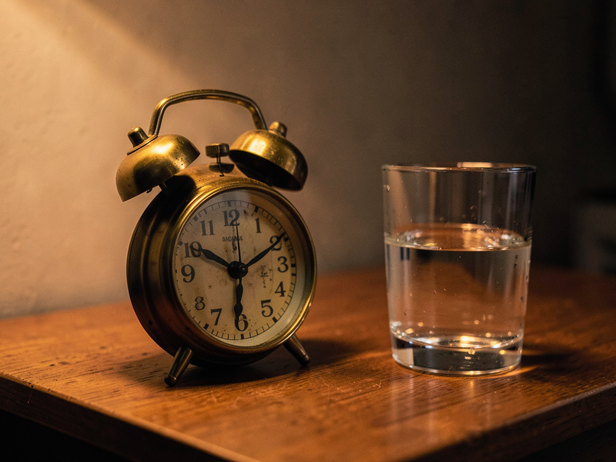
![Brass Clock, Amber Light]()
Brass Clock, Amber Light
Image credit : AI
My brass clock marks time, a quiet companion during festival season sleep disruption.
The Slow-Wave Debt You Are Running
Slow-wave sleep, also called N3, is where the body does its heaviest repair: growth hormone is released, immune function consolidates, and the glymphatic system clears metabolic waste from the brain. This stage is time-locked to the early part of the sleep period. If you go to bed at 1 a.m. instead of 10 p.m., you do not get the same slow-wave quota delivered three hours later. The brain has already moved past its window for the deepest slow-wave expression. Three weeks of this is not three weeks of slightly shorter slow-wave sleep. It is three weeks of substantially compressed slow-wave sleep, and the body cannot bank the deficit and pay it back in one long weekend. The WHO classifies chronic sleep disruption as a significant health stressor precisely because cumulative slow-wave loss is not linearly recoverable.
What REM Loss Does to Mood and Memory
REM sleep is the stage most sensitive to alcohol, late eating, and the elevated core body temperature that comes with being active and social until midnight. All three are common features of festival evenings. A night that ends at 1 a.m. with a full stomach and residual alcohol in the bloodstream will see REM suppressed in the first two cycles and compressed in the later ones. Over three weeks, this adds up to a measurable reduction in the emotional processing that REM provides. The effect shows up not as dramatic mood collapse but as a flattening: irritability rises, patience shortens, and the ability to read social situations accurately degrades. The Indian Journal of Sleep Medicine and sleep research from AIIMS have both documented elevated anxiety and reduced cognitive performance in populations with sustained REM disruption, consistent with what circadian and polysomnographic research shows globally.
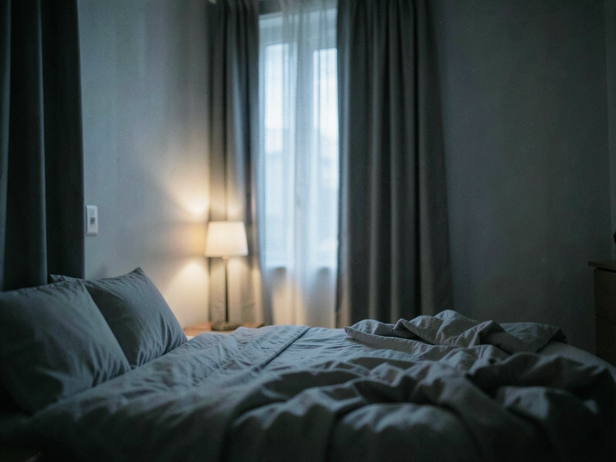
![Dawn's Lingering Glow]()
Dawn's Lingering Glow
Image credit : AI
The quiet aftermath of late nights, a gentle reminder of disrupted sleep architecture.
The Recovery Timeline Is Longer Than It Feels
Most people assume they have recovered from festival season by the second or third day of returning to normal hours. Subjective sleepiness does resolve quickly. The underlying architecture does not. Circadian phase realignment after three weeks of delayed timing typically takes seven to fourteen days of consistent earlier light exposure and fixed wake times, according to sleep medicine consensus. Slow-wave recovery follows a rebound pattern across the first few nights of normal sleep, which is why people often report unusually deep sleep in the first week back, but the full normalisation of sleep staging can take longer. The practical implication is that the week after a festival run is not the time to cut sleep short for early meetings or to pull another late night because the schedule looks clear. That is precisely the window where the architecture is repairing itself.
What You Can Do While the Season Is Still Running
Controlling every late night during festival season is neither realistic nor the point. The damage accumulates from the combination of late timing, bright light exposure at night, alcohol, and heavy meals, not from any one factor alone. Keeping meals lighter in the two hours before the late bedtime reduces the suppression of REM. Blocking bright overhead light after 10 p.m. where possible, even if the evening continues, slows the circadian phase shift. Fixing a consistent wake time, even on the mornings after late nights, gives the suprachiasmatic nucleus a reliable anchor and limits how far the clock drifts. These are not remedies that cancel the disruption. They are adjustments that keep the drift within a range the body can recover from in days rather than weeks. A sleep physician can assess whether the disruption has crossed into clinical territory if fatigue, mood changes, or concentration problems persist past the two-week post-festival mark. Three weeks of late nights is a real physiological event, not a matter of willpower or adjustment. The architecture that gets compressed during it is the same architecture that keeps the brain and body running the rest of the year.