The body adapts to running stress in roughly 10-day cycles. Bone, tendon, and cartilage lag behind cardiovascular fitness by weeks, which is why a runner can feel aerobically ready long before their joints are. Most first-time half marathon trainees in India ramp mileage too fast, often because a 12-week plan feels short and the temptation to "make up" for a missed week is strong. The six injuries below are not bad luck. They are predictable outcomes of predictable training errors.
Runner's Knee (Patellofemoral Pain Syndrome)
Runner's knee is the most common complaint logged at sports medicine clinics among new distance runners. The kneecap sits in a groove on the femur and glides through it with each stride. When the muscles around the hip and thigh, particularly the vastus medialis and the hip abductors, are weak relative to the load being placed on them, the kneecap tracks slightly off-centre. Over hundreds of kilometres of training, that misalignment produces pain behind or around the kneecap that worsens on stairs, after sitting for long periods, and on downhill sections of road. Indian runners who train on banked roads, the cambered surfaces common on Indian highways and arterial roads used as running routes, are at higher risk because the camber creates a persistent lateral pull on the knee. Strengthening the glutes and hip abductors and running on flatter surfaces where possible reduces the load. Rest alone, without addressing the muscular imbalance, typically means the injury returns when training resumes.
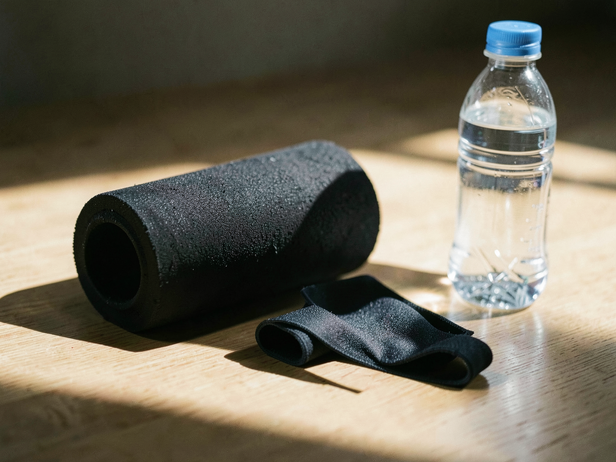
![Morning Recovery Essentials]()
Morning Recovery Essentials
Image credit : AI
Preparing for my next run, focusing on preventing overuse running injuries beginners might face.
Iliotibial Band Syndrome
The iliotibial band is a thick strip of connective tissue running from the hip to just below the outer knee. It does not stretch the way a muscle does. When mileage increases faster than the surrounding hip musculature can handle, the band becomes irritated as it repeatedly crosses the lateral femoral condyle, the bony prominence on the outside of the knee, with each stride. The result is a sharp, burning pain on the outer knee that typically appears after a set distance into a run, often between 15 and 25 minutes, and stops almost immediately when running stops. This on-off pattern fools many trainees into thinking the problem is minor. It is not. Ignoring it and running through it extends recovery from weeks to months. The primary driver is weak hip abductors and external rotators, compounded by rapid mileage increases. A foam roller addresses the symptom; the hip work addresses the cause.
Shin Splints (Medial Tibial Stress Syndrome)
Shin splints is a catch-all term that in most first-time trainees refers to medial tibial stress syndrome, diffuse pain along the inner edge of the tibia, worst at the start of a run and sometimes easing as the tissue warms up. The bone and its surrounding periosteum are responding to a training load they have not yet adapted to. Indian trainees who move from minimal or no running directly into a structured plan, or who run on hard concrete surfaces common in Indian cities, are particularly susceptible. Footwear matters here: running in worn-out shoes or shoes designed for other sports increases tibial stress. The Indian Association of Orthopaedic Surgeons has consistently flagged inadequate footwear as a modifiable risk factor for lower-limb stress injuries in recreational runners. If the pain becomes focal rather than diffuse, concentrated at one specific point on the shin, that warrants assessment before continuing, because focal tibial pain can indicate a stress fracture rather than soft-tissue irritation.
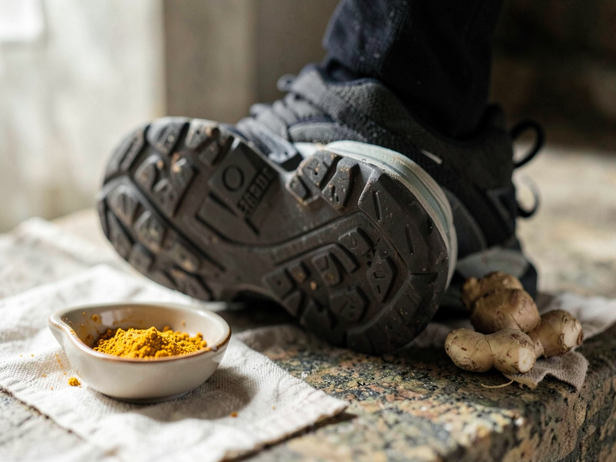
![Sole, Spice, and Stillness]()
Sole, Spice, and Stillness
Image credit : AI
Preparing for my half marathon training, I focus on recovery and natural remedies. Avoiding overuse running injuries is key.
Plantar Fasciitis
The plantar fascia is a band of tissue along the sole of the foot connecting the heel bone to the toes. In distance runners, repetitive loading causes micro-tears at the point where the fascia attaches to the heel. The hallmark symptom is intense heel pain on the first few steps after waking or after sitting for a long period, which partially eases once the tissue warms up. Trainees who increase mileage rapidly, have tight calf muscles, or run in shoes with inadequate arch support are at elevated risk. Calf tightness is especially common among Indian runners who spend significant time in sandals or flat footwear, which keeps the calf in a shortened position. Calf stretching, eccentric heel drops on a step, and reviewing footwear are first-line responses. Continuing to train at full volume through established plantar fasciitis reliably converts a manageable irritation into a condition requiring months off.
Achilles Tendinopathy
The Achilles tendon connects the calf muscles to the heel bone and absorbs enormous force with each running stride, roughly three to four times body weight at moderate pace. Tendinopathy develops when load exceeds the tendon's capacity to repair between sessions. In first-time trainees, this typically means running on consecutive days without adequate recovery, or adding speed work too early. Pain sits at the back of the heel or in the tendon itself, is stiff in the morning, and may produce a visible thickening in the tendon over time. A critical point: the Achilles tendon has a poor blood supply relative to muscle, which means it heals slowly and responds poorly to passive rest alone. Eccentric loading exercises, specifically the heel-drop protocol, have a strong evidence base for mid-portion Achilles tendinopathy through the mechanism of stimulating tendon remodelling. Insertional Achilles tendinopathy, where pain sits right at the heel bone attachment, responds differently and warrants a separate assessment. Any runner feeling a sudden, sharp pop in the Achilles during a run should stop immediately and seek evaluation; that presentation is not tendinopathy.
Stress Fractures
Stress fractures are the injury first-time trainees least expect and most need to take seriously. They occur when repetitive loading creates microscopic bone damage faster than the bone can remodel. In distance runners, the metatarsals of the foot, the tibia, and the navicular are the most commonly affected sites. The pain is typically focal, one specific spot that is tender to direct touch, and worsens progressively through a run rather than easing. Trainees who increase weekly mileage by more than 10 percent per week, who have low bone density, or who are under-fuelling their training (a particular concern among women who are restricting intake to manage weight during a training block) are at meaningfully higher risk. The ICMR has documented that calcium and vitamin D insufficiency is widespread in the Indian population, and both are directly relevant to bone stress injury risk in runners. A suspected stress fracture requires imaging, plain X-ray may miss early fractures, and MRI is more sensitive, and a qualified sports medicine assessment before any return to running.