Most patients walk out of a CT scan without a second thought. The images are clear, the diagnosis is faster, and the machine looks nothing like the hulking X-ray units of an earlier era. What stays behind, invisibly, is a dose of ionising radiation that can be fifty to several hundred times higher than a standard chest X-ray, depending on which part of the body is being scanned.
How CT Radiation Differs From an X-Ray
A conventional chest X-ray delivers roughly 0.1 millisieverts (mSv) of radiation. A CT scan of the chest runs between 5 and 7 mSv. A CT of the abdomen and pelvis, one of the most commonly ordered scans, sits between 8 and 14 mSv. A full-body trauma scan, the kind used in emergency departments after a serious accident, can reach 20 mSv or higher in a single session. The millisievert is a measure of biological dose: it accounts not just for the energy deposited but for how sensitive the tissue is to that energy. The International Commission on Radiological Protection uses it as the standard unit for estimating long-term cancer risk from low-level radiation exposure.
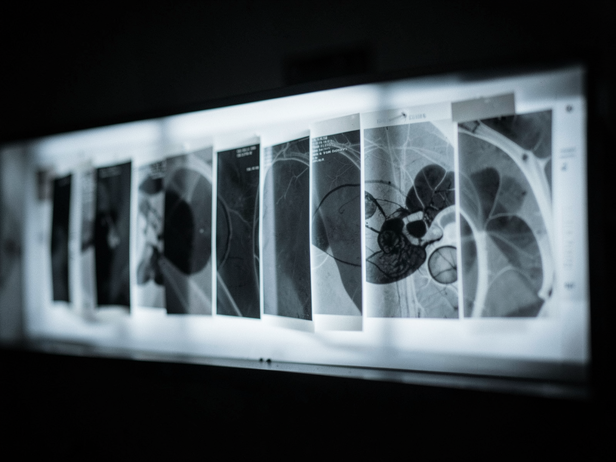
![Abstract Radiology Film Study]()
Abstract Radiology Film Study
Image credit : AI
Examining abstract grey tones on radiology films, considering cumulative radiation exposure.
Where the Risk Accumulates
A single CT scan, for most adults, carries a very small absolute risk. The concern is cumulative. Research published in journals tracking large patient cohorts, including work drawing on data from the UK's National Health Service, has found that a meaningful proportion of patients who receive CT imaging receive it more than once, and a smaller but significant group accumulates lifetime doses above 100 mSv, the threshold at which most radiological bodies agree the evidence for elevated cancer risk becomes more direct. The ICMR and the Atomic Energy Regulatory Board of India both use the same internationally established dose-risk frameworks. Below 100 mSv, risk is estimated using the linear no-threshold model, which assumes that any dose carries some proportional risk, however small, but this model is itself contested among radiation biologists, some of whom argue low doses carry less risk than the model implies. Above 100 mSv, the epidemiological evidence from populations exposed to radiation, including atomic bomb survivors studied in the Life Span Study, is more direct. The honest position is that the science is settled enough to take seriously, and contested enough that a single scan for a clear clinical reason is not a cause for alarm.
Who Is Most Likely to Accumulate a High Dose
Patients with chronic conditions that require regular imaging carry the highest cumulative exposure over a lifetime. Crohn's disease, for instance, is frequently monitored with CT enterography; a patient diagnosed in their twenties may accumulate dozens of scans by middle age. Cancer survivors in long-term follow-up, patients with recurrent kidney stones, and people who have been through multiple trauma admissions are in the same position. Children are a particular concern because their tissues are more radiosensitive than adults', and because they have more years ahead for any radiation-induced effect to manifest. Paediatric radiology bodies, including those affiliated with the Image Gently campaign, have pushed hard for dose reduction protocols specifically for younger patients. In India, where access to imaging has expanded rapidly and where there is no centralised tracking of a patient's cumulative scan history across hospitals, a patient moving between facilities may receive scans that a single treating physician would not have ordered if they had seen the full record.
![Medical Folder on Desk]()
Medical Folder on Desk
Image credit : AI
My medical folder rests on the desk, awaiting its contents. Understanding CT scan radiation risk is important for cumulative radiation exposure.
What Dose Reduction Looks Like in Practice
Modern CT machines can deliver diagnostic-quality images at substantially lower doses than older equipment, using iterative reconstruction software that compensates for the reduced signal. The gap between a well-optimised scan on a current machine and a scan on older equipment can be two to threefold in dose terms. The American College of Radiology's Dose Index Registry and similar initiatives track whether individual machines and departments are performing within acceptable dose ranges. Not every hospital in India operates equipment at the same specification or applies the same dose optimisation protocols, which means the dose for the same scan type can vary significantly between facilities. Asking whether the facility follows dose optimisation protocols is a reasonable question, not a hostile one.
Questions Worth Raising Before the Next Scan
The goal is not to refuse necessary imaging, CT scans save lives, find cancers early, and prevent unnecessary surgery by ruling out conditions quickly. The goal is to make sure each scan is genuinely necessary. Three questions are worth asking: whether the clinical question could be answered by an MRI or ultrasound instead, since neither uses ionising radiation; whether the scan parameters have been adjusted for your body size, since dose scales with the volume being imaged; and whether your previous scan results are available, since a repeat scan ordered because records were not transferred is a dose that served no diagnostic purpose. A physician ordering a scan for a clear clinical reason does not need to be second-guessed. A scan ordered as a precaution, or because it is faster than waiting for an MRI slot, is worth a brief conversation. Keeping a personal record of every CT scan you have had, the date, the body region, and the facility, gives any future doctor the information they need to make that call well.