The shoulder is the most mobile joint in the body, and that mobility comes at a cost: it relies on a rim of fibrocartilage called the labrum to keep the ball of the humerus from sliding out of its shallow socket. When that rim tears, the joint does not lock or collapse. It continues to work, imperfectly, and the signals it sends are easy to misread as something less serious.
What the Labrum Actually Does
The glenoid socket of the shoulder is roughly the shape and depth of a golf tee. The labrum deepens it by about 50 percent, according to the American Academy of Orthopaedic Surgeons, and acts as an anchor for the long head of the biceps tendon and several ligaments that stabilise the joint. Without an intact labrum, the humeral head has more room to shift than it should. That shift is the source of most of the symptoms a cricketer notices and then explains away.
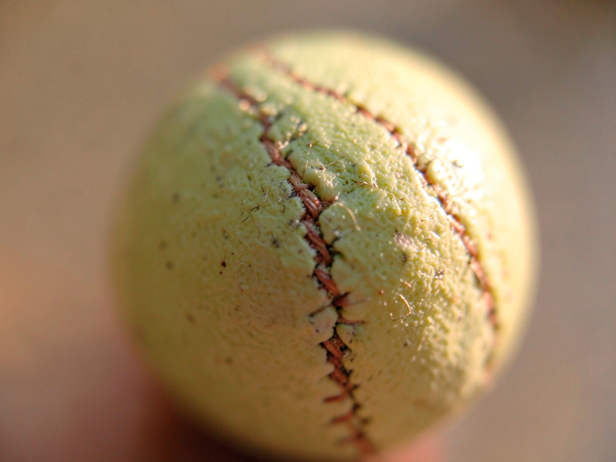
![Cricket Ball Seam Detail]()
Cricket Ball Seam Detail
Image credit : AI
Examining the cricket ball seam, a crucial element for bowlers. Understanding shoulder instability in cricketers is vital.
What a Tear Feels Like in Practice
The sensation is rarely a sharp, locating pain. More often it is a deep ache that sits somewhere inside the shoulder rather than on its surface, a feeling that is hard to point to and harder to describe to a physio in a way that sounds alarming. Clicking or catching during a throwing motion is common, particularly at the end of the cocking phase when the arm is fully loaded behind the body. Some people describe a sense that the shoulder is about to pop out, or that it briefly did and came back. That instability, even when it is fleeting, is a sign the labrum is not holding the joint where it belongs. Pain that worsens with overhead movement and eases with rest, then returns the next time bowling or throwing begins, is another pattern. Sleeping on the affected side often becomes uncomfortable in a way that is difficult to explain, because the joint is being compressed against a structure that no longer sits cleanly.
Why Cricketers Specifically Keep Missing It
Cricket loads the shoulder in a way that is different from most overhead sports. A fast bowler repeats the same high-velocity internal rotation at the shoulder through a full day's spell, and the mechanics of the delivery action place significant stress on the posterior labrum. A fielder throwing hard from the boundary does the same in shorter bursts. The problem is that the pain and instability of a partial labral tear are not dramatic. A bowler can still bowl. A fielder can still throw. Performance drops gradually, and the explanation that arrives first is almost always fatigue, a stiff rotator cuff, or a minor muscle strain. Ice, rest, and a few days off will ease the ache enough to return to play, which confirms the wrong diagnosis. The labrum does not have a rich blood supply, which means it does not heal the way a muscle does. Each return to full bowling loads a structure that has not recovered, and the tear either stays the same or extends.
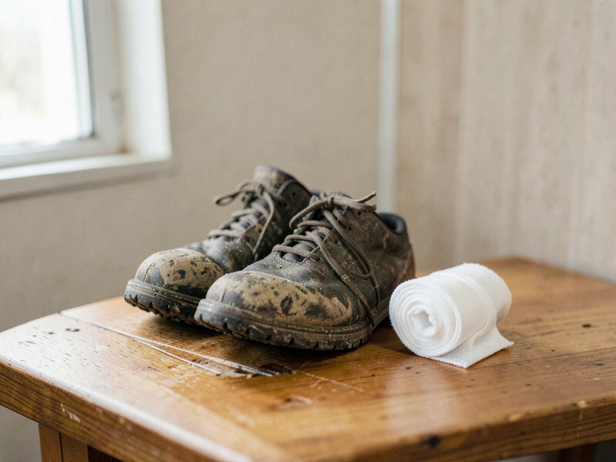
![Worn Cricket Gear Resting]()
Worn Cricket Gear Resting
Image credit : AI
The aftermath of a game, hinting at the physical toll. Understanding torn shoulder labrum symptoms is crucial for athletes.
The Gap Between Symptoms and Diagnosis
A standard X-ray will not show a labral tear. The labrum is soft tissue. An MRI arthrogram, where contrast dye is injected into the joint before imaging, is the investigation that gives a clear picture of the labrum's condition, but it is not the first thing ordered when a cricketer walks in describing a vague shoulder ache. Physical examination tests such as the O'Brien active compression test and the anterior slide test can suggest a labral injury, but they depend on the examiner's experience and the patient's ability to reproduce the sensation during the test. In a busy sports medicine setting, the gap between a suggestive clinical examination and the right imaging referral can be weeks or months. During that time, a player continues to bowl.
When to Stop Explaining It Away
A shoulder that clicks or catches during a throwing motion, feels unstable at the top of a delivery, aches deep inside rather than on the surface, or wakes a player at night is worth showing a doctor, not a physio first. Specifically, it is worth asking for an MRI arthrogram rather than a standard MRI, and worth naming the suspicion of a labral tear so the request is framed correctly. Treatment depends on the tear's location, size, and whether the joint has become unstable. Partial tears in a low-demand patient are sometimes managed without surgery. A cricketer who wants to return to bowling at full pace is rarely in that category, and the conversation about options, including arthroscopic repair, is one that belongs with an orthopaedic surgeon who works with overhead athletes. The longer the delay between the first symptom and the right diagnosis, the more likely the tear has extended and the more complex the repair.