For many people, the decision to choose a copper IUD is straightforward: no hormones, long-term protection, reversible. What the conversation does not always cover in enough detail is what the body does in the months immediately after insertion. Heavier periods and more intense cramping are not a sign that something has gone wrong. They are the uterus responding to a small foreign object, and the pattern follows a recognisable arc.
Why Bleeding Increases After Insertion
The copper IUD works partly because copper ions are toxic to sperm, but copper also has a local inflammatory effect on the uterine lining. That inflammation increases blood flow to the endometrium and can cause the lining to shed more heavily than it did before. For people who already had light or moderate periods, the shift can feel dramatic. For those who already had heavy periods, it compounds something that was already difficult.
The increase is not uniform across the cycle. Spotting between periods is common in the first one to three months, particularly in the days just after insertion. The period itself tends to be longer, sometimes by two to three days, and the flow is heavier, particularly in the first two days. Most of this settles progressively. By month four or five, many people find their periods have not returned to exactly what they were before, but the gap has narrowed considerably.
![Herbal Elixir Still Life]()
Herbal Elixir Still Life
Image credit : AI
A moment of calm with natural remedies. Exploring options for non-hormonal IUD period changes.
Cramping: What Is Typical and When It Shifts
Insertion itself is uncomfortable for most people and briefly painful for some. The cramping that follows insertion can last from a few hours to a couple of days and is the uterus contracting around the device. Over-the-counter pain relief taken before the appointment, as some clinicians suggest, can reduce this.
Beyond insertion, cramping during periods tends to be stronger than before the IUD, particularly in the first three months. The mechanism is prostaglandins: the same compounds that drive uterine contractions during menstruation are elevated by the inflammatory response to copper. This is why a non-steroidal anti-inflammatory such as ibuprofen, which blocks prostaglandin production, is more effective at managing copper IUD cramping than paracetamol, which does not.
Cramping that is severe enough to be disabling, that occurs outside of periods, or that worsens rather than improves after the third month is worth discussing with the clinician who placed the device. Pain that is consistently one-sided can indicate a positioning issue and should be evaluated.
The Six-Month Arc
The clinical picture that emerges from gynaecological practice is that the first three months are the hardest. Bleeding is heaviest, spotting is most frequent, and cramping is at its peak. Between months three and six, most people see a gradual improvement. The periods remain heavier than pre-IUD baseline for many people, but the severity of cramping usually decreases and the spotting between periods resolves.
A minority of people find the changes intolerable enough to have the device removed. Removal is straightforward and periods typically return to their previous pattern within one to two cycles. This is not a failure of the method; it is information about fit between a person and a particular form of contraception.
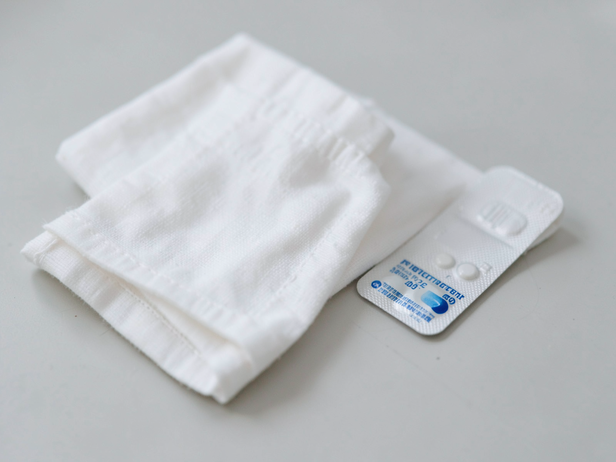
![Cloth and Pills]()
Cloth and Pills
Image credit : AI
A simple still life featuring a cloth and pain relief, perhaps for managing heavy periods after a copper IUD.
What Supports the Adjustment Period
Tracking the cycle from insertion onward gives both the person and their clinician useful information. A period tracking app or a simple written log noting flow volume, duration, and pain level makes it easier to see whether things are improving, staying flat, or worsening, which is the distinction that matters clinically.
Iron levels are worth monitoring for people who already had borderline iron stores before insertion, since consistently heavier periods over several months can deplete them further. Fatigue that feels disproportionate to the blood loss is a reason to get a blood count checked, not to assume it is normal adjustment. Dietary iron and, where indicated, supplementation are conversations to have with a doctor based on actual test results rather than assumption.
Heat applied to the lower abdomen during cramping provides real relief for many people and carries no risk. Ibuprofen taken at the onset of cramping rather than after it has peaked is more effective than the same dose taken later. Neither of these replaces an evaluation if the pain is outside what was described above.
The copper IUD's adjustment window is real and it is finite. The body is not rejecting the device; it is accommodating one. That distinction matters, because the people who get the most out of this form of contraception are usually the ones who went in knowing what the first six months would ask of them.