Pick up the same generic drug from two different manufacturers and the strip looks nearly identical: same active ingredient, same stated dose, same approved indication. Yet doctors in India regularly hear patients report that one brand of amlodipine controls their blood pressure and another does not, or that one generic antibiotic clears an infection and a cheaper substitute does not. This is not placebo effect or patient imagination. It is pharmacology, and five specific factors drive it.
Bioavailability Is a Range, Not a Fixed Number
The regulatory standard for generic approval requires that a drug's bioavailability, the fraction of the active ingredient that reaches the bloodstream, fall within 80 to 125 percent of the reference branded drug's bioavailability. That is not a narrow window. A generic at 82 percent and a generic at 121 percent are both legally equivalent, but they are not clinically identical for a patient on a tight therapeutic margin. Drugs like warfarin, levothyroxine, and lithium have narrow therapeutic indices, meaning the difference between a dose that works and one that causes harm is small. For those molecules, a shift anywhere inside the approved bioavailability range can produce a measurable clinical difference. The Central Drugs Standard Control Organisation follows the same international bioequivalence framework, but the window itself is the issue, not the regulator.
![Tablet and Water Still Life]()
Tablet and Water Still Life
Image credit : AI
Exploring the subtle differences in generic drug bioavailability. Understanding why generics work differently is key.
Excipients Are Not Inert
The active ingredient is typically a small fraction of what is in a tablet. The rest, binders, fillers, coatings, disintegrants, lubricants, are called excipients, and they are chosen by each manufacturer independently. Two generics with identical active ingredients can use entirely different excipients, and those choices affect how fast the tablet breaks apart in the stomach, how quickly the drug dissolves, and how much reaches the intestinal wall for absorption. Magnesium stearate, a common lubricant, slows dissolution when used in higher concentrations. Certain cellulose fillers absorb moisture and affect how a tablet disintegrates. For drugs that depend on precise dissolution timing, extended-release formulations especially, excipient differences between manufacturers can shift the drug's release curve enough to change its clinical effect.
Manufacturing Process and Particle Size
The physical form of an active ingredient matters as much as its chemical identity. The same molecule can be milled to different particle sizes by different manufacturers, and smaller particles dissolve faster and are absorbed more readily. A drug like griseofulvin, an antifungal, is a textbook case: its absorption improves substantially when the particle size is reduced. Indian pharmaceutical manufacturers operate under Schedule M of the Drugs and Cosmetics Act, which sets Good Manufacturing Practice requirements, but the specific choices within those requirements, milling technique, granulation method, compression force, vary by facility and are proprietary. Two factories both in compliance can produce tablets that behave differently in the gut for exactly these reasons.
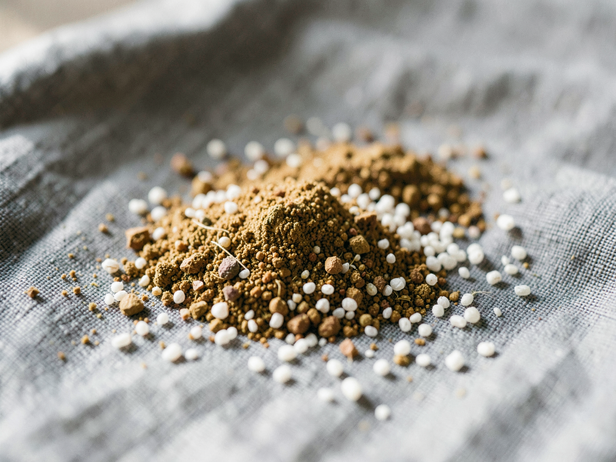
![Botanical Powders and Granules]()
Botanical Powders and Granules
Image credit : AI
Exploring the subtle differences in raw botanical powders and granules. Understanding bioequivalence is key.
Storage Conditions Before the Pharmacy
A drug that leaves the factory within specification can arrive at a patient's hands outside it. India's supply chain moves through multiple hands, distributor, regional warehouse, stockist, retail pharmacy, and temperature and humidity exposure accumulates at each step. The Indian Pharmacopoeia specifies storage conditions, but cold chain compliance for drugs that are not vaccines or biologics is inconsistently enforced across states. Heat degrades certain molecules: tetracyclines can break down into compounds that are nephrotoxic at high temperatures; aspirin hydrolyses into acetic acid and salicylic acid in humidity. A generic stored correctly and one stored poorly carry the same label but not the same chemistry by the time they reach the patient.
Batch-to-Batch Variation Within a Single Manufacturer
Even within one manufacturer, not every batch is identical. Raw material quality varies by supplier and by season. A starting material sourced from one API manufacturer in one quarter may carry slightly different impurity profiles than the next quarter's batch. Indian API production is concentrated in Hyderabad and Ahmedabad, and the same finished-drug manufacturer may switch API suppliers when costs or availability shift. The finished drug's performance can shift with it. Regulatory batch testing samples a fraction of production; it does not guarantee that every unit in every batch performs identically. For most drugs and most patients this variation is clinically invisible. For patients on narrow-margin therapies, it is not.