India made e-cigarettes illegal in September 2019 under the Prohibition of Electronic Cigarettes Act, with penalties for manufacture, import, sale, and advertisement. Six years later, disposable vapes with names like Elf Bar and Lost Mary are available through quick-commerce apps, imported informally, and traded at school gates for a few hundred rupees. The gap between the law and the reality is not a failure of intent. It is a failure to reckon with how easy the product is to move, how appealing it is to a specific age group, and what it is actually doing inside the body that receives it.
The Nicotine Delivery Problem Is Different Now
Early e-cigarettes used freebase nicotine, the same form found in cigarettes. Nicotine salts, introduced around 2015 and now standard in most disposables, changed the pharmacology. They allow much higher nicotine concentrations, often 20 to 50 milligrams per millilitre, to be inhaled without the harsh throat sensation that would otherwise limit how much a person could take in. A single disposable vape marketed as delivering 600 puffs can carry nicotine equivalent to a pack or more of cigarettes. The hit is faster, the harshness is lower, and the dose is higher. For a teenage user who has never smoked, there is no learned tolerance and no reference point for how much is too much.
![Botanical Dropper Still Life]()
Botanical Dropper Still Life
Image credit : AI
Exploring natural ingredients, mindful of vaping effects on teenage brain.
Why the Adolescent Brain Is a Different Target
The prefrontal cortex, the region governing impulse control, risk assessment, and the ability to weigh long-term consequence against short-term reward, is not fully developed until the mid-twenties. Nicotine acts on acetylcholine receptors distributed across the brain, and in an adolescent, those receptors are more numerous and more plastic than in an adult. Repeated nicotine exposure during this window does not just create dependence in the way it does for an adult. According to the US Surgeon General's advisory on e-cigarettes and youth, adolescent nicotine exposure can alter the development of the circuits that govern attention, learning, and mood regulation, changes that persist after the nicotine is gone. The Indian Council of Medical Research flagged adolescent nicotine exposure as a developmental concern in its position paper supporting the 2019 ban, noting that early initiation is associated with higher rates of dependence and greater difficulty quitting than initiation in adulthood. The brain being shaped by nicotine is simultaneously the brain being asked to evaluate whether using nicotine is a good idea. That is the structural problem no ban addresses by itself.
What the Vapour Actually Contains
The marketing language around vaping has consistently leaned on the word clean, no tar, no combustion, no tobacco. The comparison to cigarettes is accurate as far as it goes and misleading in what it omits. The aerosol produced by heating propylene glycol and vegetable glycerin carries the base chemicals in a form the lungs were not built to process. When flavouring compounds are added, and most products sold to teenagers are heavily flavoured, which is a documented driver of uptake in young users, the picture changes further. Diacetyl, a compound used in some buttery flavourings, is associated with a condition called bronchiolitis obliterans, a scarring of the small airways. Vitamin E acetate, used as a thickening agent in some products, was identified as a primary cause of the EVALI outbreak in the United States in 2019, which hospitalised nearly three thousand people and killed sixty-eight. The products entering India through informal channels carry no regulatory oversight of their contents. A teenager buying a mango-flavoured disposable from a courier app has no way of knowing what is in the heating coil or the liquid, and no recourse if the contents differ from the label.
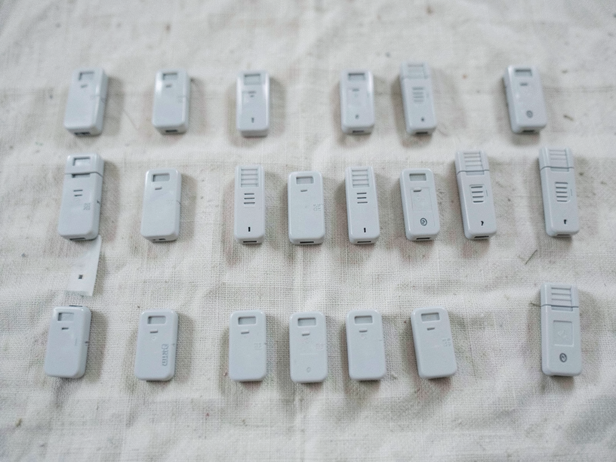
![Disposable Vapes on Linen]()
Disposable Vapes on Linen
Image credit : AI
Rows of disposable vapes, a stark reminder of the potential for e-cigarette addiction among young people.
Why the Ban Has Not Held
The 2019 Act gave enforcement authority to state governments. Disposables are small, odourless in transit, and easily described as electronic accessories in shipping documentation. The demand side is driven by a demographic with high digital fluency, access to UPI payments, and social networks that move product information faster than regulatory awareness. Harm-reduction messaging in India has historically been built around tobacco and alcohol, not nicotine delivery devices that look like USB drives. Many parents and teachers cannot identify a vape by sight. School staff in several cities have reported finding devices only after students were already symptomatic, headaches, nausea, elevated heart rate, which are the signs of acute nicotine excess in a body unused to it. The ban removed the legal retail channel. It did not remove the product, the demand, or the social environment in which use is normalised through peer visibility.
What Intervention Actually Looks Like
Countries that have seen measurable reductions in adolescent vaping rates have combined legal restriction with three other elements: school-based education that names the specific product and the specific mechanism rather than offering generic anti-drug messaging; clinician training so that paediatricians and school doctors can screen for nicotine dependence and offer cessation support; and customs enforcement targeted at the import channel rather than the retail end. The Indian Dental Association and several paediatric bodies have called for nicotine replacement therapy to be made accessible to adolescents under clinical supervision, recognising that a teenager already dependent on 50 mg/ml nicotine salts cannot simply be told to stop. None of this replaces the ban. The ban matters because legal availability at scale would make the numbers far worse. But a ban treated as a completed intervention, rather than the first line of a longer response, leaves the adolescent brain to absorb the consequences of a policy gap that the aerosol does not wait for anyone to close.