Most Indian homes were built to survive summer, not winter. The same stone floors and high ceilings that keep rooms cool in May become cold traps in December. A room heater fixes the symptom but not the cause: the moment it goes off, the warmth bleeds out through gaps, thin curtains, and uninsulated floors within the hour. These five methods work on the building itself, so the heat you generate stays where you need it.
Layer the Floor Before You Layer Yourself
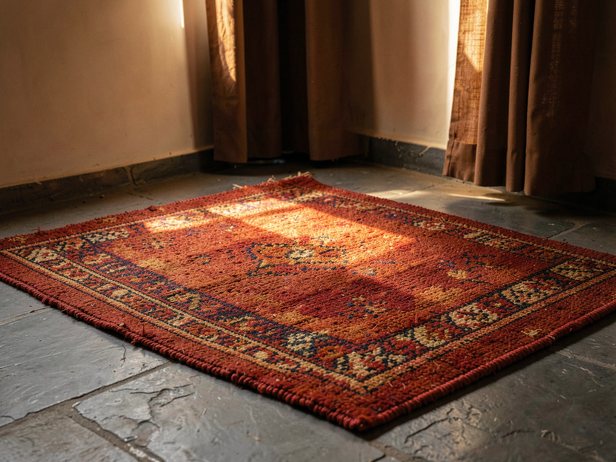
Cold floors are the fastest route to a cold room. Stone, marble, and ceramic tile conduct heat away from the air above them all night. A thick durrie, a folded cotton dhurrie, or even a layer of newspaper under a rug breaks that conduction. The principle is simple: still air trapped in a textile is one of the cheapest insulators there is. Cover the floor between the bed and the bathroom, the path you walk half-asleep at 3 a.m. is where you feel the cold most sharply. If you have a stone or tile floor and no rug, a folded bedsheet laid flat does the job for one night.
![Golden Morning Rug Warmth]()
Golden Morning Rug Warmth
Image credit : AI
My Indian home feels warm without a heater, thanks to this beautiful rug. Winter home tips India.
Use Your Windows Like a Valve, Not a Wall
Windows lose heat in two ways: cold air seeping through gaps around the frame, and radiant heat escaping through the glass itself. Heavy curtains, lined cotton, velvet, or the thick polyester blackout variety sold at most fabric markets, cut both losses when drawn before the temperature drops, typically around sunset. The timing matters. Drawing curtains after the room has already cooled traps cold air inside rather than keeping warm air in. A rolled towel or a folded dupatta pressed against the gap at the bottom of the door to the corridor does the same job for that edge. This is not a permanent fix; it is a nightly habit that takes thirty seconds.
Heat the Bed, Not the Room
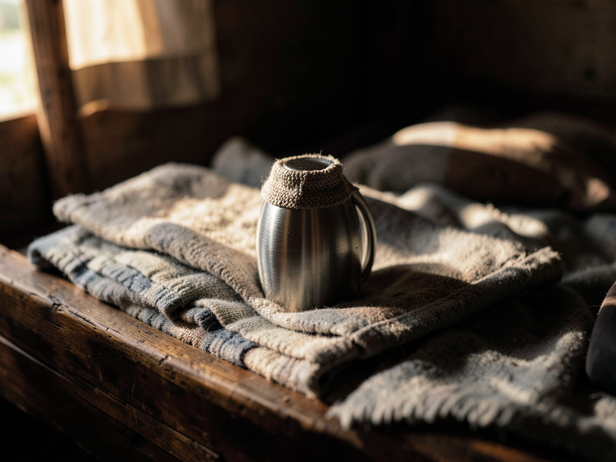
A room heater warms cubic metres of air that drift away the moment a door opens. A hot water bottle warms the specific cubic centimetres where your body actually is. Fill a rubber hot water bottle, or a stainless steel one with a cloth cover, widely available in north Indian markets, with water just off the boil, slip it under the blanket at the foot of the bed twenty minutes before you sleep, and the bed stays warm through the first half of the night with no electricity running. For children or elderly family members who feel the cold more, a second bottle near the torso works. The Chanakya Niti principle of directing resources where they produce the most effect applies here as directly as it does to statecraft: heat the person, not the building.
![Cozy Winter Warmth]()
Cozy Winter Warmth
Image credit : AI
Embrace the chill with this cozy setup. A simple way to keep house warm without heater.
Block the Chimney Effect at the Top of the House
Warm air rises. In a two-storey house or a flat with a staircase open to the floor above, heat generated on the ground floor migrates upward all night. Closing the door to the stairwell, or hanging a heavy curtain across an open staircase, keeps the warmth on the floor where the bedrooms are. The same logic applies to lofts, attic hatches, and even tall almirahs pushed against an exterior wall, they create a cold column that pulls warm air toward them. Moving an almirah away from an exterior wall and positioning it against an interior one is a rearrangement that costs nothing and changes the thermal map of the room.
Run the Heater Smart, Then Let Thermal Mass Finish the Job
Stone walls, concrete ceilings, and brick absorb heat slowly and release it slowly. This is the thermal mass that makes old havelis comfortable in summer, and it works in reverse in winter if you use it deliberately. Run the heater for ninety minutes before bed with the door closed, letting the walls and ceiling absorb as much heat as they can. Then turn it off, close the room tight, and let the structure radiate that stored warmth back through the night. A room that has been heated for ninety minutes with the door shut will stay several degrees warmer at 4 a.m. than one heated for the same duration with the door open. The difference is not the heater, it is what the walls remember.