
5 Animals That Appear Only at Night and Are Rarely Seen
Nidhi | Mar 17, 2026, 11:54 IST

Animals
Image credit : Ai
When the world goes quiet, a hidden side of nature awakens. This article explores five rare animals that live almost entirely in the dark, rarely seen by human eyes. From forests to deep oceans, these creatures survive with extraordinary abilities, reminding us that some of the most fascinating life exists quietly, beyond our everyday view.
When the sun sets and the world slows down, a completely different ecosystem comes alive. While humans associate darkness with rest, for many creatures, night is when life truly begins. Hidden from plain sight, these animals have evolved to thrive in silence, shadows, and secrecy.
Nocturnal animals are not just active at night. They are specialists of darkness. Their senses are sharper, their movements quieter, and their presence often goes unnoticed. Some of them are so elusive that even wildlife researchers struggle to observe them regularly.
![Aye-Aye]() The Aye-aye is one of the strangest and rarest primates in the world, found only in the forests of Madagascar. Often called the ghost of the forest, it is rarely seen due to its strictly nocturnal nature and solitary behavior.
The Aye-aye is one of the strangest and rarest primates in the world, found only in the forests of Madagascar. Often called the ghost of the forest, it is rarely seen due to its strictly nocturnal nature and solitary behavior.
What makes the aye-aye extraordinary is its highly specialized middle finger. This thin, elongated finger is used to tap on tree bark to locate hollow spaces where insects hide. Once detected, it gnaws through the wood and extracts its prey with surgical precision. This unique hunting method is known as percussive foraging.
Its large, glowing eyes allow it to see in near-total darkness, while its bat-like ears can detect even the faintest sounds of insects moving inside wood. Due to its eerie appearance and secretive habits, it has been surrounded by myths and superstitions in local cultures.
![Snow Leopard]() The Snow Leopard is one of the most elusive big cats on Earth, often referred to as the ghost of the mountains. Found in the high altitudes of Central and South Asia, including the Himalayas, it is rarely spotted even by seasoned explorers.
The Snow Leopard is one of the most elusive big cats on Earth, often referred to as the ghost of the mountains. Found in the high altitudes of Central and South Asia, including the Himalayas, it is rarely spotted even by seasoned explorers.
Although not strictly nocturnal, snow leopards are most active during twilight and nighttime, when they hunt in silence. Their thick, smoky-gray fur with rosette patterns provides perfect camouflage against rocky terrain, making them almost invisible.
They rely on stealth rather than speed. Their wide paws act like natural snowshoes, allowing them to move silently across snow, while their long tail helps maintain balance in steep terrains. Their ability to remain undetected even in open landscapes makes them one of the hardest animals to study.
The Fennec Fox is the smallest species of fox, but it possesses some of the most impressive adaptations for nighttime survival in harsh desert environments.
Living in the Sahara Desert, where daytime temperatures can be extreme, the fennec fox avoids the heat by being active only at night. Its oversized ears are not just for hearing prey underground but also help dissipate heat, keeping its body cool.
It feeds on insects, small rodents, and plants, often digging silently beneath the sand. Its thick fur protects it from the cold desert nights while also reflecting heat during the day when it rests underground. Its pale color blends seamlessly with the desert, making it nearly invisible under moonlight.
The Slow Loris is a small, tree-dwelling primate known for its slow movements and large, reflective eyes. Found in Southeast Asia, it is almost entirely nocturnal and rarely seen in the wild.
What makes the slow loris truly unique is that it is one of the few venomous mammals. It produces toxins from glands in its elbows, which it spreads onto its fur. This acts as a defense mechanism against predators.
Its slow, deliberate movements are not a weakness but a survival strategy. By moving quietly and steadily, it avoids detection. Its grip is incredibly strong, allowing it to hang onto branches for long periods without effort. Its large eyes enhance night vision, enabling it to navigate dense forests in darkness.
![Vampire Squid]() The Vampire Squid lives in the deep ocean where sunlight never reaches. It is one of the rarest and least understood marine creatures, spending its entire life in darkness.
The Vampire Squid lives in the deep ocean where sunlight never reaches. It is one of the rarest and least understood marine creatures, spending its entire life in darkness.
Unlike most squid, the vampire squid does not hunt actively. Instead, it feeds on organic debris drifting through the water, known as marine snow. Its survival depends on energy efficiency and minimal movement.
Its most fascinating feature is bioluminescence. It can produce light from specialized organs on its body, either to confuse predators or communicate. When threatened, it turns itself inside out, revealing spiny projections and glowing patterns that create an intimidating display.
This mysterious creature represents life at its most extreme, thriving in conditions where most organisms cannot survive.
Nocturnal animals are not just active at night. They are specialists of darkness. Their senses are sharper, their movements quieter, and their presence often goes unnoticed. Some of them are so elusive that even wildlife researchers struggle to observe them regularly.
1. The Ghost of the Forest: Aye-Aye
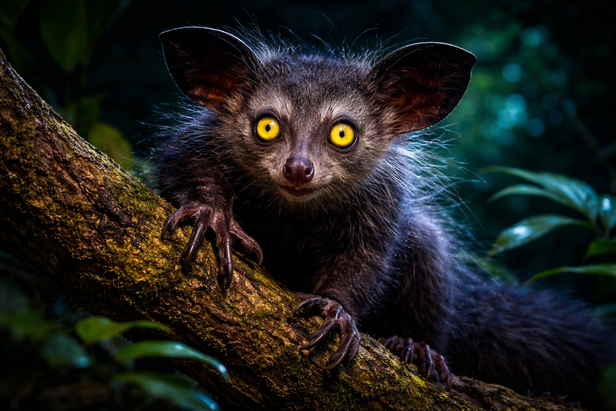
Aye-Aye
Image credit : Ai
What makes the aye-aye extraordinary is its highly specialized middle finger. This thin, elongated finger is used to tap on tree bark to locate hollow spaces where insects hide. Once detected, it gnaws through the wood and extracts its prey with surgical precision. This unique hunting method is known as percussive foraging.
Its large, glowing eyes allow it to see in near-total darkness, while its bat-like ears can detect even the faintest sounds of insects moving inside wood. Due to its eerie appearance and secretive habits, it has been surrounded by myths and superstitions in local cultures.
2. The Silent Hunter: Snow Leopard
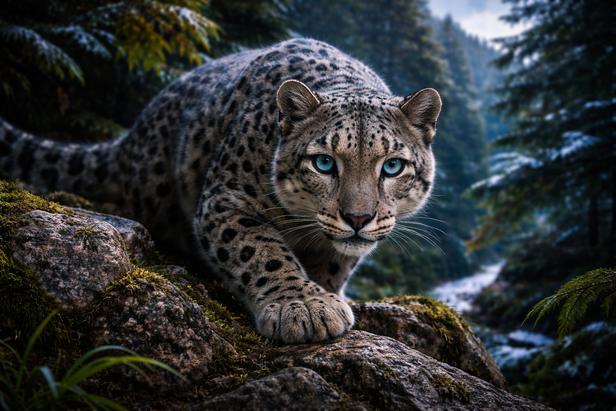
Snow Leopard
Image credit : Ai
Although not strictly nocturnal, snow leopards are most active during twilight and nighttime, when they hunt in silence. Their thick, smoky-gray fur with rosette patterns provides perfect camouflage against rocky terrain, making them almost invisible.
They rely on stealth rather than speed. Their wide paws act like natural snowshoes, allowing them to move silently across snow, while their long tail helps maintain balance in steep terrains. Their ability to remain undetected even in open landscapes makes them one of the hardest animals to study.
3. The Desert Phantom: Fennec Fox
Living in the Sahara Desert, where daytime temperatures can be extreme, the fennec fox avoids the heat by being active only at night. Its oversized ears are not just for hearing prey underground but also help dissipate heat, keeping its body cool.
It feeds on insects, small rodents, and plants, often digging silently beneath the sand. Its thick fur protects it from the cold desert nights while also reflecting heat during the day when it rests underground. Its pale color blends seamlessly with the desert, making it nearly invisible under moonlight.
4. The Master of Darkness: Slow Loris
What makes the slow loris truly unique is that it is one of the few venomous mammals. It produces toxins from glands in its elbows, which it spreads onto its fur. This acts as a defense mechanism against predators.
Its slow, deliberate movements are not a weakness but a survival strategy. By moving quietly and steadily, it avoids detection. Its grip is incredibly strong, allowing it to hang onto branches for long periods without effort. Its large eyes enhance night vision, enabling it to navigate dense forests in darkness.
5. The Ocean’s Night Phantom: Vampire Squid
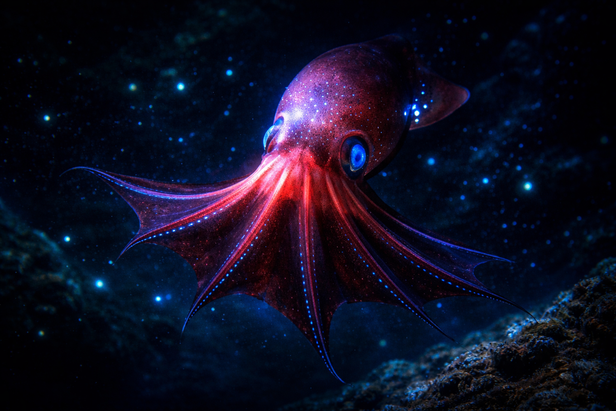
Vampire Squid
Image credit : Ai
Unlike most squid, the vampire squid does not hunt actively. Instead, it feeds on organic debris drifting through the water, known as marine snow. Its survival depends on energy efficiency and minimal movement.
Its most fascinating feature is bioluminescence. It can produce light from specialized organs on its body, either to confuse predators or communicate. When threatened, it turns itself inside out, revealing spiny projections and glowing patterns that create an intimidating display.
This mysterious creature represents life at its most extreme, thriving in conditions where most organisms cannot survive.