The used car market in India moves fast. A decent hatchback listed on a Monday can have three buyers calling by Tuesday afternoon, and that urgency is exactly what sellers rely on. Slow down. The checks in this guide take one afternoon and can save you anywhere from twenty thousand to two lakh rupees in hidden repair bills, loan complications, and legal headaches.
Start with the paperwork, not the car
Before you look at the paint or lift the bonnet, ask for the Registration Certificate. The RC tells you the registered owner's name, the vehicle's chassis number, the engine number, and whether it is registered as a private vehicle or a commercial one. If the seller's name does not match the RC, you are buying from someone who either has not transferred ownership after their own purchase or is selling a car they do not legally own. Walk away from both situations.
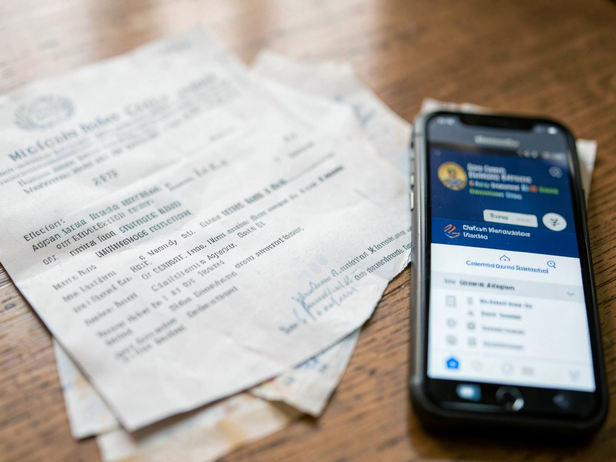
Run the vehicle's registration number through the Vahan portal at vahan.parivahan.gov.in. It is free and takes two minutes. You will see the current registration status, the insurance validity, and whether the vehicle has been reported stolen. Also check the Court Records section on the same portal for any challan history. A car with forty unpaid challans is your problem the moment the RC transfers to your name.
Ask for the original insurance policy document, not a screenshot. Confirm the policy is active and that the vehicle's chassis number on the policy matches the RC and the physical number stamped on the car's firewall. A mismatch anywhere in this chain is a serious red flag.
![Car Ownership Verification]()
Car Ownership Verification
Image credit : AI
I'm checking the used car RC verification on the Vahan portal for peace of mind.
Check for a loan on the vehicle
Many used cars in India are sold while still under a hypothecation, meaning a bank or NBFC has a lien on the vehicle because the original buyer took a loan that is not fully repaid. The RC will show the name of the hypothecating institution in the Hypothecation column. If that column is not blank, the seller needs to show you a No Objection Certificate from the lender before you pay anything. Without an NOC, the lender has a legal claim on the vehicle even after you buy it.
You can also check for active loans through CERSAI, the Central Registry of Securitisation Asset Reconstruction and Security Interest of India. It is a small fee and takes a day, but it is worth it for any car above five lakh rupees.
Inspect the body for a hidden history
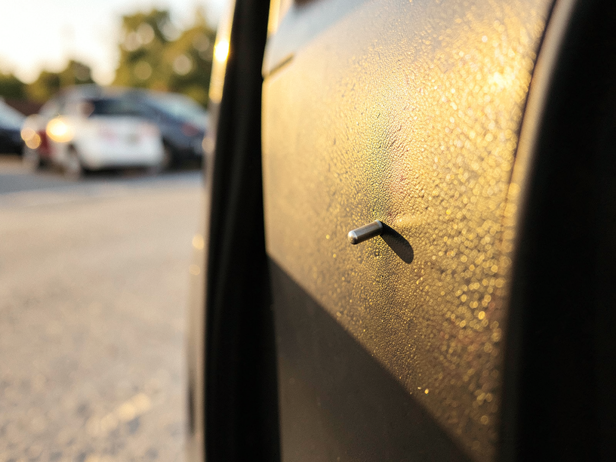
A repainted panel is not always a problem, but it is always a conversation. Run a magnet along the body panels. Where the magnet loses grip, filler has been used to cover dent damage or rust. Filler is common and not necessarily alarming in small patches, but a bonnet or an A-pillar that has been filled and repainted suggests a more serious impact.
Open every door and look at the rubber seals. Uneven gaps between panels, paint overspray on the rubber, or a door that does not sit flush with the body are signs of panel replacement after an accident. Check the boot floor and lift the spare tyre cover. Accident damage to the rear often shows up as crinkled metal or fresh underseal in the boot well that does not match the rest of the car.
Do this inspection in daylight, never in a basement parking lot or at dusk. Artificial light hides more than it shows.
![Magnet on Car Door]()
Magnet on Car Door
Image credit : AI
Examining a car's condition, I notice a small magnet on the door panel. This is part of how to check second hand car before buying.
Drive it, and drive it hard enough to learn something
A ten-minute test drive around the block tells you almost nothing. Take it on a road with potholes, brake firmly at 60 kmph, and if possible get it onto a highway stretch. Listen for a pull to one side under braking, which suggests uneven brake wear or a warped disc. A shimmy in the steering wheel at highway speed usually means wheel balancing or alignment is off, which is cheap to fix but also a sign that the car has not been maintained. A vibration through the floor at idle can mean a worn engine mount.
Turn the steering wheel to full lock in both directions in a parking lot and listen for a clicking sound from the front wheels. That click is a worn CV joint. Replacing both CV axles on a hatchback typically costs between eight and fifteen thousand rupees, so factor it in or ask for a price adjustment.
Switch on every electrical item one at a time: air conditioning, all four windows, both wing mirrors, the rear defogger, the infotainment system. Electrical gremlins on older Indian-market cars are common and often expensive because they trace back to corroded wiring that no one has touched in years.
Get an independent inspection before you commit
Maruti True Value, Mahindra First Choice, and several independent garages in most cities offer pre-purchase inspections for between five hundred and two thousand rupees. A mechanic who has no stake in the sale will put the car on a lift and check what you cannot see from underneath: oil leaks, suspension wear, exhaust condition, and whether the chassis has been welded or straightened after an accident.
This step feels unnecessary when you have already spent two hours looking the car over and you like it. It is the step that saves you the most money, precisely because you like the car. Emotional investment is when the blind spots appear.
Once the inspection is done and you are satisfied, negotiate on what the inspection found, not on what you assumed before it. A car that needs two new tyres and a CV joint is worth that much less than the asking price. Say so with the receipts in hand.
The transfer of ownership happens at the local RTO. Both buyer and seller need to be present, or the seller can give a notarised power of attorney. The Form 29 and Form 30 are the transfer documents. Keep your copies. The RC in your name is what makes the car legally yours, and it is what every traffic officer, insurance company, and future buyer will ask for first.