Satyajit Ray shot Pather Panchali over three years with no studio backing, a crew that was learning on the job, and a budget that ran out before the film did. The West Bengal government eventually stepped in to finish it. When it screened at Cannes in 1956, it won Best Human Document. The lesson is not that genius overcomes poverty. The lesson is that Ray had a specific set of working habits that made the constraint productive rather than fatal.
Prepare Until the Shot Costs Nothing to Think About
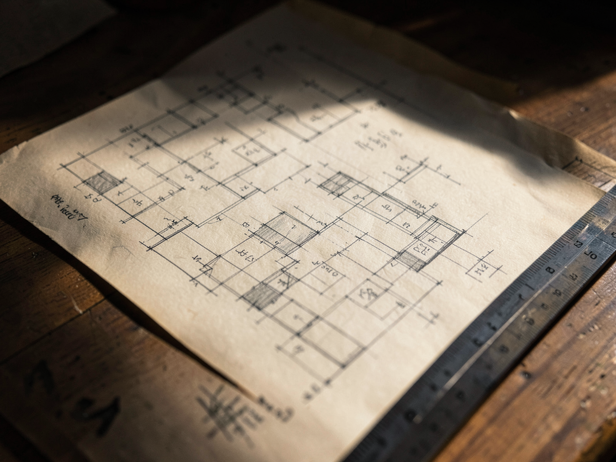
Ray storyboarded Pather Panchali in such detail that every frame was decided before a single reel of film was loaded. He could not afford to discover the composition on set. Film stock cost money. Idle crew cost money. The thinking had to happen earlier, on paper, for free. The principle transfers cleanly: the more expensive the execution, the cheaper the planning has to be. If you are working on a limited budget, a small business, a side project, a home renovation, every hour spent on paper before the work starts is an hour that does not get billed twice. Ray's storyboards were not decoration. They were the budget control system.
![Morning Light on Sketches]()
Morning Light on Sketches
Image credit : AI
My creative work on a tight budget, inspired by the Pather Panchali lessons for everyday life.
Know the Difference Between What You Cannot Afford and What You Do Not Need
Ray had no professional actors for Pather Panchali. He cast Chunibala Devi, an elderly woman who had been out of work for years, as Indir Thakrun. He cast children from the neighbourhood. He could not afford established names. But established names were not what the story needed. The film needed faces that had not been seen before. The constraint pointed him toward the right choice. This is the discipline most low-budget workers skip: they spend energy mourning the resource they lack rather than asking whether the lack is actually a problem. Before treating a gap as a deficiency, ask what the work actually requires. Often the cheaper option is not second-best, it is just unfamiliar.
Chanakya's Principle: Finish What You Start Before Starting Anything Else
The Arthashastra records a principle that translates roughly as: a task half-done consumes resources without producing results. Ray kept the Pather Panchali project alive across three years of interrupted shooting precisely because he never let it become a background item. When money ran out, he stopped shooting. He did not pivot to something else. He waited, raised more, and returned. The project stayed the project. Scattered attention is a budget problem even when money is not the constraint, it is a time and energy budget problem. Finishing one thing completely before opening another is not a discipline of perfectionism. It is arithmetic.
![Lamp, Notebook, Golden Light]()
Lamp, Notebook, Golden Light
Image credit : AI
My creative work on a tight budget India begins with simple tools and focused intention. Inspiration awaits on these blank pages.
Use the Location You Have, Not the One You Wish You Had
Ray shot in rural Bengal because that was where the story was set and because he could not afford to build sets. The landscape became one of the film's most praised elements, the famous sequence of Apu and Durga running through the kaash flower fields exists because Ray looked at what was actually there and asked what it could do. The equivalent in everyday work is the habit of auditing what is already available before writing a requirements list. Most small projects are under-resourced in money and over-resourced in existing materials, relationships, and spaces that have not been properly used. The audit comes first.
Let the Constraint Set the Aesthetic
Ray could not afford to light every scene the way a studio production would. So he worked with natural light, which meant shooting at specific times of day, which meant the film has a quality of light that studio productions of the same era do not. The constraint became the style. This is not a consolation. It is a design principle: when a limitation forces a choice, that choice often produces something more distinctive than the well-resourced default would have. The low-budget version of a project, made with full attention to what the constraint makes possible, is frequently more interesting than the adequately funded version made without that pressure. Ray did not apologise for the light. He used it.