Most salaried employees in India get between 12 and 18 days of earned leave a year. Wedding season alone can demand eight of them in a single month if you are not deliberate about it. The five approaches below are not about saying no to weddings, they are about making the same number of days cover more ground.
Map the full season before booking a single day
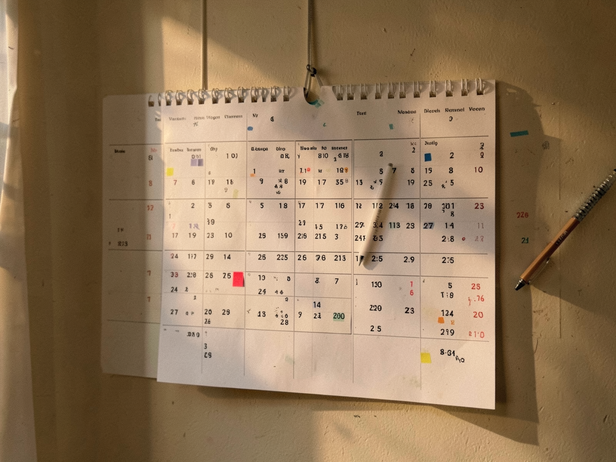
![Calendar Planning Still Life]()
Calendar Planning Still Life
Image credit : AI
Strategic leave planning for wedding season. Spread annual leave across months for better balance.
Pull up your leave balance and a calendar on the same screen. Write down every wedding, sangeet, mehendi, and reception you are expected at, not just the ones you want to attend. October through February is the core window; December and January carry the heaviest concentration of destination weddings. Seeing the full picture at once stops the habit of treating each event as an isolated decision. A three-day Udaipur wedding in October and a two-day Goa wedding in January look manageable separately. Together with the events around them, they may already account for your entire balance. The map does not make the decisions for you, but it stops you making them blind.
Use the sandwich method around public holidays
The Government of India gazette lists roughly 17 central public holidays a year, and most state governments add their own. Wedding season overlaps with several: Dussehra, Diwali, Christmas, and Makar Sankranti all fall inside the October-to-January window. A wedding on the Saturday before a public holiday Monday costs you one day of leave, not two. A destination wedding that begins on a long weekend costs you the travel day, not the entire weekend. Chanakya wrote in the Arthashastra that a minister who wastes resources through carelessness causes more damage than one who is corrupt, the principle scales down to a leave register. One sandwiched leave day doing the work of three is not a trick; it is arithmetic.
Separate the must-attend from the should-attend
![Office Leave & Wedding Invitation]()
Office Leave & Wedding Invitation
Image credit : AI
Planning office leave during wedding season? This visual highlights the intersection of professional and personal commitments.
Not every event on the list carries equal weight. The wedding of a close sibling or a best friend is a must-attend. The reception of a colleague's cousin, where your presence is courteous but not central, is a should-attend. This distinction is not about affection, it is about what your absence would actually mean to the people getting married. For must-attend events, protect the full leave block. For should-attend events, look at whether a single-day appearance at the reception covers the obligation. Attending the reception rather than the full function is socially accepted at most Indian weddings when the guest is not in the immediate family circle. Two days saved here can fund a must-attend destination wedding in February.
Front-load the planning conversation with your manager
Most leave conflicts happen because the request comes too late. A wedding in November that you raise in October is competing with everyone else who also waited. The same wedding raised in August, when the invitation has just arrived, is a different conversation. Managers plan team coverage in advance; a leave request that gives them three months is one they can accommodate. A request that gives them three weeks is one they have to refuse or resent. If your company allows leave encashment or carry-forward, ask HR in September what the rules are. Some organisations allow up to 30 days of carry-forward, which means unused leave from the previous year can absorb a heavy wedding month without touching the current year's balance.
Build a buffer of two days and do not touch it until December
Reserve two days from your balance in September and treat them as already spent. Do not assign them to any event. This buffer exists for the invitation that arrives in November for a December wedding you did not know about, for the flight that gets cancelled and costs an extra day, for the family function that expands at the last minute. People who plan every day to its maximum use are the ones who finish November with nothing left. The buffer is not wasted leave, it is the insurance that keeps the rest of the plan intact. If December passes without needing it, you have two days to carry into January or to use for the New Year holiday you kept telling yourself you would take.