The AQI hits 180 and you lace up anyway, reasoning that a short run cannot hurt. That reasoning is wrong, and the mechanism is simple: exercise multiplies the volume of air your lungs pull in per minute, which multiplies the dose of PM2.5 you absorb. A brisk 30-minute run in moderate smog delivers a particle load closer to sitting in heavy smog for several hours.
The AQI Numbers That Actually Matter for Exercise
The Central Pollution Control Board uses six AQI bands. For outdoor exercise, the thresholds work differently than they do for resting exposure. At 0 to 50 (Good), run freely. At 51 to 100 (Satisfactory), most healthy adults are fine; those with asthma or heart conditions should shorten the session. At 101 to 200 (Moderate), cut intensity and duration by half and avoid peak traffic hours. At 201 to 300 (Poor), outdoor cardio is off the table for everyone. Above 300, the air is hazardous even for people standing still.
Delhi, Lucknow, and Patna routinely breach 300 between October and January. Mumbai and Pune see 150 to 200 windows during Diwali week. Check the SAFAR India app or the CPCB dashboard before stepping out; the reading changes by the hour and varies by neighbourhood, so a general city average undersells what you inhale near a main road.
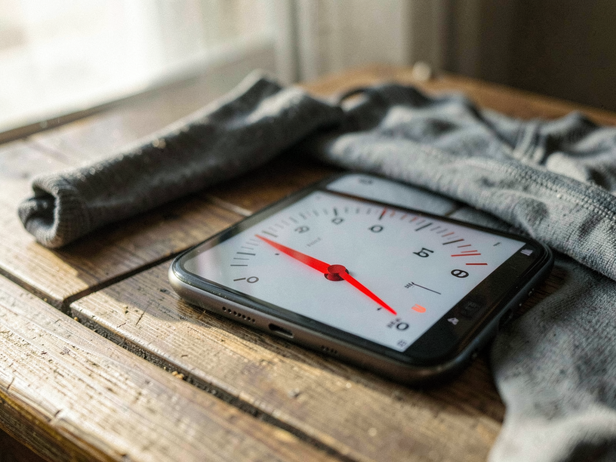
![Red AQI, Morning Run Prep]()
Red AQI, Morning Run Prep
Image credit : AI
My morning run is on hold due to the red AQI. I'll need to find an indoor workout during air pollution instead.
What PM2.5 Does to Your Body When You Are Moving
PM2.5 particles are small enough to bypass the nose and throat entirely and lodge in the alveoli, the tiny air sacs where oxygen crosses into the bloodstream. During rest, an adult breathes roughly six litres of air per minute. During a moderate run, that rises to 60 to 100 litres per minute. The lungs are also more open during exercise, drawing particles deeper. Repeated exposure at this intensity has been linked by the Indian Council of Medical Research to accelerated decline in lung function in urban populations, particularly in people who exercise heavily outdoors in high-pollution months.
The short-term effects show up within hours: airway irritation, reduced lung capacity, and elevated inflammatory markers in the blood. For people with no diagnosed condition, these effects are mostly reversible with rest. For those with asthma, COPD, or a history of cardiac events, a single heavy-exposure session can trigger a flare.
Indoor Workouts That Replace the Cardiovascular Load
The goal is not to rest through smog season. It is to keep the cardiovascular adaptation you have built without trading it for lung damage.
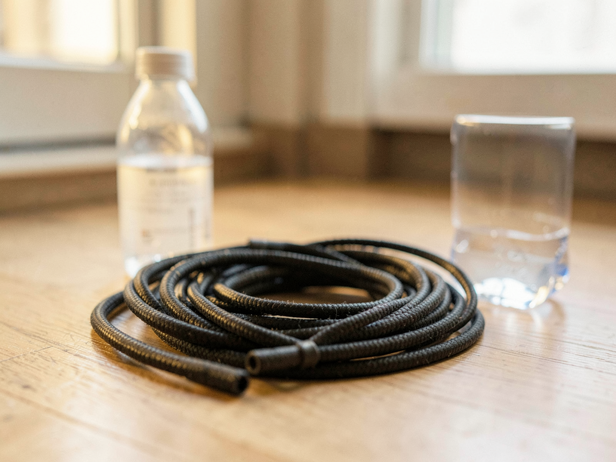
Jump rope is the most underrated replacement. Twenty minutes of steady skipping at a moderate pace keeps your heart rate in the same zone as a 5 km run. It requires three square metres of floor space and costs under five hundred rupees for a decent rope. Staircase intervals work equally well if you have four or more floors: walk down, run up, repeat for 25 minutes. The eccentric load on the descent also works the quadriceps in a way flat running does not.
For those with a gym membership, the treadmill with an incline of 6 to 8 percent replicates outdoor running effort more accurately than flat-belt jogging. The incline engages the glutes and calves more fully and raises the heart rate to outdoor equivalents at a lower speed. If you prefer no equipment, a circuit of bodyweight squats, mountain climbers, and burpees held for 30 minutes maintains aerobic capacity through the season.
Yoga and stretching are not cardiovascular replacements. They are valuable, but they serve a different system. If your goal is to protect the fitness you built running, you need sustained elevated heart rate, not flexibility work.
![Jump Rope and Water]()
Jump Rope and Water
Image credit : AI
Indoor workout during air pollution? This setup is ready for your next session.
What to Wear If You Must Go Out
Some days the choice is not yours: a commute, an outdoor obligation, a city where indoor space is limited. An N95 mask rated for PM2.5 cuts particle inhalation significantly during light walking. It does not work for running. At running pace, the seal breaks with each heavy breath and the filtration drops sharply. A surgical mask does almost nothing against PM2.5 at any intensity.
If you must be outside during a moderate AQI window, walk rather than run, stay away from main roads and construction sites, and go out between 10 am and 2 pm when temperature inversions that trap pollutants close to the ground are weakest. Early morning, which runners typically prefer, is often the worst window in smog season because overnight cooling concentrates particles near the surface.
Building the Habit Back When the Air Clears
A four-to-six-week indoor period does not erase your running base. Cardiovascular fitness declines measurably after about ten days of complete inactivity, but maintained indoor training holds most of it. When the AQI returns to the satisfactory band, ease back over two weeks rather than resuming your pre-smog mileage immediately. The lungs need time to clear residual inflammation before you stress them again at full intensity.
Chanakya wrote in the Arthashastra that preparation made in advance of a difficulty costs a fraction of what recovery costs after it. The same logic applies here: the indoor habit built before the air becomes dangerous is easier to maintain than the fitness rebuilt after a season of forced rest. Smog season is predictable. The response does not have to be improvised.