A razai that has been washed wrong once is not the same razai. The filling shifts, clumps, or compresses, and no amount of shaking it out in the sun brings back what it was. The same is true of a quilted bedcover or a woollen blanket stored damp in a plastic bag. These are not delicate objects, they are built to last decades, but they fail fast when the basics are skipped. The rules are simple once you know which material you are dealing with.
Read the Fill Before You Fill the Bucket
Cotton razais, synthetic fibre quilts, and woollen blankets each need a different approach, and treating them the same is the first mistake. A cotton-filled razai can go into a large-capacity front-load machine on a gentle cycle with cold water, but only if the machine drum is big enough that the razai can move freely. If it is packed in, the filling bunches and stays bunched. A synthetic quilt tolerates machine washing better than cotton or wool, it dries faster and the fill is more forgiving, but it still needs a low-heat tumble or a flat line dry, not a hot dryer. Woollen blankets are the most temperamental: hot water felts wool permanently, and agitation shrinks it. Hand wash in cold water with a small amount of mild shampoo or a wool-specific detergent, press the water out without wringing, and roll the blanket in a dry towel to absorb the bulk of the moisture before laying it flat.
![Sun-kissed Cotton Razai Drying]()
Sun-kissed Cotton Razai Drying
Image credit : AI
Drying my cotton razai in the sun, a simple way to keep it fresh. Learn how to wash razai at home for cozy winters.
The Chanakya Principle of Maintenance: Act Before the Problem Arrives
Chanakya wrote in the Arthashastra that prevention is the work of the wise and repair is the work of the unlucky. Applied to winter bedding: the time to deal with a razai is before it goes into storage, not when you pull it out smelling of mildew in October. Air the razai or blanket in direct sunlight for at least four hours before washing, sunlight kills dust mites and neutralises odour at the surface level. After washing, air it again until there is no trace of dampness anywhere in the fill, not just at the surface. A razai that feels dry on the outside can still carry moisture at its centre, and that moisture becomes mildew over eight months in a cupboard.
Washing Without Wrecking the Fill
The most common damage happens during washing itself. For a cotton razai, use a small amount of mild detergent, less than you think, and run a second rinse cycle to clear the soap. Soap residue left in cotton fill stiffens it and attracts more dust. Do not use fabric softener on woollen blankets; it breaks down the wool fibre over time. For a quilt with a printed cotton top, turn it inside out before washing to protect the colours. If hand washing a large razai in a bathtub, press and squeeze rather than twist. Twisting distorts the stitching channels that hold the fill in place, and once those channels are off, the fill migrates to the edges and leaves cold patches in the centre.
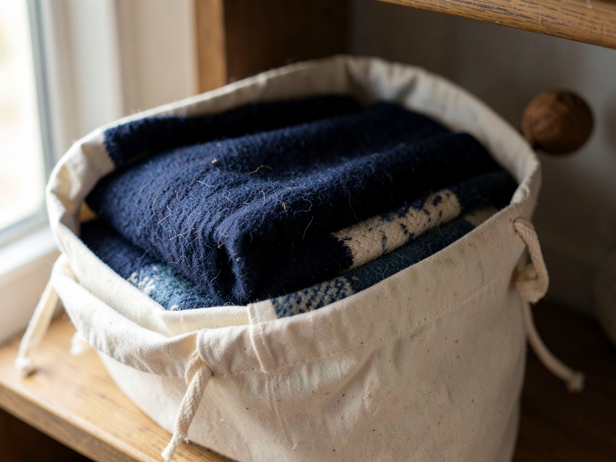
![Cozy Woolens Stored Safely]()
Cozy Woolens Stored Safely
Image credit : AI
Keeping my winter bedding care and storage in check with these cozy woolens. Stored safely with cedar.
Drying Is Where Most People Lose
Line drying is the only reliable method for cotton and wool. Hang a razai over two parallel lines rather than one so the weight is distributed and the fill does not sag to one side while drying. Shake and redistribute the fill every hour or two during the first half of the drying time. A woollen blanket should dry flat on a clean surface or draped over a wide rack, hanging it from one end stretches the fibres while they are wet and changes the shape permanently. Synthetic quilts can go into a tumble dryer on the lowest heat setting with two or three clean tennis balls; the balls keep the fill from clumping as it dries. Check the fill by pressing into the centre of the quilt: if it feels dense or cool, it is not dry yet.
Storage That Adds Years, Not Mould
Cotton breathes and wool breathes. Plastic does not. Storing a razai or blanket in a sealed plastic bag or a vacuum storage bag traps any residual moisture and creates exactly the conditions mould needs. Use a cotton storage bag, a pillowcase, or a clean cotton bedsheet folded around the item. Cedar balls or dried neem leaves placed inside the storage bag repel moths without the chemical smell of naphthalene balls, which can transfer to fabric and linger. Store bedding in a cool, dry place away from direct sunlight, a high shelf in a wardrobe is better than a box under the bed where floor-level damp can reach it. Before folding for storage, fold loosely rather than compressing tightly; a razai stored under heavy pressure develops permanent creases in the fill that reduce its loft.