The number on your air quality app is not a vibe. It is a count of how many fine particles and gases are sitting in a cubic metre of the air your child is about to run through or your parent is about to breathe on their morning walk. Getting that number wrong in either direction costs something real, unnecessary confinement for someone who needed movement, or a bad breathing day for someone whose lungs or heart cannot absorb it.
What the AQI Scale Actually Measures
India follows the National Air Quality Index, published by the Central Pollution Control Board, which runs from 0 to 500 across six colour-coded bands. The number is calculated from eight pollutants, but for daily decisions the one that matters most is PM2.5, particles smaller than 2.5 micrometres that bypass the nose and throat entirely and lodge in the lung tissue. The AQI converts raw pollutant concentrations into a single number so you do not need to read a chemistry report. Each band has a sub-index for each pollutant; the highest sub-index wins, which means a day dominated by ozone reads the same way as a day dominated by PM2.5, even though they affect the body differently.
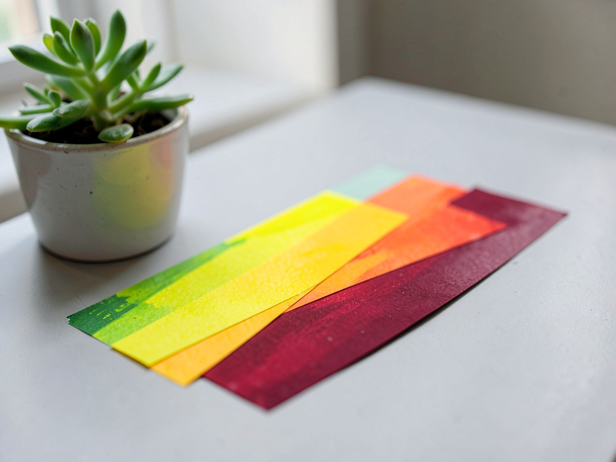
![Paper Gradient Beside Plant]()
Paper Gradient Beside Plant
Image credit : AI
My visual guide to air quality, from healthy green to concerning maroon. Understanding the AQI number is crucial for everyone.
The Six Bands and What They Mean for Vulnerable People
0 to 50 is Good. Children can play outside without restriction. Elderly parents with stable respiratory or cardiac conditions can walk at their normal pace for as long as they like. This band is rare in most Indian cities between October and February.
51 to 100 is Satisfactory. Healthy adults feel nothing. Children with no asthma or allergy history are fine outdoors. An elderly parent with mild, controlled COPD or heart disease should keep the outing shorter than usual and avoid peak traffic hours, typically 8 to 10 in the morning and 6 to 8 in the evening.
101 to 200 is Moderate. This is where the decision starts to split by person. A healthy child with no respiratory history can still go out but should skip high-intensity activity, no sprint races, no vigorous cycling. A child with asthma should carry their reliever inhaler and stay within quick reach of indoors. An elderly parent with any cardiovascular or pulmonary diagnosis should treat this as an indoor day, or limit outdoor time to under twenty minutes in a green, low-traffic area.
201 to 300 is Poor. The CPCB categorises this band as causing breathing discomfort on prolonged exposure even in healthy people. Children should not play outdoors for more than fifteen minutes. If your child has asthma, keep them inside. An elderly parent goes out only for essential movement, a slow walk to the pharmacy, not a park circuit, and only with a well-fitted N95 mask, not a cloth mask or a surgical mask, which do not filter PM2.5 adequately.
301 to 400 is Very Poor. Healthy adults experience respiratory effects with prolonged exposure. Children and elderly parents with any chronic condition stay indoors. If the child needs to travel to school, the journey is in a closed vehicle with windows up and recirculated air. Outdoor play is cancelled, not shortened.
401 to 500 is Severe. Everyone stays inside. This is not a guideline; it is the point at which even brief outdoor exposure produces measurable effects in healthy adults. Schools in Delhi have protocols for this band that include closing playgrounds and shifting physical education indoors. Apply the same logic at home regardless of whether an official advisory has been issued.
Where to Get a Number You Can Trust
The CPCB's own app, Sameer, pulls from government monitoring stations and is the authoritative source for India. IQAir and AirVisual are widely used and generally reliable for Indian cities. The key detail: check the station nearest your neighbourhood, not the city average. AQI can vary by 80 to 100 points between an industrial corridor and a residential area three kilometres away. If your nearest station is more than five kilometres from your home, treat the number as a rough guide and add one band of caution. Check at the time your child or parent is actually going out, not the night before. AQI in Indian cities often peaks between 6 and 9 in the morning and again after sunset, when temperature inversions trap pollutants close to the ground.
![Morning Walk in Haze]()
Morning Walk in Haze
Image credit : AI
A gentle morning walk, a reminder of the importance of clean air for vulnerable groups. Understanding the AQI guide India is crucial.
Practical Adjustments That Actually Help
Timing is the simplest lever. If the AQI at 7 a.m. is 180 and at 10 a.m. it is 130, the walk moves to 10. For children going to school, a well-fitted N95 or FFP2 mask reduces PM2.5 inhalation meaningfully; a double-layered cloth mask does not. For an elderly parent who insists on their walk, route matters, a tree-lined lane away from a main road carries lower localised pollution than a footpath beside moving traffic. Indoors, keeping windows closed during peak pollution hours and running an air purifier with a HEPA filter in the room where the child sleeps or the parent rests reduces cumulative exposure across the day. The outdoor number is the headline; indoor air quality on a high-AQI day is the story that unfolds over hours.
AQI numbers are not designed to frighten. They are designed to make a decision that was previously a guess into something you can act on. A child kept indoors on a Satisfactory day loses something. A parent sent out on a Very Poor day risks something. The number tells you which trade-off you are actually making.