Sambhar Lake sits in the Thar Desert about 80 kilometres southwest of Jaipur, and for migratory waterbirds it has been a reliable stopover for centuries. In November 2019, that changed. Within days, carcasses of flamingos, northern pintails, common teals, and ruddy shelducks began washing ashore in numbers that alarmed forest department staff and birders alike. Final estimates placed the death toll at between 18,000 and 20,000 birds across dozens of species. The investigation that followed drew in the Wildlife Institute of India, the Bombay Natural History Society, and state veterinary laboratories, and it produced a clear answer: avian botulism caused by the bacterium Clostridium botulinum type C.
What Avian Botulism Actually Does to a Bird
Clostridium botulinum is an anaerobic bacterium, meaning it thrives where oxygen is absent. It produces a neurotoxin, botulinum toxin type C, that disrupts the nerve signals controlling muscle movement. In birds, the first visible sign is limber neck, a loss of muscle tone in the neck that leaves the bird unable to hold its head up. Wings droop. Legs stop working. The bird cannot fly, cannot swim to safety, and eventually cannot breathe. Death follows from respiratory paralysis, not from the infection itself but from the toxin already circulating in the body. There is no field treatment once a wild bird reaches that stage.
![Dawn Wetland Landscape]()
Dawn Wetland Landscape
Image credit : AI
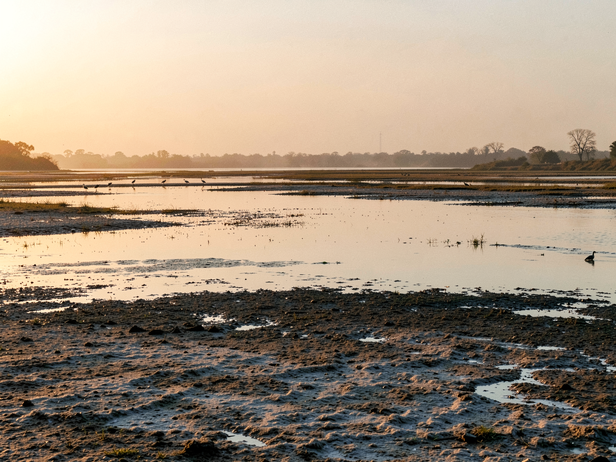
I observe the vastness of a shallow wetland at dawn, noting the exposed mudflats and salt crust. This scene evokes a sense of scale and natural beauty.
Why Sambhar Lake in That Season
Sambhar is India's largest inland saltwater lake, and its ecology makes it structurally vulnerable to botulism outbreaks. The lake is shallow, rarely exceeding a metre in depth, and in dry years large sections shrink further, concentrating salinity and reducing dissolved oxygen at the sediment layer. The monsoon of 2019 had been unusually heavy in the Sambhar catchment, and the subsequent retreat of water created wide bands of warm, stagnant, oxygen-depleted shallows. Clostridium botulinum produces toxin in exactly those conditions: warm temperatures, decomposing organic matter, and near-zero oxygen. Invertebrates, particularly fly maggots feeding on decomposing fish and plant material, concentrate the toxin in their bodies. Waterbirds that feed on those invertebrates ingest a lethal dose. Dead birds become a new substrate for maggots, and the cycle amplifies. Investigators from the Wildlife Institute of India confirmed this maggot-cycle mechanism as the primary transmission route at Sambhar.
What the Laboratory Results Confirmed
Tissue samples from carcasses were sent to the Indian Veterinary Research Institute at Bareilly and to state laboratories in Rajasthan. The botulinum type C toxin was detected in the gut contents and liver tissue of multiple species. Critically, investigators ruled out avian influenza, Newcastle disease, and poisoning by agricultural chemicals, all of which had been raised as possibilities in the early days of the die-off. The saline conditions of Sambhar were initially thought to be protective, because high salinity suppresses many pathogens. What the investigation clarified is that botulism does not follow that logic: Clostridium botulinum spores are widespread in soil and sediment, and the toxin production depends on local anaerobic conditions in pockets of the lake bed, not on the salinity of the water column as a whole.
![Rajasthan Salt Lake Dusk]()
Rajasthan Salt Lake Dusk
Image credit : AI
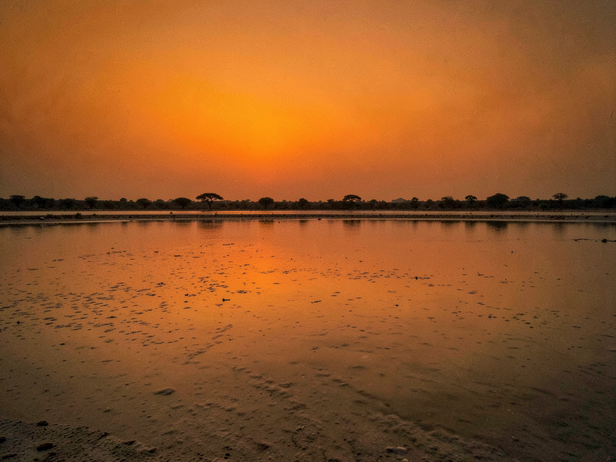
The vast salt flats of Rajasthan at dusk, a serene scene reflecting the vibrant sky. This landscape is a habitat for many species, though it has faced challenges like Sambhar Lake bird deaths.
The Broader Pattern Avian Botulism Follows
Sambhar 2019 was not an isolated event in global terms. Avian botulism outbreaks have killed waterbirds in the Great Lakes of North America, in wetlands across Europe, and in saline lakes in East Africa. What links these sites is a combination of warm water, fluctuating water levels, and abundant organic matter in the sediment. Climate variability that produces heavy rainfall followed by rapid evaporation creates exactly the cycle of flooding and drawdown that sets up botulism conditions. For India specifically, Sambhar is one of several Ramsar-listed wetlands that host large concentrations of migratory birds during the northern winter. The Bombay Natural History Society noted after the 2019 outbreak that monitoring protocols for waterbird die-offs at Indian wetlands were not standardised, and that the delay in identifying the cause at Sambhar cost time that might have allowed some rescue effort for birds still in early stages of limber neck.
What Changed After the Investigation
The Rajasthan forest department, working with the Wildlife Institute of India, developed a rapid-response protocol for future die-off events at Sambhar and other state wetlands. This included pre-positioning of collection teams during peak migratory season, faster routing of samples to IVRI Bareilly, and guidance on the safe disposal of carcasses to break the maggot amplification cycle. Disposal is not a minor detail: carcasses left in the shallows continue producing toxin-laden maggots for days. The investigation also recommended seasonal water-level monitoring at Sambhar to flag the drawdown conditions that precede outbreaks, giving managers a potential early-warning window. None of these measures eliminate the risk, because Clostridium botulinum spores are permanently present in the sediment of most wetlands. What they address is the response time once birds begin dying.