Indian balconies are small ecosystems, a terracotta pot of tulsi here, a hanging pothos there, a row of aloe vera soaking up the afternoon sun. Most of these plants are chosen for how they look or how little care they need, not for whether they are safe around a dog who chews on anything at nose height or a cat who treats every trailing vine as a toy. Several of the most popular choices in Indian households are genuinely toxic to companion animals, and the symptoms they cause range from drooling and vomiting to kidney failure.
Pothos and Money Plant
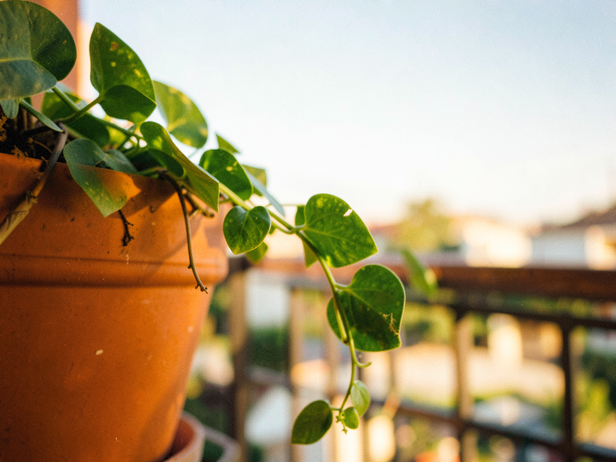
Epipremnum aureum goes by money plant in most Indian homes and pothos everywhere else. It is possibly the most common balcony and indoor plant in the country, sold at every nursery for almost nothing and nearly impossible to kill. It is also toxic to both cats and dogs. The plant contains insoluble calcium oxalate crystals, microscopic needle-like structures that embed in the soft tissue of the mouth, tongue, and throat the moment an animal bites into a leaf. The immediate response is intense oral irritation: pawing at the mouth, drooling, refusing food, occasional vomiting. Systemic toxicity from pothos is uncommon, but the oral pain it causes is real and distressing for the animal. Because the plant is so ubiquitous and so often hung at exactly the height a cat can reach, it accounts for a disproportionate share of plant-related calls to veterinary clinics.
![Sunlit Pothos on Balcony]()
Sunlit Pothos on Balcony
Image credit : AI
This trailing pothos vine, with its heart-shaped leaves, adds a touch of green to the balcony. It's a popular choice, but remember to check if it's toxic to pets in India.
Peace Lily
Spathiphyllum, sold across India as peace lily or white anthurium, is a gifting staple, it thrives indoors, flowers reliably, and looks elegant. It carries the same calcium oxalate crystals as pothos, producing the same burning oral irritation. What makes peace lily worth a separate entry is that it is frequently placed on low surfaces, a balcony ledge, a side table, a floor corner, which puts it within easy reach of dogs. Cats are drawn to the broad, smooth leaves. Ingestion typically causes drooling, pawing at the face, and vomiting within an hour. Keep it out of any space a pet can access unsupervised.
Aloe Vera
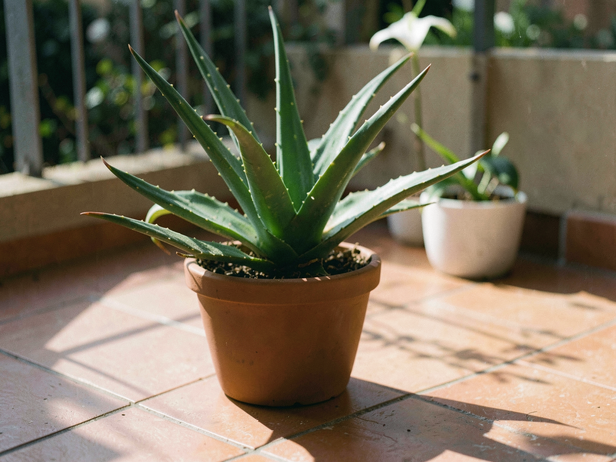
Aloe vera occupies an unusual position: the clear gel inside the leaf is widely used in human skincare and is not meaningfully toxic, but the latex layer just beneath the outer skin, the yellow-green fluid between the gel and the rind, contains compounds called anthraquinones that act as a strong laxative in dogs and cats. A dog that chews through an aloe leaf may develop vomiting, diarrhoea, lethargy, and in larger ingestions, tremors. Aloe is everywhere on Indian balconies, often at floor level in squat terracotta pots, exactly where a curious dog investigates. The plant is not in the same danger category as oleander or lily, but it is not the harmless succulent many owners assume.
![Balcony Aloe Still Life]()
Balcony Aloe Still Life
Image credit : AI
A serene balcony scene featuring an aloe vera plant. Consider pet safe plants for your Indian home.
Oleander
Nerium oleander is one of the most toxic plants an animal can encounter, and it grows freely across India, in gardens, along roadsides, and on large balconies and terraces where space allows. Every part of the plant, including fallen leaves and the water in a vase that held cut stems, contains cardiac glycosides that interfere directly with heart muscle function. In dogs and cats, even a small amount can cause vomiting, a dangerously slow or irregular heartbeat, weakness, and collapse. This is a veterinary emergency. If oleander grows anywhere near where your pet spends time, it needs to go. There is no safe threshold for a companion animal.
Dieffenbachia (Dumb Cane)
Dieffenbachia is a large-leafed ornamental that does well in the partial shade of a covered balcony and is sold at most Indian nurseries under the name dumb cane. Like pothos and peace lily, it contains calcium oxalate crystals, but in significantly higher concentrations. Biting into a leaf causes immediate, intense burning in the mouth and throat. In larger ingestions the swelling can extend to the throat and affect swallowing. The common name comes from the temporary loss of speech the plant causes in humans who chew it, an effect that translates in animals to distress, excessive salivation, and reluctance to eat or drink. A dog that has chewed dieffenbachia needs water to rinse the mouth and a call to a vet.
Sago Palm
Cycas revoluta, the sago palm, has become fashionable on Indian terraces and large balconies for its architectural look. It is among the most dangerous plants a dog can ingest. All parts are toxic, but the seeds carry the highest concentration of cycasin, a compound that causes severe liver failure. The onset can look deceptively mild, vomiting, diarrhoea, lethargy, before progressing rapidly to liver damage that is often fatal even with aggressive treatment. The mortality rate in dogs that ingest sago palm seeds is high. This is not a plant to keep in a home with a dog, regardless of where it is placed.
Tulsi and What Is Actually Safe
Tulsi, Ocimum tenuiflorum, is worth naming because it sits in almost every Indian home and the question comes up constantly: is it safe? For dogs and cats, tulsi is not considered toxic. The same is broadly true of most culinary herbs grown on Indian balconies, curry leaf, coriander, mint. Spider plants, areca palms, and money plant alternatives such as jade plant require a note of caution for jade (mildly toxic to dogs), but the real risk plants are the ornamentals, not the kitchen garden. If you are building a pet-safe balcony, the culinary corner is the safest corner you have.