The vet hands you a vial of insulin, a box of syringes, and an appointment card for a glucose curve in two weeks. What the consultation rarely covers is the architecture of the day you are now committing to, every day, without exception, for the rest of your pet's life. Canine and feline diabetes is manageable, and many pets live well for years after diagnosis. But the twice-daily insulin schedule is not a loose guideline. It is a biological clock your household has to synchronise with.
Why the Timing Is Non-Negotiable
Most diabetic dogs are managed on a protocol tied to meals: the animal eats, then receives insulin within thirty to sixty minutes of finishing the meal. The logic is physiological. Insulin is given when blood glucose is already rising from food, so the hormone and the glucose peak together. Give insulin to a dog that has not eaten and you risk hypoglycaemia, a drop in blood sugar that can progress from wobbling and confusion to seizures within minutes. Cats are metabolically different from dogs: they are obligate carnivores whose glucose response to meals is flatter, and many feline diabetics are managed on a fixed twelve-hour schedule regardless of whether the cat has eaten. Your vet will specify the protocol for your animal. The critical point is that the interval between doses must stay as close to twelve hours as the household can manage. A consistent gap matters more than hitting an exact clock time; drifting to eight hours one day and sixteen the next destabilises regulation far more than a dose given at 7:30 instead of 7:00.
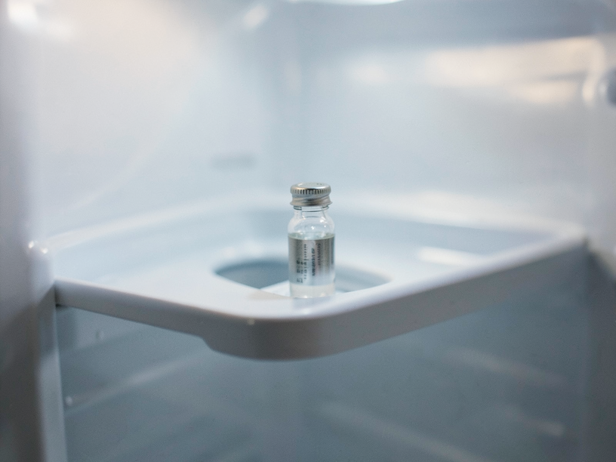
![Vial in Refrigerator Shelf]()
Vial in Refrigerator Shelf
Image credit : AI
A small vial sits in a refrigerator, a reminder of managing diabetic pets. Understanding signs of hypoglycaemia is crucial.
What Refrigeration Actually Means in an Indian Home
Insulin is a protein. Heat denatures it. An open vial of most veterinary insulins, Caninsulin and Insuvet are the formulations most commonly dispensed by Indian small-animal practices, must be stored between two and eight degrees Celsius and is typically considered stable for four to six weeks after first use, though you should follow the specific guidance on your vial. In a household where power cuts are a daily reality, this is not a trivial requirement. A vial left on the counter during a two-hour outage in a Chennai summer is not automatically ruined, but repeated temperature excursions will degrade potency before the expiry date. A small, dedicated section of the refrigerator door, away from the freezer compartment, which will freeze and destroy the insulin, is the standard solution. Insulin should never be shaken; roll the vial gently between your palms to mix it. Cloudy veterinary insulins like Caninsulin need to be mixed this way before every draw. A vial that looks clumped, crystalline, or has changed colour should not be used.
Reading a Hypoglycaemic Episode Before It Becomes an Emergency
Hypoglycaemia is the acute risk of insulin therapy, and recognising it early is the skill that saves lives between vet visits. In dogs, early signs include sudden weakness in the hindlimbs, glassy eyes, disorientation, trembling, and reluctance to stand. A dog that was alert ten minutes ago and is now unsteady on its feet after an insulin dose should be treated as hypoglycaemic until proven otherwise. The immediate home response, confirmed with your vet before you ever need it, is to rub a small amount of glucose solution, honey, or corn syrup on the gums and get to a clinic. Do not wait to see if the dog recovers on its own. Cats in hypoglycaemia often become profoundly weak and may vocalise or seizure with less warning than dogs. The same gum-glucose protocol applies. Keep a glucose source in the same drawer as the syringes. If you have to search for it during an episode, you have already lost time.
![Sweetness and Science]()
Sweetness and Science
Image credit : AI
A close-up of honey and glucose solution, hinting at the complexities of managing conditions like diabetes in dogs.
The Glucose Curve and Why Home Monitoring Changes Everything
A glucose curve is a series of blood glucose readings taken every one to two hours over a full dosing cycle, typically eight to twelve hours. It tells the vet whether the current insulin dose is peaking too early, too late, or not enough. In India, most glucose curves are done at the clinic, which means the animal spends the day in an unfamiliar environment, a stressor that can itself raise blood glucose and distort the reading. Home glucose monitoring, using a human glucometer with a small blood sample from the inner ear pinna or a paw pad, gives a truer picture of the animal's regulated state. The technique requires practice and a vet who will teach it, but the data it produces is more useful than a clinic curve for many patients. A glucometer reading is a guide, not a diagnosis; values should always be interpreted alongside the animal's clinical signs and discussed with your vet before any dose adjustment.
Building the Routine Into an Indian Household
Twice-daily insulin at a fixed interval means someone is home, or back home, at roughly the same two times every day. For a household where both adults commute, or where travel is frequent, this is the constraint that requires the most honest planning before committing to treatment. Options exist: a trusted family member who can be trained on injection technique, a reliable pet-sitter with written protocols, or a boarding facility experienced with diabetic animals for unavoidable absences. The injection itself is not technically difficult. Veterinary insulin is given subcutaneously, under the skin, not into a vein, and the needle gauge used for small animals is fine enough that most dogs and cats tolerate it with minimal reaction once they associate the injection with the meal that follows it. The scruff of the neck or the loose skin over the shoulder blade are the standard sites; rotate between them to avoid localised tissue changes. What makes the routine sustainable is consistency, not perfection. A dose given thirty minutes late is almost always better than a dose skipped. A meal refused by the animal is a reason to call your vet before giving insulin, not a reason to give it anyway and hope.
Diabetes does not ask for heroics. It asks for the same two things at the same two times, watched carefully enough that the quiet signals of a body going wrong are caught before they become loud ones. The households that manage it well are not the ones with the most medical knowledge, they are the ones that treated the schedule as genuinely non-negotiable from the first week.