A river does not experience a mass pilgrimage the way a road does. The road gets crowded, then empties. The river absorbs the crowd chemically, biologically, and physically, and carries the evidence downstream for days after the last pilgrim has left.
What Dissolved Oxygen Has to Do With a Human Body in Water
Fish, turtles, and most aquatic invertebrates depend on oxygen dissolved in the water column, not the air above it. A healthy stretch of a slow-moving Indian river typically holds between 6 and 9 milligrams of dissolved oxygen per litre. When large numbers of people enter the same stretch, several things happen at once. Human bodies displace water, reducing the surface area available for atmospheric re-oxygenation. Sunscreen, soap residue, and organic matter from skin introduce biochemical oxygen demand, meaning bacteria begin breaking down that organic load, consuming dissolved oxygen as they work. Studies monitoring the Ganga during Kumbh gatherings have recorded measurable drops in dissolved oxygen in heavily bathed stretches, with some monitoring stations showing values dipping toward the 4 mg/L threshold below which many fish species begin showing stress behaviour.
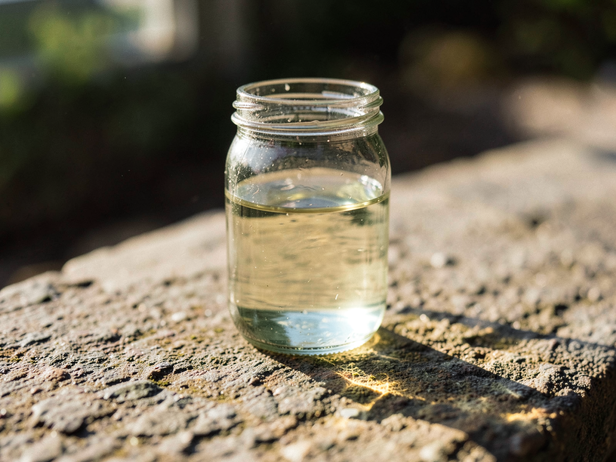
![Turbid River Water Jar]()
Turbid River Water Jar
Image credit : AI
Observing the subtle grain and natural color of river water, a glimpse into the freshwater wildlife gathering.
How Fish Actually Respond to the Disturbance
Fish do not simply swim away from noise and turbulence the way a bird flushes from a field. Their response is more metabolically costly. The vibration and pressure waves from thousands of bodies entering water simultaneously trigger a sustained stress response in nearby fish, raising cortisol levels and suppressing immune function, a pattern documented in freshwater fish exposed to acoustic and physical disturbance. Species like the mahseer and rohu, both common in north Indian river systems, are particularly sensitive to sudden changes in turbidity. When silt is churned from the riverbed by feet and movement, visibility drops and the fish's ability to locate prey is compromised. For two or three days after a major bathing event, fish in the affected stretch tend to hold position in deeper, calmer water or move laterally into tributary channels where conditions are more stable.
Turtles and the Basking Problem
The Indian softshell turtle and the red-crowned roofed turtle, both found in Gangetic river systems and both listed as vulnerable, depend on predictable basking sites to regulate body temperature. Basking is not optional behaviour for a reptile; it is how they digest food, mature eggs, and fight off fungal infections. When riverbanks are occupied by pilgrims for extended periods, turtles are displaced from those sites entirely. A turtle that cannot bask for two or three consecutive days during cooler months accumulates a thermoregulatory deficit. Research on freshwater turtle populations in disturbed river systems shows that repeated displacement from basking sites across a season correlates with lower reproductive success, because females require sustained warmth to develop viable clutches. The problem is not a single gathering, it is the cumulative effect when the same sites are disturbed across multiple festivals in a year.
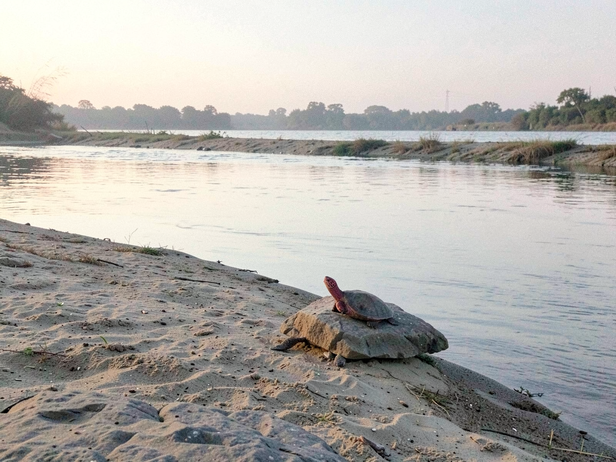
![Dawn Riverbank Turtle Basking]()
Dawn Riverbank Turtle Basking
Image credit : AI
I witness a red-crowned roofed turtle basking on a rock, a peaceful moment in the river ecosystem during pilgrimage.
What the Water Column Looks Like After Everyone Leaves
The visible signs, plastic, garlands, oil lamps, ash, are the part that gets photographed. The less visible chemistry is what takes longer to resolve. Coliform bacteria counts spike sharply during mass bathing events, which is well established in monitoring data from the Central Pollution Control Board's real-time stations on the Ganga. High coliform loads accelerate microbial activity, which in turn draws down dissolved oxygen further even after the physical disturbance has ended. In a river with moderate flow, dissolved oxygen typically begins recovering within 48 to 72 hours as the water column mixes and the organic load disperses downstream. In slower-moving stretches, or where the river is already under stress from municipal discharge, recovery can take longer. The fish and turtles that moved away during the event return gradually, tracking the return of stable oxygen and turbidity, not the return of quiet.
The Cumulative Picture Across the Calendar
No single two-day gathering collapses a river ecosystem. The biology is more resilient than that, and rivers in the Indo-Gangetic plain have hosted human activity for millennia. The concern that ecologists raise is cumulative frequency. When a river stretch hosts multiple mass bathing events across a year, Makar Sankranti, Mauni Amavasya, Kartik Purnima, and others, the intervals between disturbances may be shorter than the time the turtle population needs to recover its basking routine or the time the fish population needs to re-establish feeding territories. The river recovers. The question is whether it recovers fully before the next event arrives. That gap, not any single gathering, is where the ecological pressure actually sits.