A dead cow on the edge of a village in Rajasthan in 1990 would have been stripped to bone within hours. A long-billed vulture can consume four kilograms of flesh in a single feed, and a roosting colony descending on a carcass creates a kind of industrial efficiency that no other animal matches. By 2007, that efficiency had collapsed. The Oriental white-backed vulture, once the most numerous large raptor on earth, had declined by more than 99% across the subcontinent. The cause was diclofenac, a veterinary anti-inflammatory drug that causes fatal kidney failure in vultures that feed on treated livestock. What remained was a carcass and a vacancy.
The Animals That Moved In
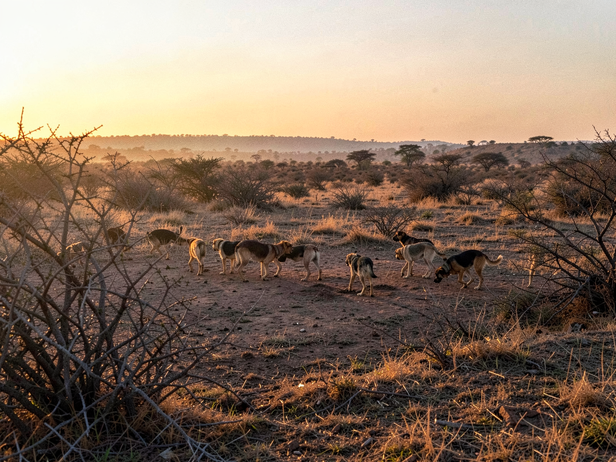
Feral dogs were the fastest to claim the gap. India carries an estimated 35 million feral dogs, and unlike vultures, they are generalist feeders with no sensitivity to diclofenac residues. Studies tracking carcass removal rates in areas of vulture decline found that dog numbers around disposal sites increased sharply within years of the vulture crash. Jackals, both the golden jackal and the side-striped jackal in wetter zones, also expanded their scavenging range, though they tend to arrive after dogs have opened the carcass and feed on softer tissue and offal.
![Dusk scrubland scavenger gathering]()
Dusk scrubland scavenger gathering
Image credit : AI
Feral dogs, vital for scavenger ecology in India, gather at dusk in the arid scrubland.
Corvids, Kites, and the Slower Work
Crows and house crows are present at almost every carcass in urban and peri-urban India, but their contribution is limited by body size. A house crow weighs roughly 400 grams. It picks, it does not strip. Black kites, common across Indian cities, take soft tissue and viscera but cannot break hide or access the large muscle mass that vultures dismantled. The Egyptian vulture, which survived the diclofenac crisis better than its larger relatives because it feeds on smaller carcasses and organic waste, fills a partial role, but its numbers are also declining, and it was never a bulk processor. The result is that carcasses that once disappeared in hours now persist for days, sometimes longer, depending on season and location.
What Persistence Means for Disease
Vultures carry a digestive system that is genuinely unusual among vertebrates. Their stomach acid sits at a pH close to zero, which destroys anthrax spores, Clostridium botulinum, and rabies virus that would survive passage through a dog or jackal. A 2008 study in Ecological Economics, led by Jyoti Prakash Jain and colleagues, estimated that the decline of vultures in India contributed to a rise in feral dog populations and, through that pathway, to an increase in human rabies cases. The mechanism is direct: more uneaten carcasses mean more food supporting larger dog populations, and larger dog populations mean more bites. India accounts for roughly 36% of global rabies deaths, and the dog-carcass link is one thread in that figure. Anthrax persistence in soil is a second concern; vultures historically interrupted the cycle by consuming infected carcasses before spores could leach into groundwater.
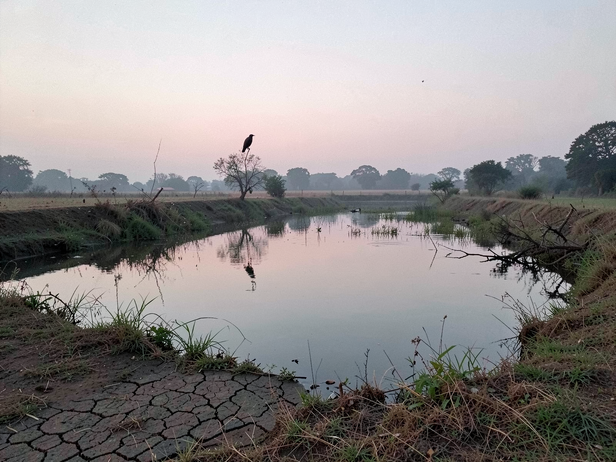
![Dawn Kite Over Still Pond]()
Dawn Kite Over Still Pond
Image credit : AI
A lone black kite perches at dawn, a silent observer of the rural Indian landscape. This scene highlights the importance of scavenger animals in maintaining ecological balance.
The Scavenger Guild, Ranked by Efficiency
Ecologists use the term scavenger guild to describe the community of species sharing a food source. India's pre-diclofenac guild was vulture-dominated, with other species occupying peripheral roles. The post-collapse guild is flatter and slower. Ranked by processing speed and volume: vultures at the top, now largely absent from most of their former range; feral dogs second, fast but microbiologically dangerous; jackals third, effective on smaller carcasses; corvids and kites fourth, limited by size; mongoose, monitor lizards, and hyenas (in drier western zones) filling the final margins. No combination of these animals replicates what a vulture colony did. The biological reason is the acid gut. Dogs and jackals spread pathogens as they feed; vultures terminated them.
Recovery Efforts and What They Face
The Bombay Natural History Society and the Ministry of Environment, Forest and Climate Change have run vulture conservation breeding programmes at Pinjore in Haryana, Rani in Assam, and Rajabhatkhawa in West Bengal. The three species targeted, Oriental white-backed, long-billed, and slender-billed vultures, have produced breeding pairs in captivity. The harder problem is the landscape they return to. Diclofenac for veterinary use was banned in India in 2006, but aceclofenac, a related drug that metabolises into diclofenac in cattle tissue, remained available until a 2023 Supreme Court-directed review pushed for stricter controls. Ketoprofen and nimesulide, also toxic to vultures, are still in use. A vulture released into a landscape where treated livestock still die has a high probability of ingesting a lethal dose within its first year. The scavenger vacancy, in other words, is not simply a population problem. It is a pharmaceutical supply chain problem.
The animals cleaning India's carcasses today are doing it more slowly, more dangerously, and less completely than the birds they replaced. The guild that remained is not a substitute, it is what survives when the keystone is gone.