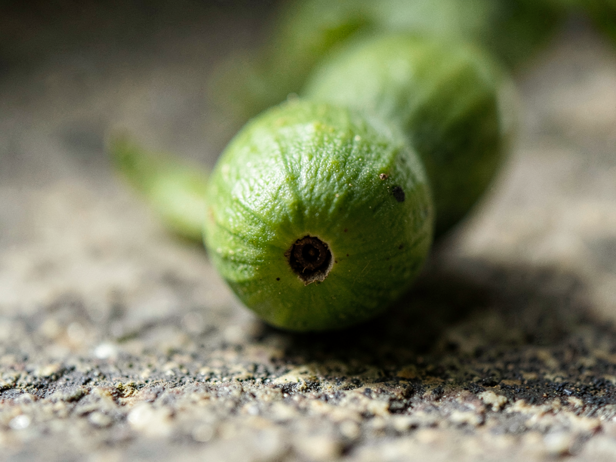
Every fig is, in biological terms, a flower turned inside out. The actual blossoms are hidden inside the fleshy receptacle, and the only way pollen can reach them is through a tiny hole at the base called the ostiole, a passage so narrow that only one species of wasp, in most cases, can squeeze through it.
A Wasp Enters and Does Not Come Back Out
A female fig wasp, carrying pollen she collected in her previous birth-fig, forces her way through the ostiole to reach the flowers inside. The squeeze is violent enough to tear off her wings and antennae. She will never leave. Inside, she deposits pollen on the female flowers, lays her own eggs in some of them, and dies within a day or two. The fig then produces a chemical that breaks down her body, which is why a ripe fig contains no visible wasp remains, only digested protein that becomes part of the fruit. What looks like a single fruit is simultaneously a nursery, a tomb, and a pollination chamber.
![Fig Ostiole Detail]()
Fig Ostiole Detail
Image credit : AI
I observe the fig wasp mutualism, a vital process for this fruit's life cycle.
The Wasp's Side of the Contract
The wasp larvae develop inside the fig's male flowers, which are positioned near the ostiole. When male wasps hatch first, they mate with the still-hatching females, then chew an exit tunnel through the fig wall and die outside, having never seen the open air in any meaningful sense. The females hatch next, crawl through the pollen-dusted tunnel the males cut, exit the fig covered in pollen, and fly to find a new fig in exactly the right developmental stage to accept them. The window is narrow. A fig that is too young will reject her. A fig that is too old offers no viable flowers. The synchrony required is not approximate; it is precise to within days.
How 80 Million Years of Co-evolution Locks Two Species Together
The fig-wasp mutualism is estimated to be roughly 80 million years old, predating many of the flowering plant families we consider ancient. There are approximately 750 known species of fig, and almost every one has its own dedicated wasp species in the family Agaonidae. The relationship is so species-specific that a wasp from one fig species typically cannot successfully pollinate another. This is not loyalty, it is morphology. The wasp's body is shaped to fit one ostiole diameter, one flower arrangement, one chemical signal. The fig, in turn, produces volatile compounds that attract only its partner wasp. Each pair has been refining this lock-and-key arrangement for longer than most mammal lineages have existed.
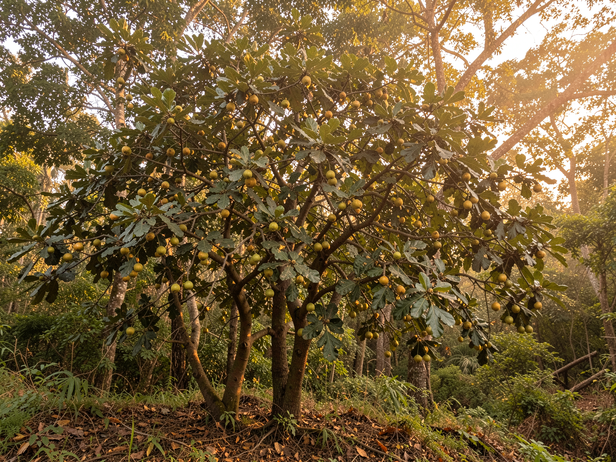
![Golden Hour Wild Fig Tree]()
Golden Hour Wild Fig Tree
Image credit : AI
I observed the intricate fig wasp mutualism, a vital process for this wild ficus in India.
What This Means for the Figs You Eat
Cultivated varieties such as the common fig, Ficus carica, are largely parthenocarpic, they produce fruit without pollination, which is why commercial figs grown in India and elsewhere do not require wasps to be present. Wild figs and certain traditional varieties, however, depend entirely on the mutualism. In parts of Karnataka and Tamil Nadu, wild Ficus species anchor local forest ecosystems: they are keystone species, fruiting asynchronously across individuals so that something is always ripe, feeding hundreds of bird and mammal species year-round. Remove the wasp, and the wild fig stops setting seed. Remove the fig, and the wasp has nowhere to breed. The two species are not partners in the way we loosely use the word, they are a single functional unit that evolution has been stress-testing for tens of millions of years.