When the first dhol of the season thumps through the neighbourhood at nine in the evening, most dogs startle, pace, and eventually settle once the procession moves on. Their owners note the distress, offer a cuddle, and consider the matter closed. But baraat season in Indian cities does not deliver one loud evening. It delivers forty, sometimes sixty, across consecutive nights through the winter wedding months, each one arriving at an unpredictable hour, each one loud enough to vibrate windows. What happens inside a dog across that stretch is physiologically distinct from what happens in a single fright, and the difference has real consequences for behaviour, health, and recovery.
What One Bad Night Actually Does to a Dog's Body
A sudden loud noise triggers the canine autonomic nervous system the same way it does in any mammal. The amygdala flags threat. Cortisol and adrenaline spike. Heart rate climbs, pupils dilate, muscles prime for flight. In a dog with no prior trauma around sound, this response peaks quickly and then the parasympathetic system pulls the body back toward baseline. Cortisol clears through the bloodstream over roughly forty to ninety minutes in a healthy adult dog. By the time the baraat has turned the corner, most dogs are physiologically close to where they started, even if they are still behaviorally unsettled for a little longer.
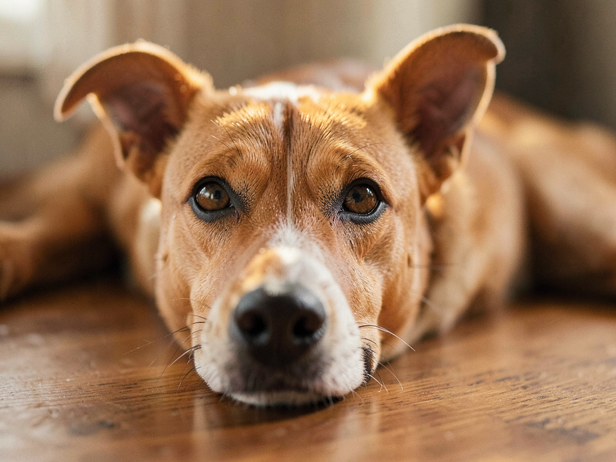
![Dog's Anxious Evening Gaze]()
Dog's Anxious Evening Gaze
Image credit : AI
I feel the stress of chronic noise, a common issue during baraat season. My anxiety is palpable.
What Repeated Exposure Through a Season Does Instead
Chronic intermittent stress is a different biological state. When a stressor arrives unpredictably but repeatedly, the hypothalamic-pituitary-adrenal axis, the body's central stress-regulation pathway, does not return fully to baseline between events. Baseline cortisol creeps upward across days and weeks. Research in veterinary behavioural medicine has documented that dogs exposed to chronic noise stress show elevated resting cortisol, disrupted sleep architecture, reduced appetite, and increased generalised vigilance, meaning they startle at sounds that would not have registered before the season started. The nervous system has recalibrated threat detection upward. A pressure cooker hissing in the kitchen now produces the same flinch that the dhol once did alone. This sensitisation, rather than the habituation most owners hope for, is the more common outcome of repeated unpredictable noise.
Behavioural Signs That Distinguish Chronic Stress From Acute Fright
Acute fright looks dramatic and resolves: trembling during the noise, hiding, possibly urination, then a return to normal eating and play within an hour or two. Chronic noise stress wears a quieter face that owners often miss. Watch for a dog that has become reluctant to go outside in the evenings even on quiet nights, one that eats less consistently across the season, one that sleeps more during the day but restlessly, one that has started resource-guarding food or toys it previously shared without tension, or one that reacts sharply to being touched when approached from behind. These are not personality changes. They are the behavioural surface of a nervous system running at an elevated idle.
![Morning Stillness, Uneaten Kibble]()
Morning Stillness, Uneaten Kibble
Image credit : AI
Morning stillness, a quiet moment before the day's potential noise. I hope this helps with dog noise anxiety.
What You Can Do Before the Season Runs Its Course
The most effective intervention is environmental, not emotional. A dog that hears less of the noise is a dog whose nervous system gets more recovery time between events. Heavy curtains or moving the dog to an interior room reduce decibel exposure meaningfully. White noise played at a consistent moderate volume through the evening gives the auditory cortex a steady signal to anchor to, which blunts the startle response to sudden peaks. Adaptil diffusers, which release a synthetic analogue of the canine appeasing pheromone that nursing mothers produce, have peer-reviewed support for reducing cortisol responses to noise events in dogs when used consistently rather than only during the event. A snug-fitting anxiety wrap applies light, constant pressure to the torso and activates the same parasympathetic pathways as deep pressure touch in humans. None of these are cures. Each one reduces the amplitude of each stress response, and across a long season that reduction compounds. For dogs already showing the behavioural markers of chronic stress, a conversation with a veterinarian about short-term pharmacological support is reasonable. Melatonin and certain prescription anxiolytics are used in dogs during high-stress seasonal periods; the appropriate option, dose, and duration are decisions for a vet who has examined your dog.
After the Season: Why Recovery Takes Longer Than the Season Did
Owners often expect that when the baraats stop, the dog returns to its previous self within a few days. The nervous system does not work on that schedule. A dog that spent six weeks with elevated baseline cortisol needs consistent low-stress conditions over several weeks for the HPA axis to recalibrate downward. Rushing back to dog parks, loud social situations, or firework-adjacent events in December can restart the sensitisation cycle before recovery is complete. Structured, predictable daily routines, consistent feeding times, calm exercise, and deliberate avoidance of unnecessary noise exposure for the month after the season ends give the nervous system the conditions it needs to reset. The dog that seemed to become a different animal across November did not change character. Its body adapted to a sustained threat, and it needs time to learn the threat is over.