On a full moon night in the Serengeti, lions kill less. Not because they rest, but because their prey can see them coming.
Predators Lose Their Edge When the Moon Is Bright
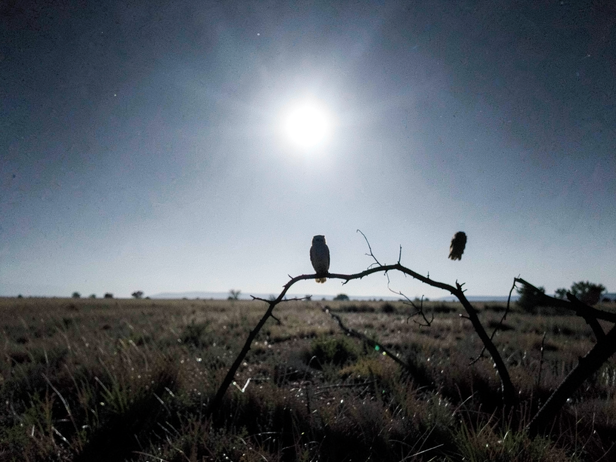
The advantage most nocturnal predators rely on is darkness. Lions, leopards, and owls are built for low-light conditions their prey cannot match. A full moon strips that advantage away. Research tracking lion predation rates in the Serengeti found that kills dropped significantly in the nights immediately after a full moon, with the effect most pronounced in open habitats where moonlight reaches the ground without obstruction. Prey species, zebra, wildebeest, impala, spread out, stay alert, and avoid open ground. The predator's stealth is neutralised not by anything the predator does differently, but by what the light reveals.
![Moonlit Owl Silhouette]()
Moonlit Owl Silhouette
Image credit : AI
A lone owl, a nocturnal predator, is silhouetted against the full moon, bathed in lunar light across the dry grassland.
Prey Animals Read the Moon as a Risk Signal
Small mammals treat lunar brightness as a direct measure of danger. Studies on desert rodents, including kangaroo rats in North American desert systems and gerbils in the Middle East, found that foraging activity dropped sharply on bright moonlit nights. The animals stayed closer to cover, took fewer trips into open ground, and reduced the time they spent exposed. This behaviour is called lunar phobia in the literature, and it is not learned, it appears to be hardwired. The moonlight itself triggers a shift in risk assessment. The cost is real: less foraging time means less food. The calculation the animal is making, at a physiological level, is that starvation is a slower threat than a predator it cannot see until it is too late.
Moths Navigate by the Moon, and Lose That Ability Near Artificial Light
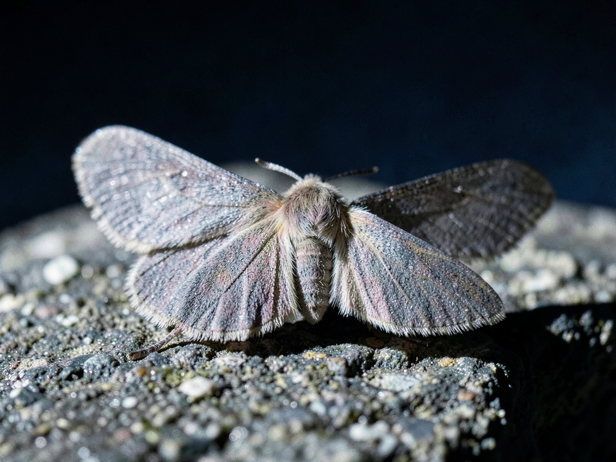
Moths use the moon as a distant fixed reference point for straight-line flight, keeping the light source at a constant angle to maintain direction. It works precisely because the moon is far enough away that the angle barely changes as the moth moves. Artificial lights break this system entirely: a streetlamp is close, so the angle changes rapidly as the moth circles it, producing the spiralling flight that ends in the bulb. On true full moon nights, moths fly more directly and travel farther. Researchers studying moth migration have documented that lunar phase influences both the timing and the distance of movement, with full moon periods associated with longer straight-line flights. The moon, for a moth, is infrastructure.
![Moonlit Moth on Stone]()
Moonlit Moth on Stone
Image credit : AI
A moth basks in the moonlight, a silent observer of the nocturnal world. The full moon illuminates its intricate wing patterns.
Dung Beetles Use the Milky Way, and the Moon Outcompetes It
The dung beetle finding from a 2013 study published in Current Biology is one of the more surprising results in animal navigation research. Scarabaeus satyrus, a South African dung beetle, rolls its ball in a straight line away from the dung pile to avoid competitors. To do this at night, it navigates by the Milky Way, the only insect confirmed to use the galaxy as a compass. On bright full moon nights, the Milky Way is washed out, and the beetle switches to the moon instead. The hierarchy is clear: moon first, stars second, Milky Way as a fallback. The experiment involved tiny cardboard hats that blocked the beetle's view of the sky, which is the kind of methodological detail that makes the finding memorable.
Reproductive Timing and the Lunar Cycle
Several marine species synchronise spawning to the lunar cycle with a precision that appears almost mechanical. The palolo worm of the South Pacific releases reproductive segments on a specific night tied to the October or November full moon. Coral spawning events on the Great Barrier Reef are coordinated by lunar phase and water temperature together, with the full moon acting as a synchronising cue across colonies spread over hundreds of kilometres. For these species, the moon is not background, it is a calendar. On land, the evidence is softer but present. Some frog species show increased calling activity around the full moon, likely because the light extends the window of activity and the acoustic signal reaches farther in open conditions. The moon does not cause the behaviour; it sets the timing.