The common house sparrow has lost roughly 60 percent of its urban population across Indian cities over the past three decades, according to surveys by the Bombay Natural History Society. The cause is not one thing. It is the sum of sealed buildings with no nesting ledges, pesticide-thinned insect populations that starve chicks in the nest, and the replacement of grain-bearing weeds with paved surfaces. A balcony feeder does not reverse any of that. What it does is narrower and more honest: it adds one reliable food patch to a landscape where reliable food patches have been disappearing.
What birds actually need in an Indian winter
Winter in most Indian cities is mild by global standards, but it still shifts the energy arithmetic for resident birds. Shorter days mean fewer foraging hours. Migratory visitors, rosy starlings, various warblers, the Amur falcon passing through, arrive and compete for the same insects and berries that resident species depend on. For granivores like sparrows and munias, the winter crop of grass seeds and fallen grain that once littered the edges of fields and vacant lots has shrunk as cities have tightened their edges. Water is the sharper constraint. Birds lose water through respiration and cannot sweat it back. In dry northern winters, a clean, shallow water source within a bird's small foraging range is often harder to find than food.
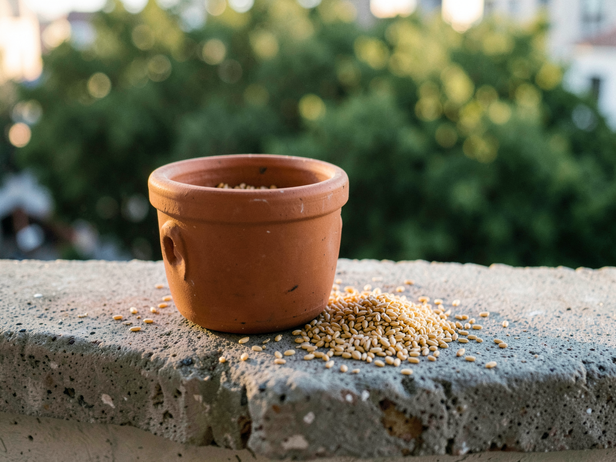
![Terracotta feeder, winter grains]()
Terracotta feeder, winter grains
Image credit : AI
I offer bajra and rice for feeding birds in winter India, a simple gesture on my balcony.
What a feeder changes, specifically
A feeder with the right grain and a shallow dish of clean water does three things that are measurable. It reduces the distance a bird must fly to meet its daily energy needs, freeing time for thermoregulation and predator vigilance. It creates a predictable patch that birds can include in a mental map of their territory, which reduces the metabolic cost of exploration. And in a city where green cover is fragmented, it can act as a stepping-stone, a node that makes it possible for a bird to cross an otherwise inhospitable stretch of road or rooftop to reach a park or tree line on the other side. None of this is dramatic. None of it rebuilds a population. But each is a real effect, not a projection of human sentiment onto a sparrow.
Grain choices and the species they bring
Bajra, jowar, and broken rice are the grains most Indian granivores are adapted to. Bajra in particular is small enough for sparrows and munias to handle without the bill fatigue that larger seeds cause. Sunflower seeds attract bulbuls and, in some cities, parakeets, but they are energy-dense enough that a bird eating only sunflower can develop nutritional imbalances over a long winter, variety matters. Avoid salted or spiced grain, bread, and biscuits. Bread expands in the crop and delivers almost no usable nutrition; birds that fill up on it skip the protein-rich insects and seeds they actually need. Cooked rice left out in heat ferments within hours and causes gut infections. Raw, dry, varied grain in a feeder that is cleaned every second day is the standard the birds benefit from.
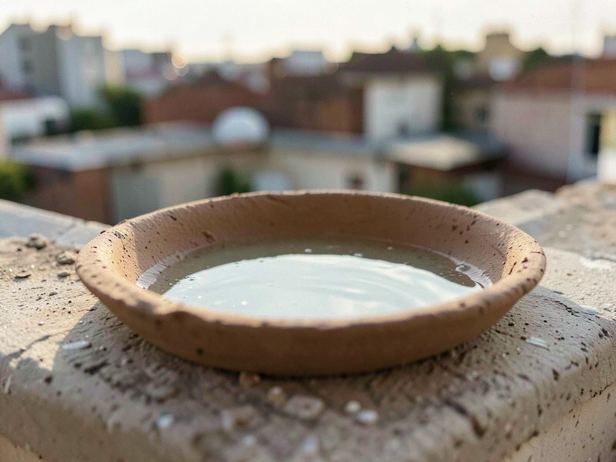
![Morning Water for Birds]()
Morning Water for Birds
Image credit : AI
Providing a vital water dish for birds in urban India, especially during winter.
The water dish and why it matters more than the feeder
A shallow clay or terracotta dish, no deeper than two centimetres at its centre, placed at a height that gives a bird a clear sightline in all directions is more useful to more species than any grain feeder. Insectivores like sunbirds and warblers that will never touch your bajra will still drink. Crows and mynas will bathe, which matters for feather condition and parasite load. Change the water daily. A dish that sits for three days becomes a breeding site for mosquito larvae and a vector for avian pox, a viral disease spread by biting insects and by birds sharing a contaminated water source. Rinse the dish with plain water, not soap, before refilling, soap residue strips the oils from feathers. The single most harmful thing a well-meaning balcony feeder does is leave stale water sitting in the sun.
What feeding does not fix
A feeder will not bring back a species that has lost its nesting habitat. House sparrows nest in cavities, behind loose roof tiles, in the gaps of old masonry, in the eaves of buildings that are no longer built that way. Feeding a sparrow that has nowhere to nest keeps it alive through winter and sends it into the breeding season without a nest site. The population does not recover. If the goal is to actually change the trajectory for sparrows in a neighbourhood, nest boxes, wooden boxes with a 3.2 centimetre entry hole, mounted under an overhang out of direct afternoon sun, do more than a decade of grain. Feeding and nest boxes together do more than either alone. The balcony feeder is the easier commitment. It is worth making, but worth making with clear eyes about what it is.