A horse standing beside a highway in Rajasthan, harness still on, one foreleg held slightly off the ground, this is where mobile equine veterinary work begins. Not in a sterile clinic, but on packed earth, in midday heat, with an owner watching and a load still waiting to be delivered. India has an estimated 1.2 million working equines, and the majority will never visit a fixed veterinary facility. Mobile units run by organisations such as the Brooke India and SPANA fill that gap, and the conditions they treat most often follow a clear, grim pattern.
Hoof and Limb Problems Come First
![Equine Care Essentials]()
Equine Care Essentials
Image credit : AI
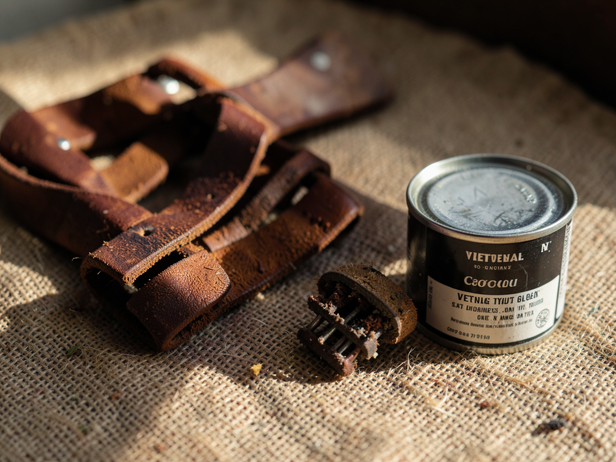
Essential tools for equine health, including a hoof rasp for working horses in India. Natural light highlights true-to-life textures.
Lameness is the single most common presentation mobile vets encounter in working equines across India. The causes stack up in a predictable order: overgrown hooves that have never been properly trimmed, cracks running up the hoof wall from months on tarmac and rubble, and puncture wounds from nails or glass picked up on construction sites. A working horse on an untrimmed hoof shifts its weight unevenly with every step, and over weeks that misalignment travels up through the fetlock and into the knee. Mobile teams carry hoof knives, rasps, and poultices. In many cases, the trim itself, something a farrier should do every six to eight weeks, is the only treatment needed. The animal has simply never had one.
Harness Wounds Are Almost Universal
If lameness is the most common reason a mobile vet is called, harness wounds are the condition they find on nearly every animal whether or not it was the presenting complaint. Ill-fitting collars cut into the shoulder. Breast straps rub raw patches above the sternum. Crupper straps under the tail create sores that go unnoticed under the dock until they are deep and infected. The biological reality is straightforward: equine skin over bony prominences has very little subcutaneous padding, and a collar that sits even slightly wrong concentrates pressure on a point the size of a thumb. Repeated daily for months, that becomes a wound. Mobile vets clean, debride, and dress these lesions, but the longer treatment is adjusting or replacing the harness itself, which requires the owner to understand why the fit matters and, often, to find the money for a new collar.
Eye Conditions Caused by Dust and Flies
![Dusk Market Equine Care]()
Dusk Market Equine Care
Image credit : AI
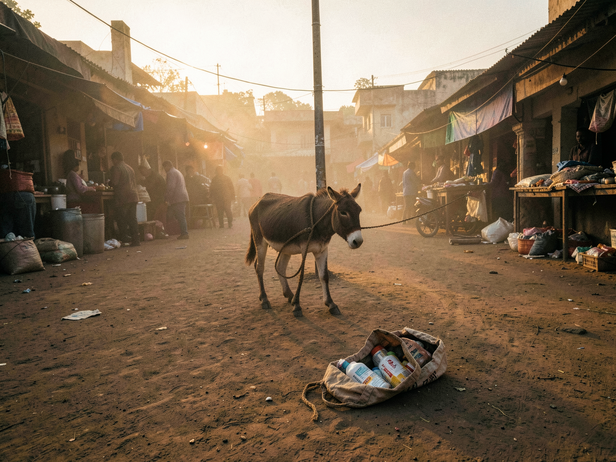
Equine health in India: a donkey receives care at a dusty market yard during dusk, highlighting the importance of working horses and mules veterinary care.
Working equines in India spend long hours on roads where diesel particulate, dust, and flies are constant. Conjunctivitis is among the top five presentations in mobile clinic data from Brooke India's field surveys. Left untreated, a simple eye infection can progress to corneal ulceration, which is painful, can impair vision, and in severe cases leads to blindness, ending a working animal's usefulness and often its life. Mobile vets treat with antibiotic eye drops and, where available, fly fringes fitted to the headcollar. The challenge is follow-up: a single roadside visit clears an acute infection, but without a second application the infection returns within days.
Skin Conditions and External Parasites
Rain scald, ringworm, and mange are common across working equine populations in India's wetter regions and during the monsoon months. Mange caused by Sarcoptes or Chorioptes mites produces intense itching, hair loss, and thickened skin, particularly around the lower legs and face. A horse that is rubbing constantly against a wall or a post is usually carrying mites. Dermatophytosis, the fungal infection called ringworm despite having nothing to do with worms, spreads easily between animals sharing grooming equipment or tethering posts. Mobile vets treat with ivermectin for parasitic infections and antifungal washes for ringworm, and the advice to owners about shared equipment is as important as the medication itself.
Colic and Nutritional Deficiencies
Colic, abdominal pain in horses, covers a range of conditions from gas accumulation to impaction, and it is a genuine emergency. Working equines in India are at elevated risk because their feeding is often irregular: long working hours with inadequate water, low-fibre diets heavy in grain, and grazing on roadsides where sand ingestion is unavoidable. Sand accumulates in the large colon and impairs gut motility over time. Mobile vets carry antispasmodics and analgesics for mild colic cases, and the decision about whether an animal needs referral to a fixed facility for more intensive treatment is one of the harder calls made on a roadside. Alongside colic, chronic underfeeding produces visible muscle wasting over the topline and quarters, a condition that no single visit corrects, but that mobile teams document and address through owner education on feed quantity and access to clean water.
The pattern across all these conditions is the same: problems that were small at the start and became serious through the absence of any routine care. A mobile vet arriving on a roadside is not a substitute for that routine, but for an animal that has never had access to any veterinary attention, it is the difference between a wound that heals and one that ends a working life.