Around half of all cats over the age of five will develop tooth resorption at some point in their lives, making it one of the most common feline dental conditions a vet sees. The biology behind it is precise and brutal: specialised cells called odontoclasts, which normally break down baby teeth to make way for adult ones, become active again in adult teeth for reasons that are still not fully understood. They begin dissolving the tooth's hard structures, enamel, dentine, cementum, from the root inward. The tooth does not crack or fall out cleanly. It is consumed, slowly, while the cat goes about its day.
Why Cats Almost Never Show It
Cats are prey animals by evolutionary design, which means they suppress signs of pain and vulnerability with remarkable efficiency. A cat with an actively resorbing tooth will often eat normally, groom normally, and behave normally. The signals that do appear, dropping food from the mouth, a slight preference for one side when chewing, occasional jaw chattering, or a subtle reluctance to eat hard kibble, are easy to read as pickiness or age. Some cats show no behavioural change at all, even when multiple teeth are affected. This is not stoicism in any comforting sense. It is a hardwired survival reflex that works against the cat's own welfare.
![Calm Cat in Window Light]()
Calm Cat in Window Light
Image credit : AI
A moment of quiet contemplation. Observing this feline, I'm reminded of the subtle signs of discomfort, like those associated with feline dental disease.
What the Condition Actually Does to the Tooth
Veterinary dentists classify feline tooth resorption into types based on where the damage is concentrated. In one pattern, the root is destroyed while the crown remains largely intact; the tooth looks normal from the outside but has lost its structural foundation. In another, both root and crown are progressively replaced by bone-like tissue, and the gum line may show a pinkish lesion where inflamed tissue has grown over the eroding surface, the one visible clue that something is wrong. A third pattern combines elements of both. The classification matters because it determines what treatment is appropriate. None of these patterns is reversible. Once the odontoclasts are active, the process does not stop on its own.
How a Vet Finds It
Diagnosis depends almost entirely on dental X-rays taken under general anaesthesia. Visual examination alone misses the majority of cases, because the most destructive changes happen below the gum line. When a vet probes a resorptive lesion during an oral exam, the cat typically flinches sharply, often the first external evidence that something has been causing pain for weeks or months. Dental radiography reveals the extent of root involvement, the integrity of the surrounding bone, and which type of resorption is present. The American Veterinary Dental College recommends full-mouth dental radiographs as standard for every feline dental procedure, precisely because so much disease is invisible without them.
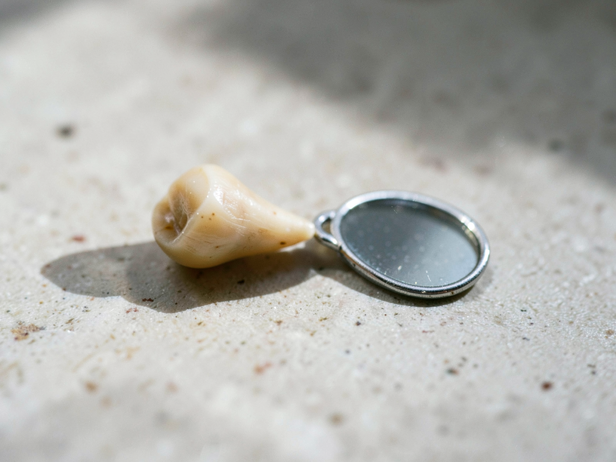
![Extracted Tooth and Mirror]()
Extracted Tooth and Mirror
Image credit : AI
Examining a single extracted tooth, a reminder of potential feline dental disease and the need for care.
Treatment and What to Expect After
There is no filling, no root canal, and no medication that reverses tooth resorption. The treatment is extraction, either of the crown and root together, or in cases where the root is already fusing with the jaw bone, of the crown alone, a procedure called intentional root retention. Cats recover from dental extractions well. They adapt to missing teeth quickly, often eating better after treatment than before, because the source of chronic pain has been removed. Post-operative pain management is straightforward with modern feline anaesthetic protocols. The harder part is the weeks or months before a diagnosis, when the pain was present but invisible.
What Owners Can Do
Annual veterinary dental examinations are the single most useful intervention an owner can make. For cats over five, or for any cat with a history of dental disease, asking specifically about tooth resorption and whether dental radiographs are indicated is reasonable and worth the conversation. At home, watch for any change in how a cat approaches food, not just refusal, but hesitation, slower eating, or a sudden preference for wet food over dry. None of these signs confirms tooth resorption, but any of them is worth mentioning to a vet. The condition does not announce itself. The only way to find it early is to look for it deliberately. Tooth resorption is not a condition that gets better with watchful waiting. Each month without diagnosis is a month of pain a cat cannot report and an owner cannot see, which is exactly why the dental check that feels optional is the one that matters most.