When a rat snake in the Aravalli hills stops eating in October and retreats under a flat rock, it is not sleeping. Its heart rate has dropped to a fraction of its active pace, its digestion has essentially halted, and it will remain in this state for weeks without food, water, or movement, yet it can rouse itself within minutes if a warm afternoon arrives. This is brumation, and it is one of the more precisely engineered survival strategies in vertebrate biology.
Brumation versus hibernation: the biology is not the same
Hibernation, as mammals practise it, involves deep unconsciousness, sustained by fat reserves that are metabolised steadily across the cold months. Brumation in reptiles is different in a fundamental way: the animal remains intermittently conscious. A brumating Indian star tortoise can wake, move to a water source, drink, and return to its shelter within the same cold week. Its metabolism has not shut down, it has slowed to the minimum required to maintain cellular function without generating heat. Reptiles are ectotherms, meaning they rely on external temperature to drive metabolic rate. When ambient temperature falls below a species-specific threshold, enzyme activity in the gut and liver drops so sharply that digesting food becomes physiologically impossible. A rat snake that eats during brumation risks rotting food in its gut, because the enzymes required to break it down are no longer operating at sufficient speed.
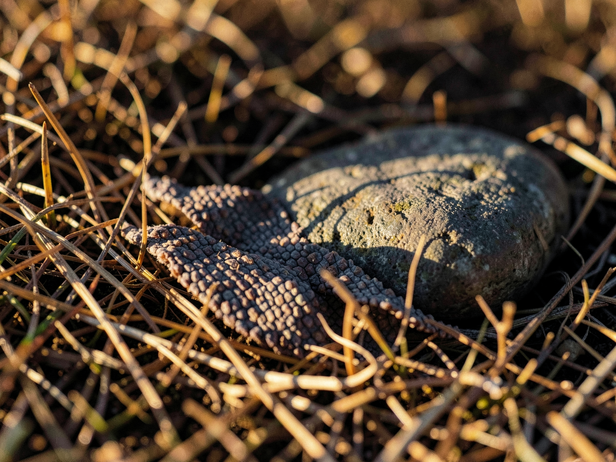
![Shed Skin on River Stone]()
Shed Skin on River Stone
Image credit : AI
I found this shed snake skin, a sign of reptile growth, resting on dry grass and a river stone. This reminds me of brumation in reptiles.
Which Indian species brumate and what triggers the shift
The trigger is not a calendar date but a sustained drop in ambient temperature, typically below 18 degrees Celsius for most Indian species, combined in many cases with shortening daylight hours detected through the parietal eye, a light-sensitive organ on the top of the skull present in many reptiles. Indian rat snakes, Russell's vipers, Indian rock pythons, Indian star tortoises, and Indian tent turtles all show documented brumation behaviour in the wild. The Himalayan pit viper, living at elevations above 2,000 metres, enters brumation earlier and for longer than lowland species, sometimes from September through to March. Indian star tortoises in the Deccan plateau and parts of Rajasthan enter a shallower brumation than their counterparts in cooler zones, sometimes remaining active on warm afternoons through December. The depth and duration of brumation scales with local climate, which is why the same species kept in Chennai and kept in Dehradun will behave differently in winter.
What happens inside the body during brumation
Heart rate in a brumating snake can fall to as low as one beat every few minutes, compared to roughly 20 to 40 beats per minute when active and warm. Respiratory rate drops in parallel. The immune system does not switch off, but its activity is reduced, which is why a reptile that enters brumation already stressed or carrying a respiratory infection is at genuine risk, the illness can progress faster than the immune response can counter it at low temperatures. Fat bodies, discrete organs in the abdominal cavity of many reptile species, provide the energy substrate. A Russell's viper that has fed well through the monsoon months enters brumation with fat bodies large enough to sustain several months of minimal metabolic activity. One that has been food-stressed through the year may not survive a long cold period. The liver also plays a central role, converting stored glycogen to glucose during the rare periods of wakefulness.
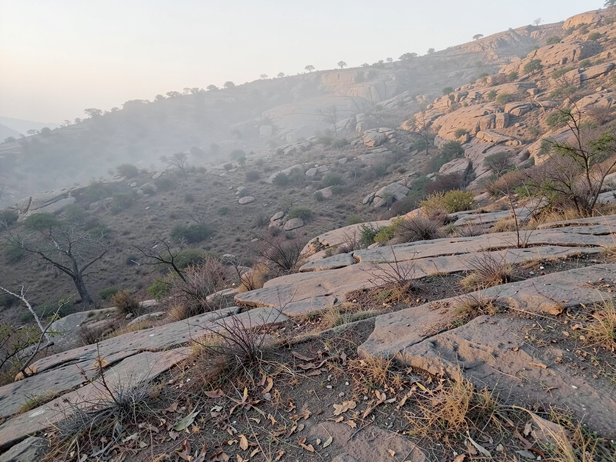
![Dawn on Indian Rocky Hillside]()
Dawn on Indian Rocky Hillside
Image credit : AI
The quiet dawn on a rocky Indian hillside, a scene where reptiles might begin their brumation.
What captive keepers in India need to understand
The most common mistake made by keepers of Indian star tortoises and native snake species is forcing continued feeding through winter. A tortoise that eats when its gut temperature is too low to digest will develop stasis, a potentially fatal condition where food ferments in the digestive tract. The second most common mistake is preventing brumation entirely through artificial heating, year after year. Research on tortoise reproductive biology suggests that a natural brumation cycle is important for hormonal regulation and long-term health, particularly for breeding adults. If you keep a species that naturally brumates in your region, the appropriate response to reduced appetite and activity in October and November is to confirm the animal is otherwise healthy, clear eyes, no wheezing, normal muscle tone, and then allow the temperature in its enclosure to drop gradually to the lower end of its safe range. Do not offer food once the animal has stopped accepting it. Fresh water should remain available at all times, because intermittent drinking during brumation is normal and necessary. If the animal shows laboured breathing, mucus around the mouth, or failure to rouse on a warm day, those are reasons to consult a reptile veterinarian, not signs of normal brumation.
Brumation in the wild: ecological consequences
Brumation timing shapes predator-prey dynamics across Indian ecosystems in ways that are only partially understood. The Indian peafowl, one of the rat snake's key predators, remains active year-round. A brumating snake that selects a poorly concealed retreat site is more vulnerable than at any other point in its year. Rock pythons in central India choose retreat sites with high thermal stability, south-facing rock outcrops, termite mounds, and deep leaf litter, that buffer against sudden temperature swings, which are more dangerous than sustained cold. A rapid temperature drop followed by a warm spell that draws a snake out, followed by another freeze, is the scenario most likely to cause mortality in the wild. Climate variability, rather than average winter temperature, may be the more significant stressor for brumating reptile populations as regional weather patterns shift. The rat snake that stops eating in October and reappears in February has not been asleep. It has been running a finely calibrated biological programme that took millions of years to develop, and it is running it in a landscape that is changing faster than that programme was built to handle.