The tea goes cold on the table between them. Neither of them reaches for it.
The son has been holding this sentence for months, maybe years. He has tried it in his head in different voices, gentle, apologetic, firm, and in every version the father's face does something he cannot predict. Now the sentence is out. It sits in the room the way a broken thing sits. Both of them look at it.
What the Father Hears
The father does not hear a career preference. He hears something older. He hears the shop as he first unlocked it, the smell of new paint and old wood, the ledger he kept by hand because he did not trust anyone else's numbers. He hears the years he came home late and told himself it was for the family. He hears the particular silence of a man who built something expecting it to outlast him, learning in one sentence that it will not.
He does not say any of this. What he says is something like: I thought you understood what this cost me. Or he says nothing at all. The silence is the same sentence.
This is not selfishness, though it can look like it from across the table. It is grief arriving early, before the thing is even gone. The shop is still open. The locks still work. But something has already ended, and he is the only one in the room who knows exactly what it was.
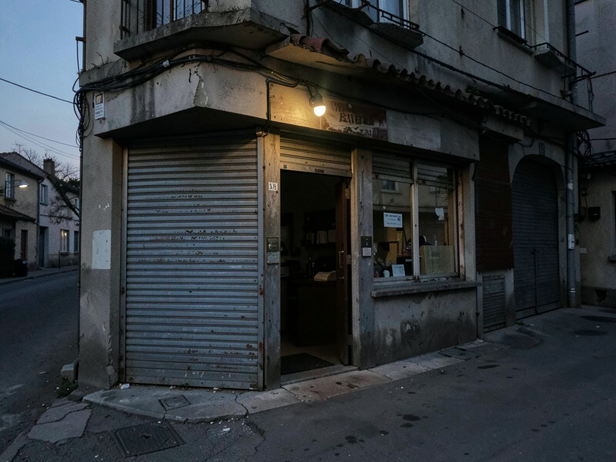
![Dusk on a Fading Shopfront]()
Dusk on a Fading Shopfront
Image credit : AI
The weight of generational expectations hangs heavy as a son considers his path, separate from the family business legacy.
What the Son Carries Into the Room
He has loved the shop in his way. Saturday mornings as a child, the weight of the keys in his hand, the feeling of being trusted with something real. That love is still there. It is not the love that is the problem.
The problem is that he has a life the shop does not fit inside. Not because he is ungrateful. Not because he did not try to want it. He tried for a long time. The trying is part of what exhausted him.
He came into this conversation expecting anger, because anger is easier to answer. Anger has a shape. What he gets instead is his father looking at the table, and that is so much harder to sit with. He wants to say: this is not about you. He knows, even as he forms the thought, that it is partly about his father. Everything is, when you are someone's child.
The Thing Neither of Them Says
Somewhere in the room is the question the father cannot ask: did I do something wrong? Was there a morning I should have asked you what you wanted instead of showing you what I had built?
And somewhere in the room is the answer the son cannot give cleanly: no, and also yes, and also it does not matter now.
Families pass things down, recipes, debts, the way a particular worry sits behind the eyes. They also pass down the assumption that what mattered to one generation will matter to the next. That assumption is not cruelty. It is how love tries to extend itself across time. It just does not always work.
![Legacy's Blank Page]()
Legacy's Blank Page
Image credit : AI
The weight of generational expectations rests on this blank page. A moment of quiet contemplation.
After the Sentence
The evening does not resolve. This is not a conversation with a clean exit. One of them might get up to rinse the cups. The other might turn on the television. They will sleep in the same house, eat breakfast in the same kitchen, and carry the conversation inside them for weeks before they speak about it again.
What changes is not the relationship. What changes is the map they had each been using to navigate it. The father's map had the son in a particular place on it. The son's map had the father expecting something the son could not give. Both maps were drawn from love. Both were slightly wrong.
The second conversation, when it comes, will be harder to start and easier to finish. By then, the father will have had time to grieve the version of the future he was holding. The son will have had time to stop apologising inside his own head. They will not agree on everything. They will not need to.
The shop will still be there. It will find its own answer, a buyer, a manager, a closure that is handled with care. That part is practical and it will get sorted. What is not practical, what cannot be sorted in an evening, is the father sitting with the knowledge that his son looked at everything he made and chose something else. That takes longer. It is allowed to take longer.
The tea was always going to go cold. Some evenings are like that, they do not end so much as they settle, the way sediment settles in still water, slowly, until you can see through to the bottom again.