
Indian Marriages Fail Because Men Fall in Love with Stress, Women with Peace
Riya Kumari | Jan 05, 2026, 23:27 IST

Indian bride
Image credit : Pexels
Love fails not because people stop caring, but because biology pulls them in opposite directions without warning. What feels like love in the beginning often feels unbearable later, not due to betrayal, but misunderstanding. Men and women are driven by different neurochemical needs when they bond. One leans toward intensity and challenge, the other toward safety and consistency.
Love is not a fairy-tale. It is a biological event, shaped by evolution, hormones, survival strategies, and the invisible forces that govern human mating. In Indian marriages and really, across cultures, a painful pattern repeats itself: what initially attracts us eventually repels us. Men, in many cases, seem to fall in love through challenge, conflict and emotional tension - through stress. Women often fall in love with quiet constancy - safety, predictability, and peace. Neither is inherently right or wrong, but when these fundamental drives are misunderstood, relationships suffer, dry up, or collapse. To understand why this happens and why so many marriages struggle, we must look beneath culture and tradition into the biological architecture of love itself.
Love Is a Hormonal Firestorm
![Marriage]()
Not a Choice Romantic love activates the same physiological systems that evolved to help our ancestors survive and reproduce. Dopamine, norepinephrine, cortisol and other neurochemicals light up the brain’s reward and stress centers when we first get close to someone. Early “madness” in love - the racing heart, anxious thoughts, sweep of emotional highs and lows, is deeply associated with the activation of the stress response system, intertwined with reward pathways in the brain.
From an evolutionary perspective, this makes sense: our biological systems were not designed to make partners comfortable - they were designed to lock us in, to push us toward mating and commitment so that our genes survive into the next generation. For many men, this means that a certain emotional agitation - uncertainty, challenge, nervous excitement, becomes coded by their bodies as intensity, value, and attachment. Stress in the context of attachment signals something worth fighting for. It fuels focus, effort, and desire. In other words: stress becomes love.
In Men, Stress Hormones Become Misread as Love
![Surprise]()
Hormones Biology doesn’t distinguish “good stress” from “bad stress” the way our conscious mind does. The same systems that fire when you’re nervous about job loss or competition also fire when your heart races thinking about someone you care for. Some hormone systems involved in early romantic attraction and pair-bonding are deeply linked with stress pathways.
This leads many men to unconsciously equate: uncertainty with engagement, struggle with importance, challenge with connection. The very thing that makes a man strive - the biological urge to protect, chase, compete, provide, can be misinterpreted as “falling deeper in love.” Hell, without these internal stress signals, a man might not even feel attached at all. It’s not just psychology, it’s physiology.
Women’s Biology Craves Stability
![Safety]()
Peace Signals Safety For women especially through evolutionary history - consistency and peace are not fluffy ideals; they are survival mechanisms. In ancestral environments, rearing offspring required a dependable partner who could provide resources, safety, protection, and predictability. Human infants are the most vulnerable in the animal kingdom, so ensuring consistent support was not optional, it was life or death for the mother and the child.
This ancient calculus didn’t vanish; it’s woven into women’s hormonal systems too. Oxytocin - the “bonding hormone” - amplifies trust, calm, and attachment when a woman feels secure. Vasopressin, dopamine, and oxytocin together create a neurochemical environment that rewards peace, contact, stability and mutual care. For most women, love is less about the thrill of the chase and more about the assurance of safety and consistency. Not chaos, not turmoil but steady grounding.
![Love]()
Men often feel bonded through usefulness, leadership, and being needed. When a woman thanks him, asks for his help in small ways, lets him lead at times, and makes him feel like a protector or hero, it activates his sense of purpose and desire to invest. A man wants to feel like a man and appreciation is fuel, not ego. Try:
Women, on the other hand, bond through safety, consistency, and emotional reassurance. When a man shows up reliably, apologizes first when things break, offers steady actions instead of silence, and makes her feel prioritized and emotionally safe, her nervous system relaxes enough to stay open, loving, and connected. Try:
The Shared Rule
Don’t demand love in your own language. Offer love in theirs. Men often give protection and expect appreciation. Women often give emotional depth and expect reassurance. Conflict starts when both feel unseen, not unloved. When a woman helps a man feel capable and wanted, and a man helps a woman feel safe and prioritized, biology stops fighting biology. Tension turns into trust. This is how love stops feeling like a battlefield and starts becoming what it was always meant to be, a partnership.
Love Is a Hormonal Firestorm
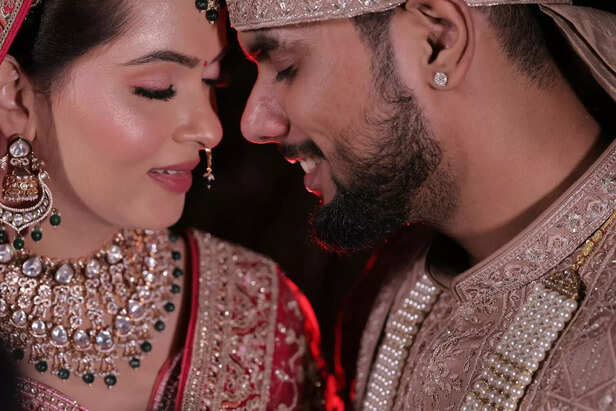
Marriage
Image credit : Pexels
Not a Choice Romantic love activates the same physiological systems that evolved to help our ancestors survive and reproduce. Dopamine, norepinephrine, cortisol and other neurochemicals light up the brain’s reward and stress centers when we first get close to someone. Early “madness” in love - the racing heart, anxious thoughts, sweep of emotional highs and lows, is deeply associated with the activation of the stress response system, intertwined with reward pathways in the brain.
From an evolutionary perspective, this makes sense: our biological systems were not designed to make partners comfortable - they were designed to lock us in, to push us toward mating and commitment so that our genes survive into the next generation. For many men, this means that a certain emotional agitation - uncertainty, challenge, nervous excitement, becomes coded by their bodies as intensity, value, and attachment. Stress in the context of attachment signals something worth fighting for. It fuels focus, effort, and desire. In other words: stress becomes love.
In Men, Stress Hormones Become Misread as Love
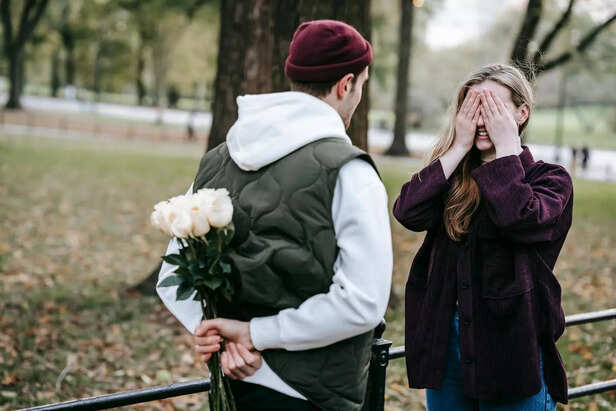
Surprise
Image credit : Pexels
Hormones Biology doesn’t distinguish “good stress” from “bad stress” the way our conscious mind does. The same systems that fire when you’re nervous about job loss or competition also fire when your heart races thinking about someone you care for. Some hormone systems involved in early romantic attraction and pair-bonding are deeply linked with stress pathways.
This leads many men to unconsciously equate: uncertainty with engagement, struggle with importance, challenge with connection. The very thing that makes a man strive - the biological urge to protect, chase, compete, provide, can be misinterpreted as “falling deeper in love.” Hell, without these internal stress signals, a man might not even feel attached at all. It’s not just psychology, it’s physiology.
Women’s Biology Craves Stability

Safety
Image credit : Pexels
Peace Signals Safety For women especially through evolutionary history - consistency and peace are not fluffy ideals; they are survival mechanisms. In ancestral environments, rearing offspring required a dependable partner who could provide resources, safety, protection, and predictability. Human infants are the most vulnerable in the animal kingdom, so ensuring consistent support was not optional, it was life or death for the mother and the child.
This ancient calculus didn’t vanish; it’s woven into women’s hormonal systems too. Oxytocin - the “bonding hormone” - amplifies trust, calm, and attachment when a woman feels secure. Vasopressin, dopamine, and oxytocin together create a neurochemical environment that rewards peace, contact, stability and mutual care. For most women, love is less about the thrill of the chase and more about the assurance of safety and consistency. Not chaos, not turmoil but steady grounding.
Men and Women Aren’t Incompatible, They Are Biologically Complementary

Love
Image credit : Pexels
Men often feel bonded through usefulness, leadership, and being needed. When a woman thanks him, asks for his help in small ways, lets him lead at times, and makes him feel like a protector or hero, it activates his sense of purpose and desire to invest. A man wants to feel like a man and appreciation is fuel, not ego. Try:
- “You’re the only one I trust with this.”
- “Can you handle this for me?” (Being needed bonds him)
- “I feel calmer just telling you this.”
- Let him lead in low-stakes moments - Restaurants. Plans. Decisions that don’t cost safety.
- Pull back praise when he withdraws effort - not affection, just reinforcement. Men subconsciously move toward where their contribution matters.
Women, on the other hand, bond through safety, consistency, and emotional reassurance. When a man shows up reliably, apologizes first when things break, offers steady actions instead of silence, and makes her feel prioritized and emotionally safe, her nervous system relaxes enough to stay open, loving, and connected. Try:
- Texts. Calls. Follow-through.
- A simple: “I see how that hurt you” because safety repairs faster than logic.
- Show up before she has to ask twice
- Even: “I need time, but I’m here” keeps the bond intact.
- Prioritize her publicly, reassure her privately
- When she’s calm and open, deepen connection. When she’s anxious, ground, don’t debate.
The Shared Rule
Don’t demand love in your own language. Offer love in theirs. Men often give protection and expect appreciation. Women often give emotional depth and expect reassurance. Conflict starts when both feel unseen, not unloved. When a woman helps a man feel capable and wanted, and a man helps a woman feel safe and prioritized, biology stops fighting biology. Tension turns into trust. This is how love stops feeling like a battlefield and starts becoming what it was always meant to be, a partnership.