She was the one who always had somewhere to be. The kitchen at five in the morning, the neighbour's door at ten, the temple by eleven, the market before the vegetables went soft. Her days had a structure that nobody built for her, she built it herself, over decades, out of obligation and habit and the particular pleasure of being needed. Now she is in your city, in your flat, and the day stretches from the moment you leave to the moment you return, and there is nothing in it that requires her.
The shape of a day she didn't choose
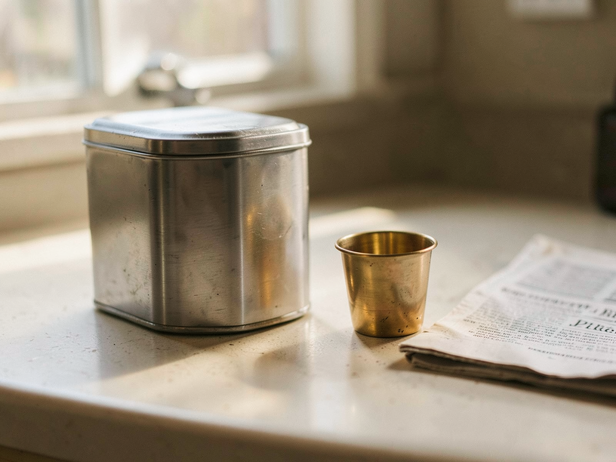
![Morning Kitchen Still Life]()
Morning Kitchen Still Life
Image credit : AI
A quiet morning scene. This image evokes a sense of routine and perhaps a parent lonely during work hours, waiting for a shared meal.
The problem isn't loneliness exactly, though loneliness is part of it. It's the loss of function. Back home, she was the person who knew where things were kept, who the plumber's number belonged to, whose grandchildren came on which afternoon. Here, she doesn't know which bin is recycling and which is general waste. She cannot read the labels at the grocery store with full confidence. The autorickshaw doesn't exist. The neighbours don't drop in. The structure that made her herself has been left behind in another city, and nobody told her what to put in its place.
You feel this when you come home. She's watched something on her phone, she's cooked, she's cleaned the kitchen twice. She tells you about her day in the careful way people describe a day that had very little in it. You feel guilty, and guilt makes you shorter than you mean to be, and then you feel guilty about that too.
What she won't say and what you can't hear
She will not tell you she is struggling. She came to help, not to be a burden. In her mind, the visit is a gift she is giving you, her presence, her cooking, the knowledge that you are not alone in a foreign city. To admit that she is the one who is untethered would be to take something back from the gift. So she says she is fine. She says she likes the quiet. She says she is resting.
And you, because you need her to be fine, because the alternative requires a restructuring of your guilt and your schedule and your understanding of what this visit is, you believe her more than you should. You come home to the smell of dal and you feel loved and you don't ask the harder question: what did today feel like for you, actually?
The hours between nine and six are not a small thing
![Afternoon Still Life: Phone and Chai]()
Afternoon Still Life: Phone and Chai
Image credit : AI
A quiet moment of reflection. This scene evokes a sense of calm, perhaps for a parent lonely during work hours.
Nine hours, five days a week, sometimes six. That is most of a life lived in a flat that belongs to someone else, in a city that has not made room for her, on a visa that does not permit her to work or build or belong in any official sense. The visitor visa was designed for tourism and family reunion. It was not designed for the specific situation of a parent who has come to be useful and discovered that usefulness here looks different than it did at home.
Some of this is structural and cannot be fixed by goodwill alone. She cannot get a library card in some cities without a local address proof she doesn't have. She cannot join the building's WhatsApp group without feeling she is inserting herself into a community that will outlast her visit by years. She is a guest in the fullest sense, which means she is always slightly in the way of her own settling.
What actually helps, and what only looks like helping
The instinct is to fill the hours with activity. A yoga class, a Hindi film club, a temple visit on Tuesday mornings. These help if she wants them. They become another obligation if she doesn't, another thing she does to reassure you that she is not wasting the visit. Ask her what she actually wants from the day, not what would make you feel better about leaving for work.
Some parents want a task that matters. Not the performative task of being taken to a museum, but a real one: managing the household budget for the month, being the person who deals with the plumber, cooking for a dinner you're hosting so that the dinner is partly hers. Responsibility, not entertainment. Others want permission to do nothing without it being interpreted as depression. The two needs look identical from the outside and require completely different responses.
The most useful thing is often the least dramatic: a phone call at lunch. Not to check in, but to actually talk, to be interrupted by her, to let her feel that the day has a middle as well as an end. It takes eleven minutes. It changes what the afternoon feels like for her.
What the six months are actually for
The visit was supposed to bring you closer. In some ways it does. You eat together every night. You know what she looks like when she's tired. You learn things about her past that only come out in the long evenings when there is nowhere else to be.
But closeness and ease are not the same thing. You can be close to someone and still be failing them in a specific, structural way. She did not come here to be managed. She came because you are her child and this is where you live, and the distance had become too much for one of you, probably both of you, to keep pretending it wasn't there.
The six months will end. She will go back to the city where she knows which bin is which, where the neighbours drop in, where her days have the shape she built for them. What stays is what you made of the hours you actually had, not the ones you filled for her, but the ones you were honest with each other inside.