Before the sun comes up, her mother-in-law hands her the sargi thali. She eats in the dark, quickly, before the fast begins. Nobody calls this a rehearsal. But it is, for the sixteen hours that follow, she will be watched, and how she carries the watching matters as much as the fast itself.
The performance of not needing
She goes to work, or she manages the house, or both. She does not eat. She does not, in most rooms, say she is hungry. The hunger is supposed to be invisible, or better, transformed into something that reads as devotion rather than deprivation. The woman who mentions her headache is being a poor sport. The woman who does not mention it is being a good wife. The fast is the same in both cases. What changes is the performance around it.
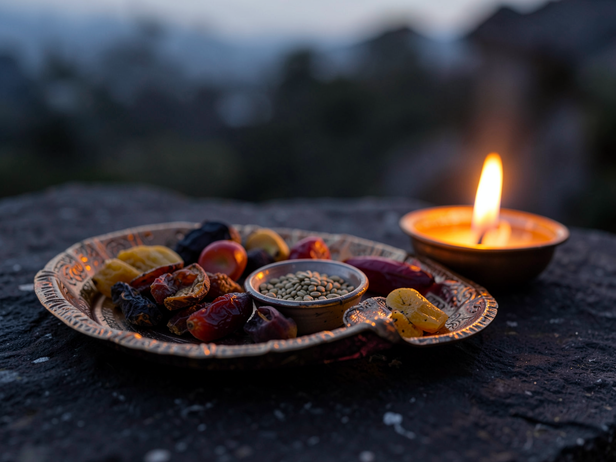
![Sargi Thali Before Dawn]()
Sargi Thali Before Dawn
Image credit : AI
I prepare the sargi thali, a vital part of the Karva Chauth emotional experience for women. The ritual signifies devotion.
What the sargi is actually passing down
The sargi meal, the fenugreek seeds, the mathri, the fruit, the sweet, is handed from older woman to younger woman before dawn. It is framed as care. It is also instruction. You are being shown how to do this. You are being enrolled in a line of women who did it before you, and the enrollment is warm and intimate and not optional. The tenderness is real. So is the inheritance of the expectation. Both things are true at the same time, and the woman receiving the thali is not always given language for holding both.
The longing that must look beautiful
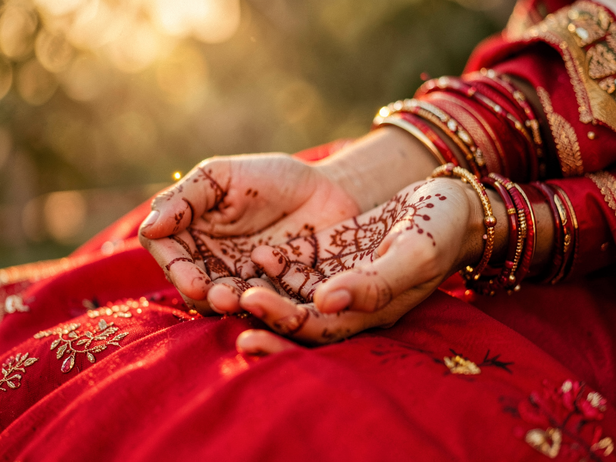
By evening, she is dressed. The mehendi is on her hands, the sindoor is in her parting, the bangles are on her wrists. She is, by design, at her most visible. The fast has made her eyes brighter, or so the story goes. What the story does not say is that she has been asked to turn her hunger into an aesthetic. The longing for the moon is romantic. The longing for water is not discussed. She is performing desire in a way that makes the people around her comfortable, desire for her husband, desire for his long life, while the more ordinary desire, the one that is just thirst, stays offstage.
![Mehendi, Bangles, Evening Light]()
Mehendi, Bangles, Evening Light
Image credit : AI
My hands, adorned with fresh mehendi, rest on a red dupatta. The bangles catch the warm evening light, a symbol of tradition and the emotional experience of fasting.
The moon arrives and so does the question
When she finally sees his face through the sieve, and drinks the water he gives her, something real happens. Relief, yes. But also the completion of a role she has been playing since before sunrise. The ritual is ancient and the feeling inside it is genuine, the relief of the fast ending, the warmth of being looked at by someone who loves her, the particular intimacy of a shared ceremony. None of that is false. What is worth sitting with is this: she performed all day for an audience that included herself. She watched herself be patient, be beautiful, be devoted. The moon did not just end the fast. It gave her permission to stop performing it.